This week, a later start (meeting at 8am, an extra 90 minutes of sleep!) as we were not leaving the confines of Tel Aviv. There are many museums in the city and several of them are concentrated around the university campus, located close to the northern suburb of Ramat Aviv. Today, we would be visiting some of these sites, partly to bed in some of what we have been learning in the classroom, and partly because these are important sites for us to be able to guide in the future.
Quick facts & guide tips
| Where | Ramat Aviv, the northern Tel Aviv suburb across the Yarkon, in and around the Tel Aviv University campus. |
|---|---|
| What’s there | The Zoological Gardens (Israeli fauna up close), the Botanical Gardens (Israeli flora with biblical and ecological stories), the Palmach Museum (walk-through history of the pre-state defence force), and the Diaspora Museum (now ANU – Museum of the Jewish People; the diaspora story and synagogue models). |
| Best for | Half-day or full-day visit on a hot day, a rainy day, or as a thematic primer for visitors interested in nature, the founding of the State, or Jewish life outside Israel; pair two or three rather than trying all four. |
| Access | The university gardens are open to the public with modest fees; the Palmach and ANU museums are paid sites with set hours, both offer English-language options (the Palmach requires advance booking and runs as scheduled walk-throughs). |
The Zoological Gardens
The day began at the Zoological Gardens. Having studied Zoology in class, this was an opportunity to get relatively up close and personal with the various species of bird, mammal and reptile found in Israel. Our guide, a PhD student at the university, took us around the various enclosures, showing how the animals camouflaged themselves in their environment, explaining about their hunting or survival techniques and their distinguishing features.
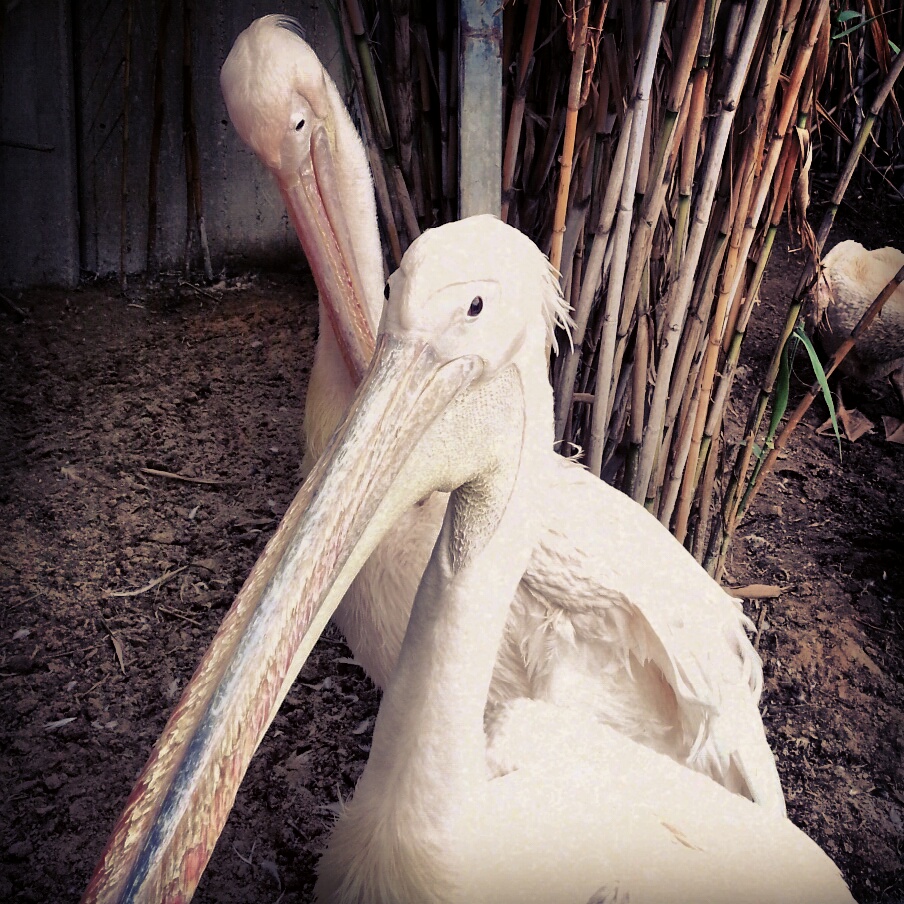
There was a huge range of animals (as might be expected in a Zoological garden). The most interesting were those you don’t normally get to see up close; the wolves, hyena, wild boar and wild cats. Also the snakes. Although I don’t like snakes. And there are quite a few poisonous ones in Israel, it turns out. The advice was: a black snake in the centre of the country is not poisonous, a black snake in the South is likely to be either a black python or mole viper, and these are definitely best avoided. I’m not a big fan of snakes, truth be told. I was happy to return to the flamingos. Got to love flamingos. Apparently they are not pink naturally; it’s to do with the way their bodies break down the enzymes in the algae they eat. And they only mate when they’re in a big group (so the garden has mirrors around it to try and persuade them that they are more numerous than they actually are).
The Botanical Gardens

After a good dose of fauna it was time for some flora; the Botanical Gardens were right next door and we headed over to meet our Botany teacher. Again, it was a case of seeing what we had learned in the class, in the field. It’s one thing to see the plants, but also interesting to hear some of the stories and legends behind them. The Hairy Thymelea (I kid you not) is considered to be the plant that Samson was bound with when he was captured by the Philistines. The appropriately named Christ’s Thorn Jujube is thought to be the plant that was used to make Jesus’s thorn crown. And the Judas Tree has a pink blossom because it is embarrassed by its treachery. Most fun was when our guide spotted a chameleon in the bushes and proceeded to lift it up and show it to us while telling us that we should never do such a thing. So, we got in a little bit of Zoology in the Botanical Gardens too.

The Palmach Museum
We enjoyed a lunch break strolling around the university campus (where there was a lunchtime rock concert…a hard life these students lead) and then it was time to visit the Palmach Museum. The Palmach was the elite force of the Haganah, the pre-state defence force for the Jewish population of the British Mandate; many of its members played very important roles in civilian life, most famously Yitzchak Rabin and Moshe Dayan. In addition to learning how to fight, they also had to work the land. Hence the emblem of the unit had a sword together with two ears of wheat.
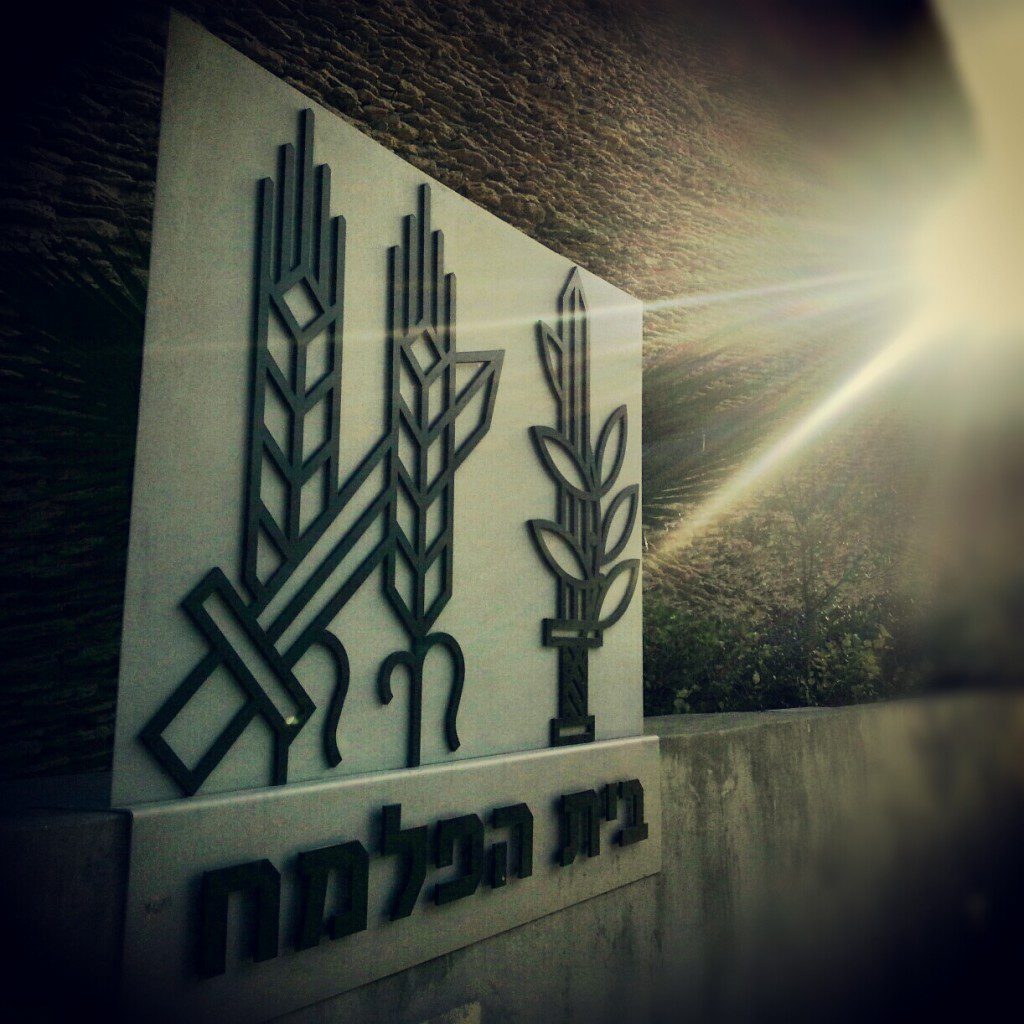
The museum is a walk-through experience which follows the story of a group of Palmachnikim who join the unit and end up playing an important role in the War of Independence several years later. Unlike many museums there are no displays or exhibits, rather one moves through rooms and watches, hears, sometimes even smells the story of the Palmach through the eyes of this small group. It really is an amazing story; teenagers as young as 16-17 signed up and trained themselves with very limited weaponry; they then played an important role in defeating the five armies that invaded Israel when it declared independence, although sadly many of them died along the way and they are remembered in a touching memorial at the museum’s end. The museum is in Hebrew but a headset providing an English translation is available.
The Diaspora Museum
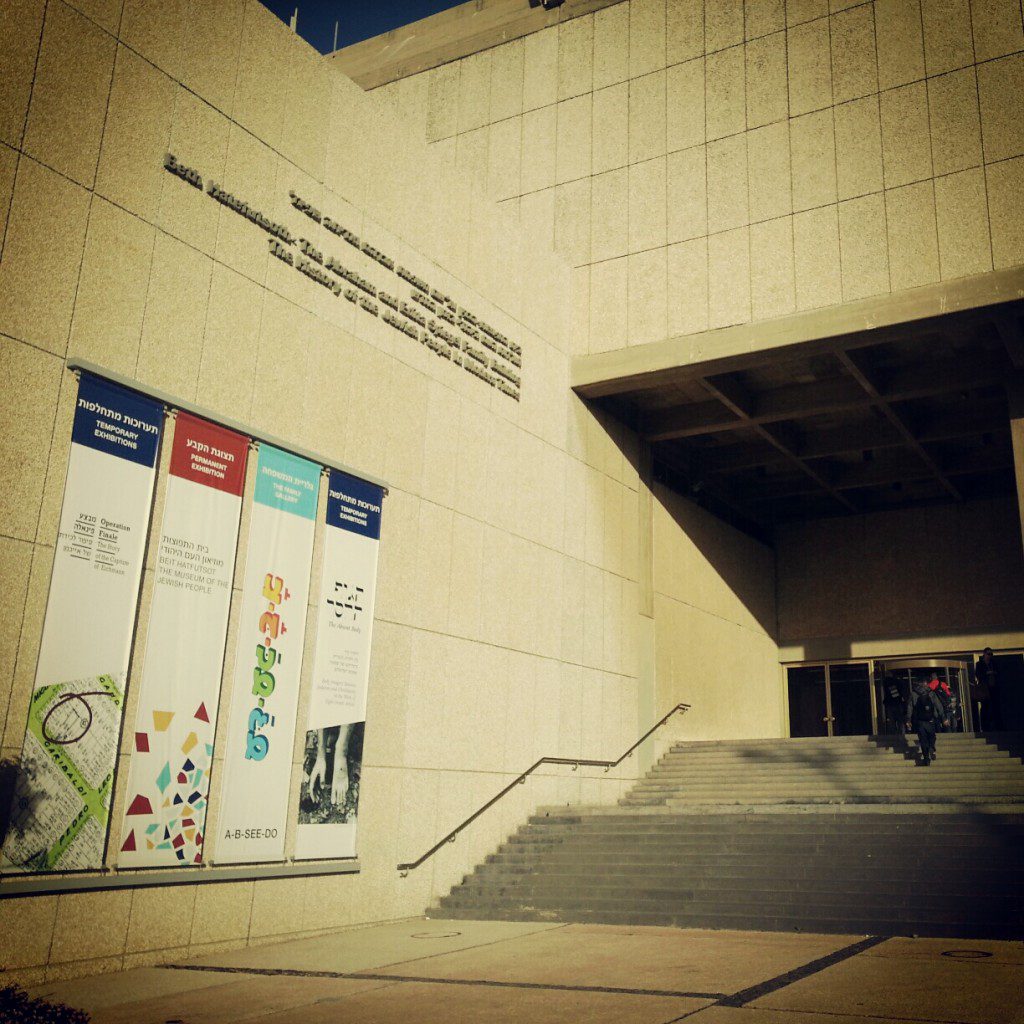
Our final stop of the day was the Diaspora Museum which is actually inside the university campus. Founded in the late 70s by Nachum Goldmann and Abba Kovner, the museum was designed to answer the question of how the Jewish people managed to (largely) maintain their religion and culture in 2000 years of exile. Sadly, the museum seems a little dated; it seemed much the same as I remember it from 10 years ago and has not taken advantage of the advances in technology and museum design. But it still provides a good introduction to Jewish life, ritual and rites of passage; insights into communities outside of Israel and perhaps most interestingly, a collection of model replicas of synagogues from around the world of historical significance. Although I felt that Bevis Marks, the oldest synagogue in Britain, should probably have been featured, and wasn’t. Which hurt my national pride a little. Still, it is an important museum, I remember that my visit to the museum was the first time I really heard in detail about Jews who were from a radically different background to mine (the UK community is quite homogenous). And it’s quite amazing that despite being so spread out over such a long period of time, the core aspects of the religion remained the same everywhere. And on that positive note, it was time to head home.


Leave a comment