Sometimes tourists tell me they’re worried about Shabbat. They’ve read that the buses stop and the shops shut, and they think they need to arrange their trip around it, like it’s a problem to be solved.
I understand the worry but I disagree. If you’re looking for a unique Israel experience, Shabbat is it! You can’t really experience something like it anywhere else, and if you plan for it, it can be a real highlight of your trip.
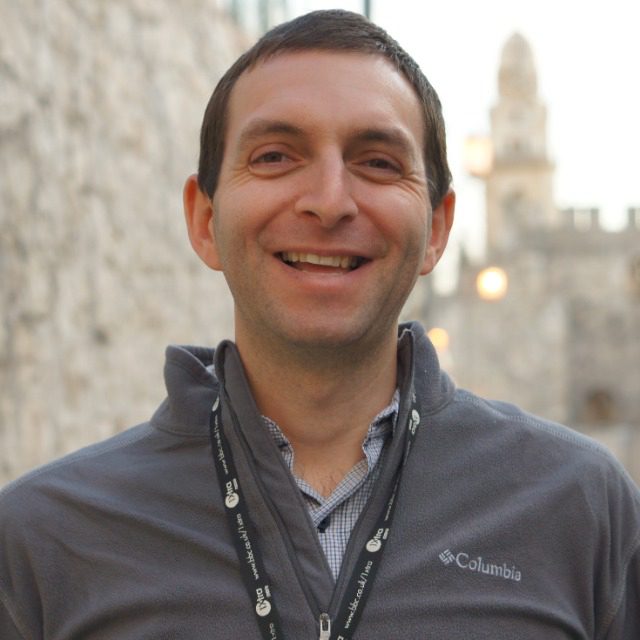
I should say up front that I’m Shabbat observant myself, so that colours my point of view. It’s also important for me to say that I would never impose my observance on the people I’m guiding. It’s for me to fit around you, not for you to fit around me.
But for me, Shabbat is genuinely the highlight of the week. With no phone, no car and no distractions, the conversations get longer, the meals get slower, and I see my family properly. Most guests who try even a piece of it recognise the appeal, whatever they believe.
Quick facts & guide tips
| What it is | The Jewish day of rest, from sundown on Friday to nightfall on Saturday, about 25 hours. |
|---|---|
| What closes | Jerusalem mostly shuts; Tel Aviv largely stays open; Haifa keeps its buses running. National parks, the Israel Museum and the Tel Aviv Museum of Art stay open. |
| Getting around | No national buses or trains (Haifa aside). Taxis, Uber, Gett, sheruts and hire cars all run. |
| Touring on Shabbat | I guide walking tours on Saturdays. It’s also a good day for Bethlehem and Jericho, or the Dead Sea and Masada. |
| Guide tip | Home hospitality with a Shabbat-observant family can be a really special and unique experience. |
What is Shabbat?
Let’s first take a minute to understand what Shabbat means. It’s the Jewish day of rest, running from sundown on Friday to nightfall on Saturday, about twenty-five hours.
The traditional practice is to stop working and stop creating: no driving, no money, no phones, no cooking. The idea comes from the creation story in the book of Genesis, where God rests after creating the world. It’s then formally commanded as one of the Ten Commandments given at Mount Sinai, referenced in Exodus and again in Deuteronomy.
That’s the theory. The practice varies enormously.
There are many Jewish laws about Shabbat, and even more customs that vary based on Jewish ethnic heritage or religious stream. Some Israelis keep every detail. Others go to synagogue on Friday night and then out to a bar. And many treat it purely as the weekend: the beach, a long lunch, football.
Plenty do nothing at all and only notice because the post office is shut. There’s no single Israeli Shabbat, and nobody is checking what you do (a genuinely liberating thing to understand before you arrive).
So when I ask guests what they want from Shabbat, I’m not asking a religious question. I’m asking what kind of day they want.
Friday, before it all stops
The lead-up to Shabbat is half the experience.
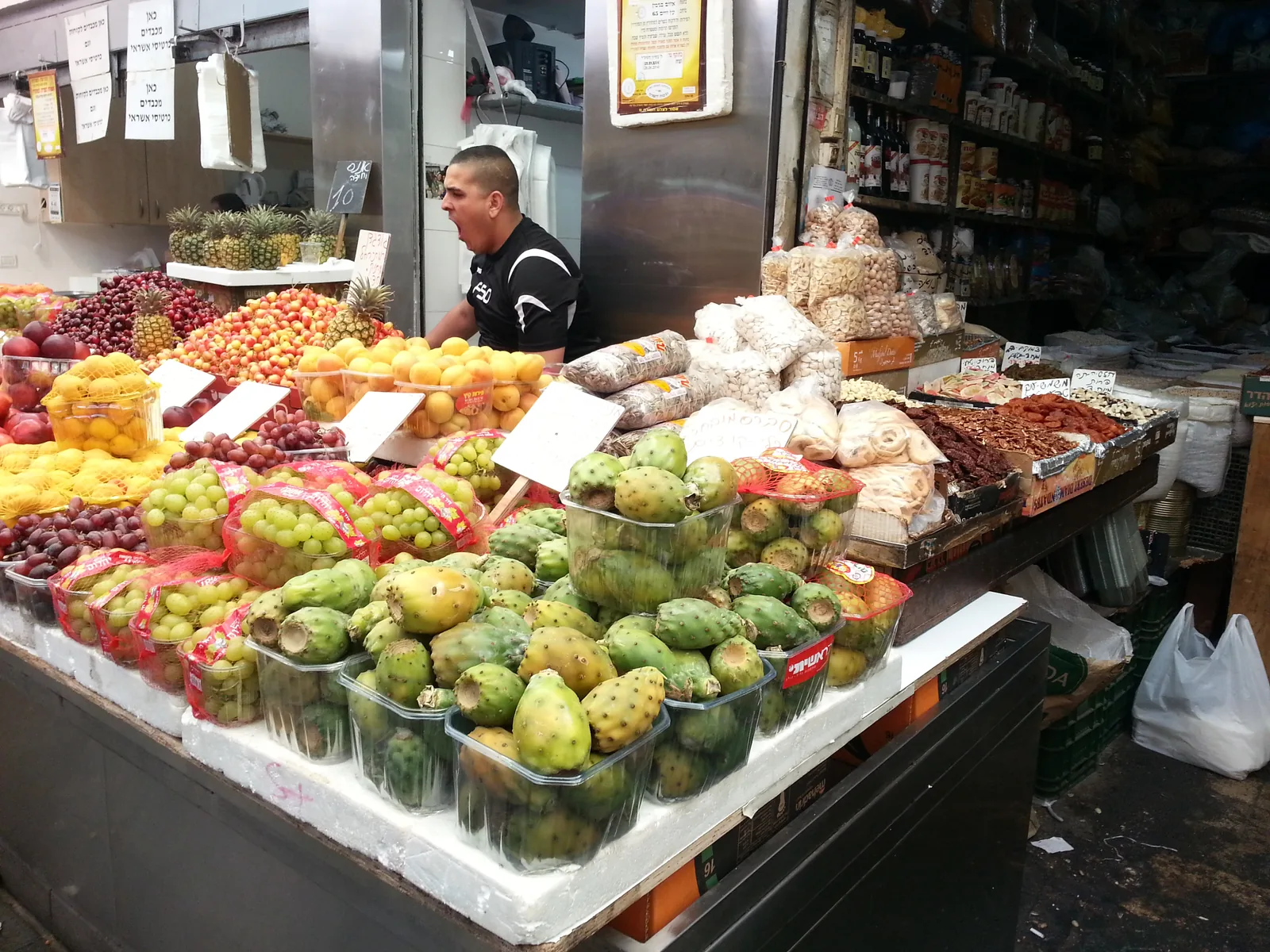
Friday morning in Jerusalem’s Mahane Yehuda market or Tel Aviv’s Carmel market is one of the great sights of the country. The whole city is shopping at once, the stallholders are shouting, and by early afternoon the prices start dropping as everyone tries to clear the stock before they close. It’s loud, hot and slightly chaotic, and I love it.
In Tel Aviv, drummers gather at Alma Beach (behind the old Dolphinarium) on Friday afternoons and play until the sun goes down. Nobody there would call it a religious act. It’s still, unmistakably, a city welcoming Shabbat in, it’s very spiritual, and it happens a few minutes’ walk from people doing the more traditional version.
One practical thing worth knowing: Shabbat starts at sundown, and sundown moves. In midsummer that’s well into the evening; in midwinter it can be mid-afternoon, and visitors sometimes get caught out. If you’re arranging anything for a Friday, ask or look up what time Shabbat comes in that week before you plan the day.
Shabbat in Jerusalem
The divide between East and West Jerusalem is very stark on Shabbat. Because Jewish Jerusalem just stops.
By Friday afternoon the traffic thins, the shops pull down their shutters and a siren sounds across the city. Then the noise simply goes. If you’ve only known Jerusalem as a hot, crowded, honking place, it’s remarkable to witness.
At sundown the Western Wall plaza fills up. There’s no single service down there; there are dozens, running at once, and some of them are super lively with raucous singing and dancing.
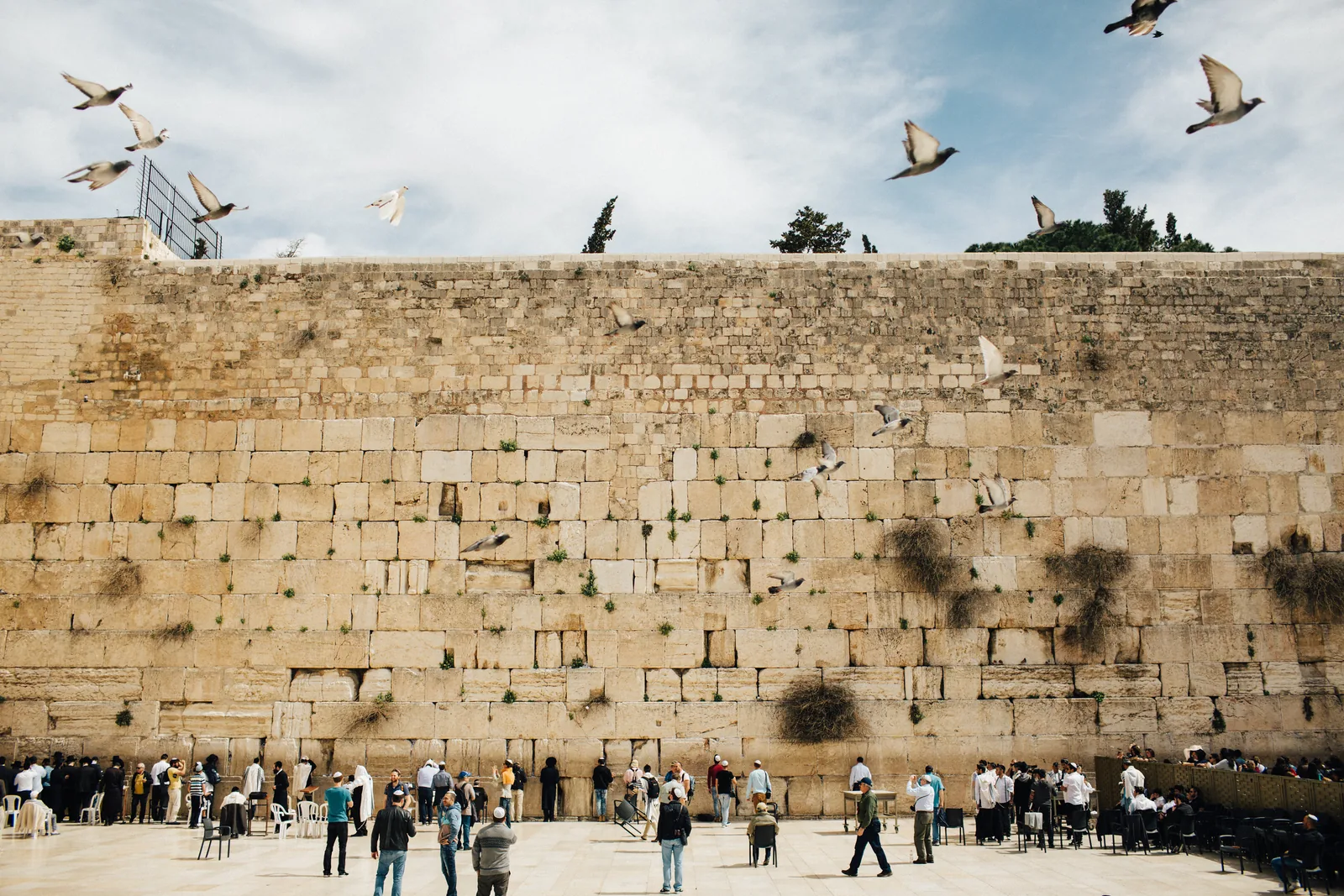
You don’t need to know what’s going on to join in, and you don’t need to join it at all. Standing at the back and watching is also an experience, and I’ve taken guests of every faith and none who found it very special.
If you’d rather be inside a service, I’ll find you one that fits. The Great Synagogue on King George is an occasion more than a service, with a cantor and a full professional choir; Shira Hadasha in the German Colony is Orthodox but gives women a much larger role than most; Kol HaNeshama in Baka is the country’s biggest Reform community; Nitzanim, also in Baka, is warm, busy and modern Orthodox.
The little shuls around Nachlaot are the ones I’d send you to if you want to feel like you’ve stumbled into someone’s neighbourhood rather than an institution.
Then there’s dinner, which is a huge part of what Shabbat is about. The vast majority of Israelis will have a family dinner on Friday night, whether or not they are religious.
I can arrange for you to eat with a local family in their home (there’s a cost, and I need decent notice, but it’s a standing offer). If that’s not for you, there are restaurants open, and there are plenty of hotels which run a Friday-night meal.
For something at the other end of the spectrum entirely: I’ve taken guests to the Karlin tisch on Yoel Street in Mea Shearim, the main ultra-orthodox neighbourhood of Jerusalem. A tisch is a hasidic gathering around the rebbe’s table, and the Karliners are known for praying at a volume that has to be heard to be believed.
This needs to be done with care. Mea Shearim is a residential neighbourhood, not an attraction, and people live there; it needs modest dress, no cameras and a willingness to be a quiet guest in someone else’s world. Handled respectfully, it’s extraordinary.
Saturday morning is a different city again. I’ll happily take you on a walking tour of the Old City. You can also drop into a service and time your arrival for the kiddush (refreshments which range from light snacks to a full-blown meal) afterwards, which is the mildly cynical move every Israeli knows: the prayers are long, the whisky and herring at the end are excellent.
The Israel Museum is also open and can be part of the day.
Shabbat in Tel Aviv
Unlike Jerusalem, Tel Aviv doesn’t stop. It changes gear, and it does several contradictory things at once.
You can have a completely traditional Friday night. You can also have dinner at a busy restaurant, and then go clubbing, because Friday night is the biggest night out of the week in a city that takes going out seriously. These are happening within a few streets of each other and nobody thinks it’s strange.
I arrange Friday-night hospitality here just as I do in Jerusalem, and in Tel Aviv many of the host families are personal friends of mine, so I know exactly whose table I’m sending you to.
If you want a service that feels like Tel Aviv rather than like a synagogue, Beit Tefilah Israeli hold a musical Kabbalat Shabbat outdoors at the port, facing the sea. It’s egalitarian, it’s mostly singing, and a lot of the people there wouldn’t describe themselves as religious at all.
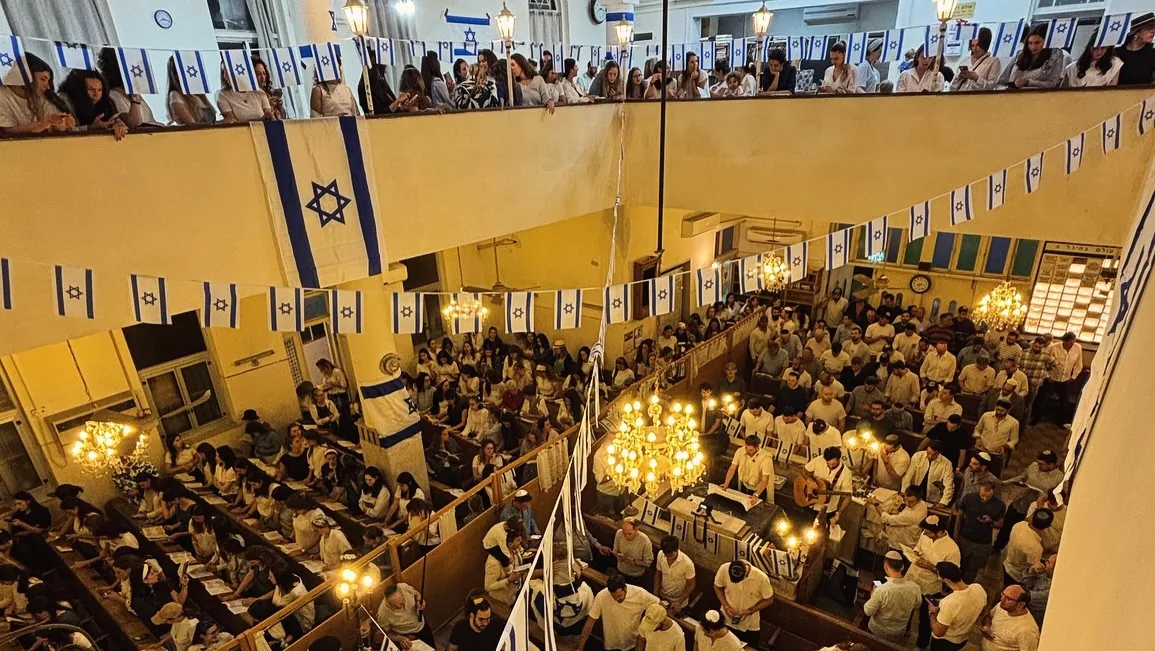
My own synagogue is 126 Ben Yehuda. It was built in 1936, before the state, when this end of Tel Aviv was still the edge of town. The community then more or less died away, and around 2010 a group of young people from the neighbourhood brought it back.
The building has a rustic, worn-in feel that a renovation would ruin. The crowd is a real mix of Israelis and foreigners, but it’s run as an Israeli institution rather than an English-speaking expat outpost, which I think is exactly why it works. It’s friendly and the Shabbat morning kiddush is excellent (it’s also packed with around 300 people!).
For a lot of the year, Saturday in Tel Aviv is the beach, either for the whole day, or for after synagogue. If you’d like to do something, I’ll walk you round Jaffa or the Bauhaus streets of the centre, and the Tel Aviv Museum of Art is open. Or you can do what most of the city does and lie on the sand until it’s time to eat again.
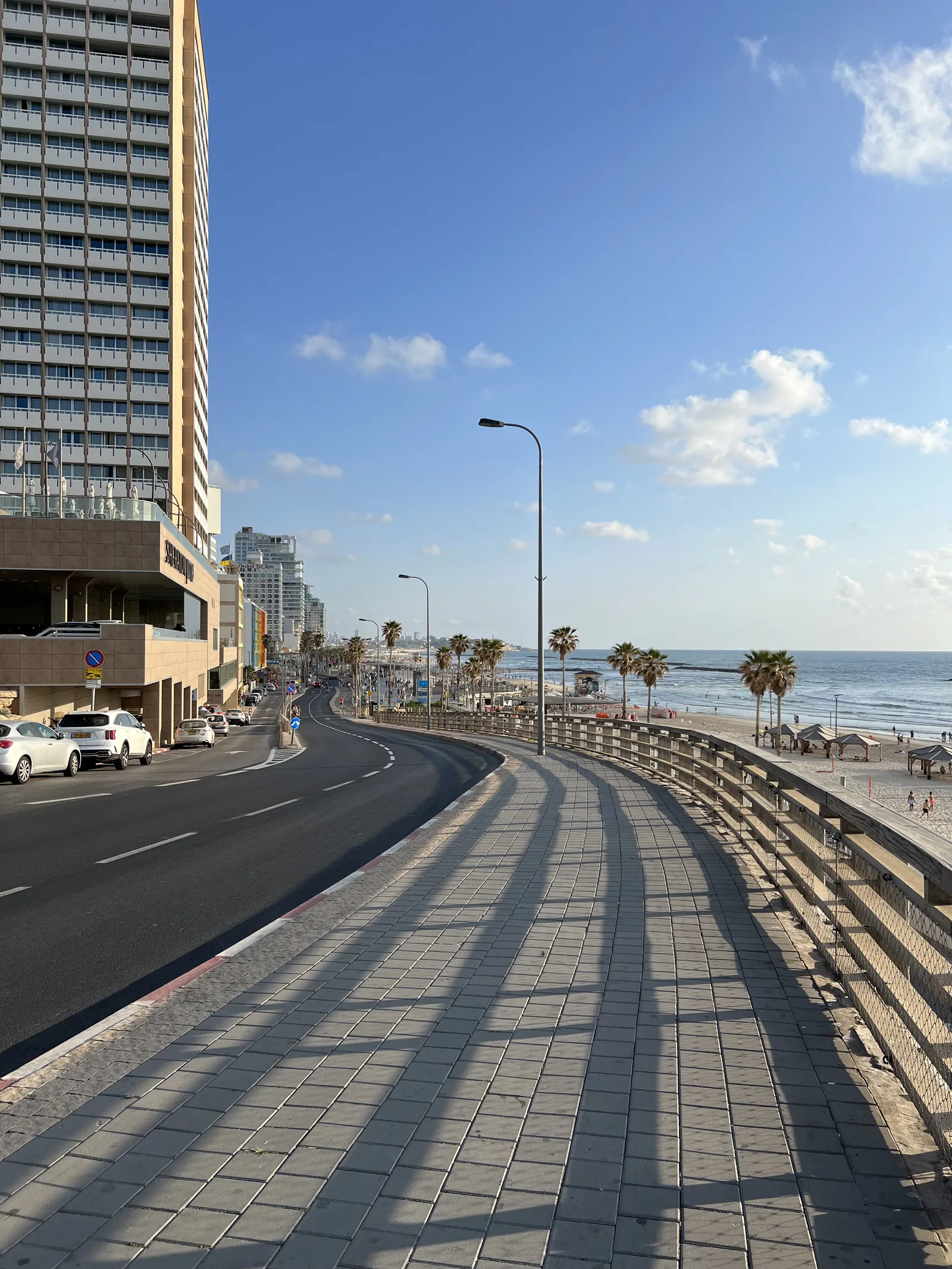
The Israeli folk dancing on the Gordon Beach promenade is worth finding. It’s free, it’s been running for decades, and the dancers are serious about it. Stand near the person leading in the middle and copy them. This is a truly Israeli experience!
Touring with me on Shabbat
Yes, I guide on Shabbat.
Because I keep Shabbat, I don’t drive and I don’t handle money on Saturday, so what I can offer is a walking tour. I’ll meet you at your hotel and we’ll explore the area on foot. In Jerusalem that could be the Old City or Nachlaot; in Tel Aviv, Jaffa or the city centre.
If you’d rather get out of town, Shabbat is an excellent day to go to Bethlehem and Jericho, where everything is open and running as normal. That’s a day I arrange with a Palestinian colleague rather than guide myself (my licence doesn’t cover the areas under Palestinian control), and it works nicely on a Saturday when Israel is quiet.
The same logic applies to the Dead Sea and Masada, where the national parks and beaches stay open.
And if none of the above appeals, some people just want a day by the pool. And that’s a Shabbat experience in itself!
The practical side of all this (transport, opening hours, what closes when) is on my plan your trip page, and there’s more on how I work with observant families on the Jewish heritage page.
When Shabbat ends
At nightfall on Saturday, the country turns back on, and the speed of it is quite something.
The ceremony that ends Shabbat is called havdalah. It’s short, taking a few minutes, and I’d be happy to run you through it if you’d like. I’ve done it with groups in the Western Wall plaza in the dark, which is hard to beat.

Then the engine starts. The shops reopen, the buses run, the restaurants fill and Saturday night becomes one of the busiest nights of the week. Sunday rolls around and we’re back to touring as normal.
Frequently asked questions
Is everything closed in Israel on Shabbat?
No. It depends entirely where you are. Jerusalem closes almost completely: shops shut, buses stop and some streets close to traffic. Tel Aviv stays busy, with plenty of restaurants, bars and cafes open, and the beaches full. Haifa is the one city that keeps its buses running. National parks, including Masada and the Dead Sea sites, stay open, as do the Israel Museum and the Tel Aviv Museum of Art.
Can I still tour on Shabbat?
Yes. I keep Shabbat myself, so on Saturdays I offer walking tours rather than driving days: I meet you at your hotel after lunch and we explore on foot. Saturday is also a good day for Bethlehem and Jericho, which I arrange with a Palestinian colleague, or for visiting the Dead Sea and Masada, which I can set up with a colleague.
How do I get around on Shabbat?
Public buses and trains stop nationwide (Haifa excepted). Taxis run throughout, Uber and Gett work, and sherut shared taxis cover the Tel Aviv to Jerusalem route. Hire cars are unaffected. Most hotels run a Shabbat lift that stops at every floor.
Can I go to a Shabbat dinner with an Israeli family?
Yes, this is something I arrange regularly. Many of the Tel Aviv families are personal friends of mine. There’s a cost involved and I need reasonable notice, but it’s a special experience and a great way to get to meet real people here.
Do I need to be Jewish to experience Shabbat?
Not at all, and I’ve taken guests of every background to Friday-night services and dinners. Nobody will ask what you believe. Do be respectful: appropriate clothing at synagogues, no photography, phones away and on silent.


Leave a comment