Today’s trip was very close to home as we explored ‘Old Tel Aviv’ and learned about the incredible story of the establishment and development of the city I now call home.
Quick facts & guide tips
| Where | Old Tel Aviv–Jaffa, a walking route through the southern half of the modern city. |
|---|---|
| Key sites | Jaffa, the American Colony, Neve Tzedek, the Shalom Tower, Rothschild Boulevard, Independence Hall, Bialik Street, Gan Meir, the Trumpeldor cemetery and the Opera Towers. |
| Period | Mid-19th century to 1948 — Jewish migration out of Jaffa, the founding of Achuzat Bayit/Tel Aviv in 1909, eclectic and Bauhaus architecture, and the declaration of the State. |
| Pace | A full-day walking tour on flat, urban terrain; several indoor stops (Shalom Tower exhibitions, Independence Hall) make it workable in heat or rain. |
Starting in Jaffa: gateway for Jewish immigration
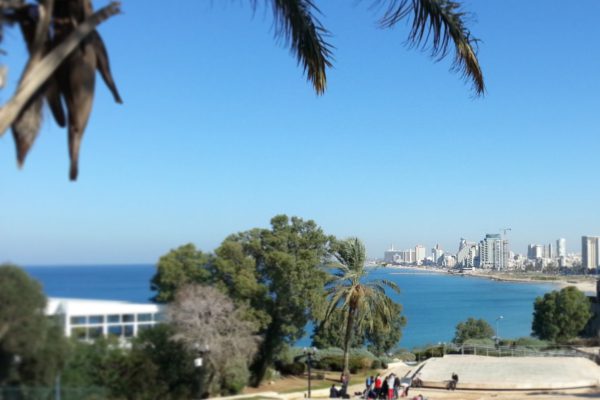
However, we actually began the trip in Jaffa. Why? Arguably, without Jaffa, there may have been no Tel Aviv. As the main port into the area, the vast majority of Jewish immigrants arrived in Jaffa as their gateway into the rest of Israel. With the immigration numbers increasing in the 19th century, some Jews decided to put down roots in the city, and a small Jewish quarter was created.
As Jaffa began to get more and more crowded, and conditions less and less sanitary, people began to move out of the city walls, with Arabs mostly moving to the South and Jews founding the area of Neve Tzedek under the patronage of Aharon Chelouche.
The American Colony and Neve Tzedek
The American Colony
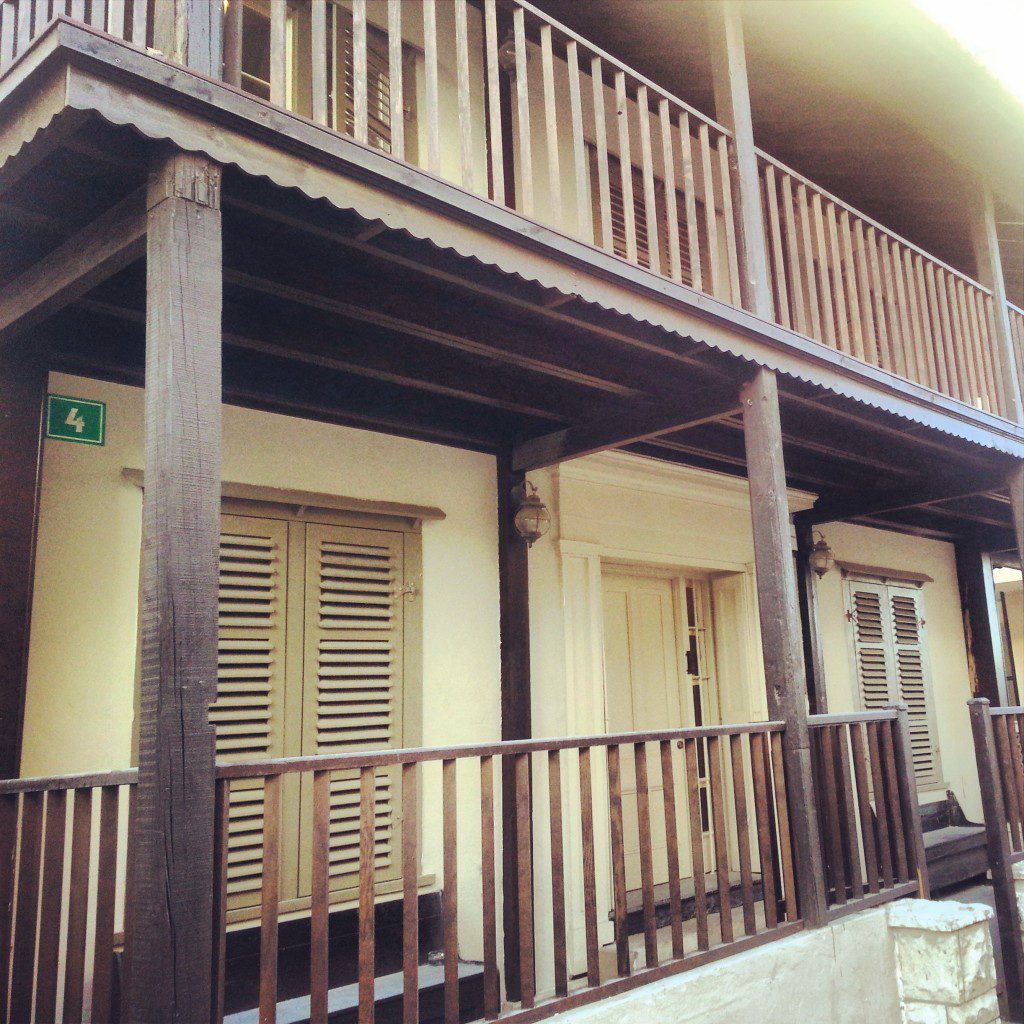
En route to Neve Tzedek, we stopped first in the American Colony, and heard the sad story of the community from Maine who arrived here in the 19th century only to suffer terribly from poor sanitation and malaria. They lasted less than a year before most of them returned home. They sold their properties to the German Templers who made this their second settlement after Haifa, and managed to make a big economical success out of it by turning it into an area of hotels for Christian pilgrims arriving from Jaffa. German efficiency for you.
Neve Tzedek
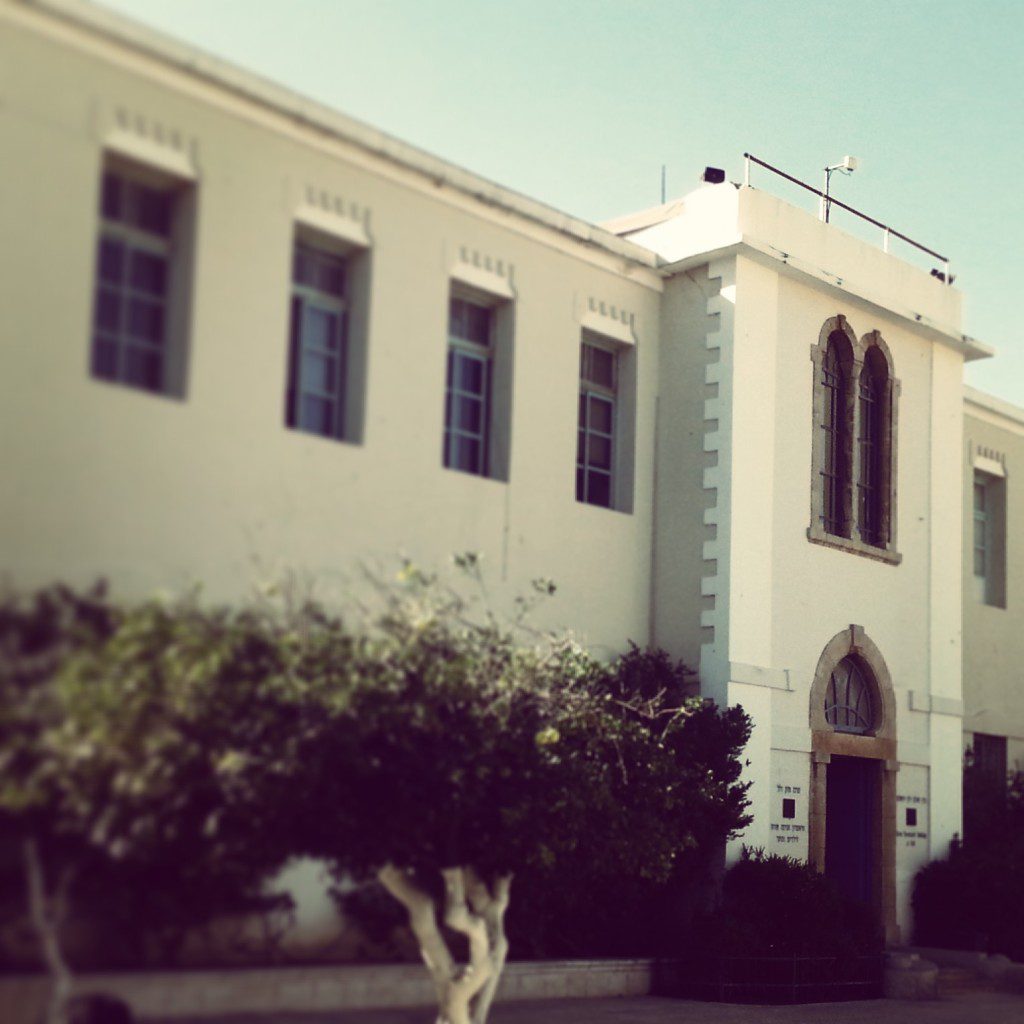
Finally arriving at Neve Tzedek, we learned more about its development, although at the time they considered themselves part of North Jaffa rather than anything else. The reasons for moving were practical rather than ideological, although many early Zionist ideologues, thinkers and writers ended up living there including Yosef Haim Brenner, Agnon, Devorah Baron and Rav Kook.
Achuzat Bayit and the founding of Tel Aviv
The Shalom Tower
We continued towards Rothschild Boulevard and entered the Shalom Tower, built on the previous site of the Herzilya Gymnasium, the first Hebrew school. I have been in the tower a few times but never noticed the large exhibitions about the history of Tel Aviv.
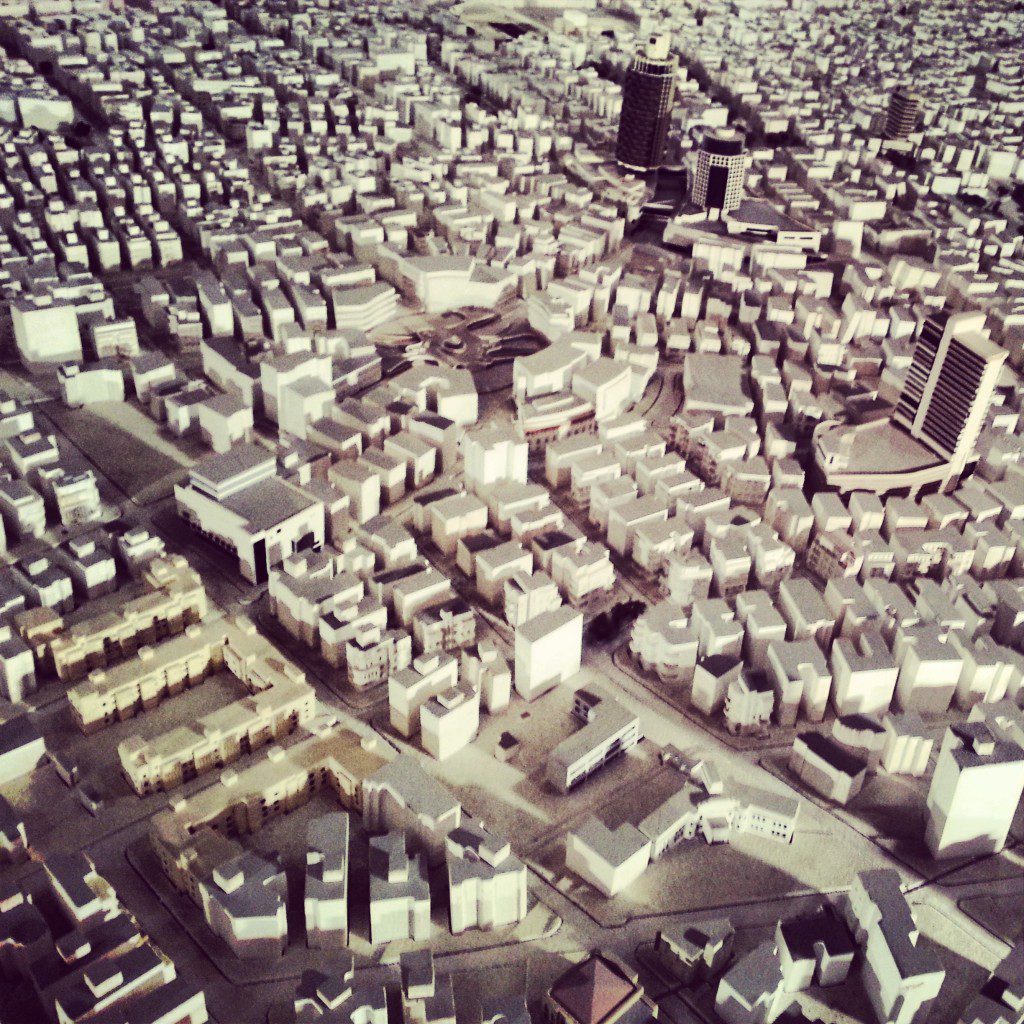
Here we learned about a small group of people, led by Akiva Weiss, who left Jaffa, and went even beyond the new neighbourhoods of Neve Tzedek, Neve Shalom and the Yemenite Quarter to establish a new, Hebrew speaking settlement called Achuzat Bayit. The small group of around 60 families were ideologues, looking to build a new modern city. They had wide roads, running water in their homes, an electric street lamp and spacious gardens. The city was soon renamed Tel Aviv and over time became the cultural and economic centre for the Zionist movement.
Eclectic style and the White City
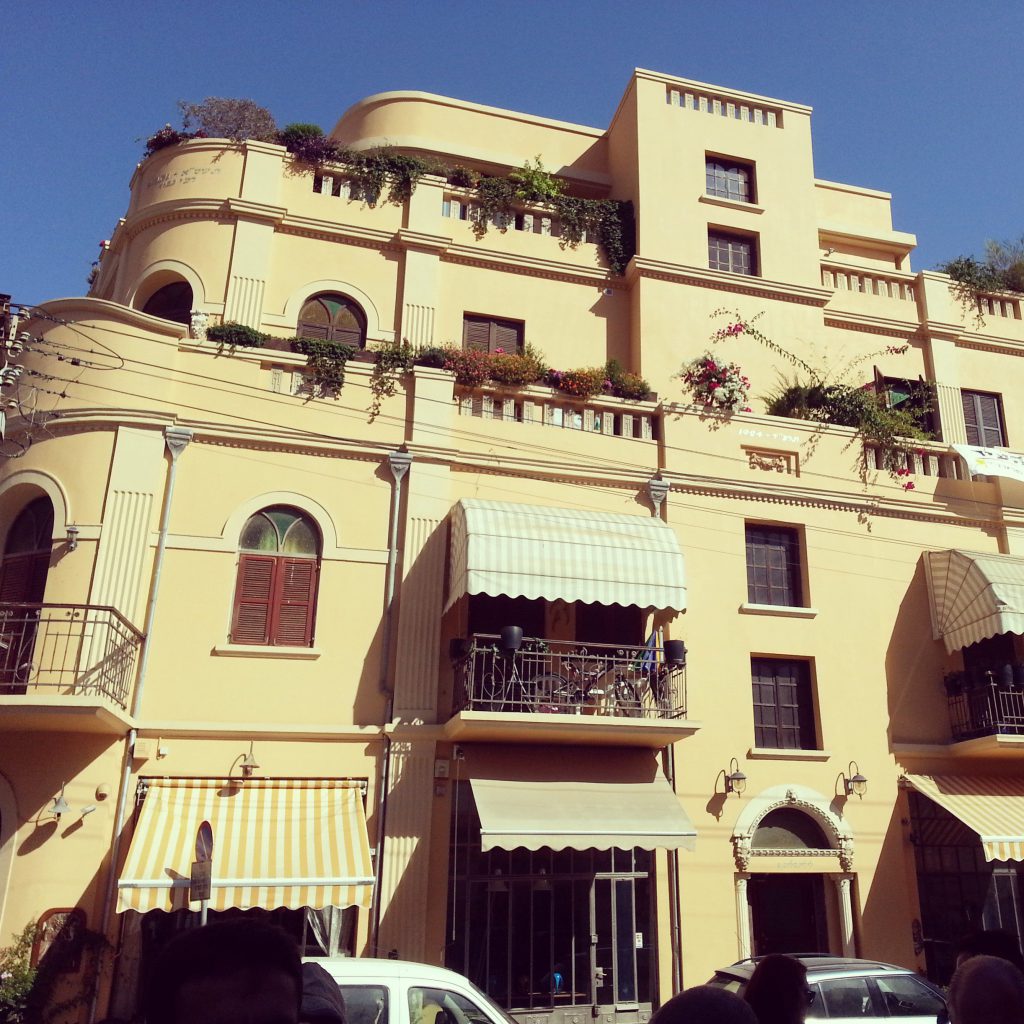
There was an exhibition on architecture and we learned about the ‘eclectic’ style that was used in the 1920s and the evolution into the ‘international modernist’ style, which is mostly known now as Bauhaus architecture. In fact, we learned, Bauhaus was a design school, influenced by the international modernist movement, which taught architecture among other things. When Hitler closed it down several of its former students moved to Tel Aviv, influencing the buildings.
UNESCO deemed this worthy of making the city a world heritage site, known as the White City; the international modernist movement with its clean, functional design marked an important turning point in the history of architecture, but in most cities where you can find it exemplified there are one or two buildings dotted around. As Tel Aviv was a new city, it is the only place where this architecture really is everywhere.
Independence Hall and Rothschild Boulevard
We headed back to Rothschild and the former home of the first mayor, Meir Dizengoff. In 1948 this was the site of the Israeli declaration of Independence, and it is now a museum commemorating that momentous event.
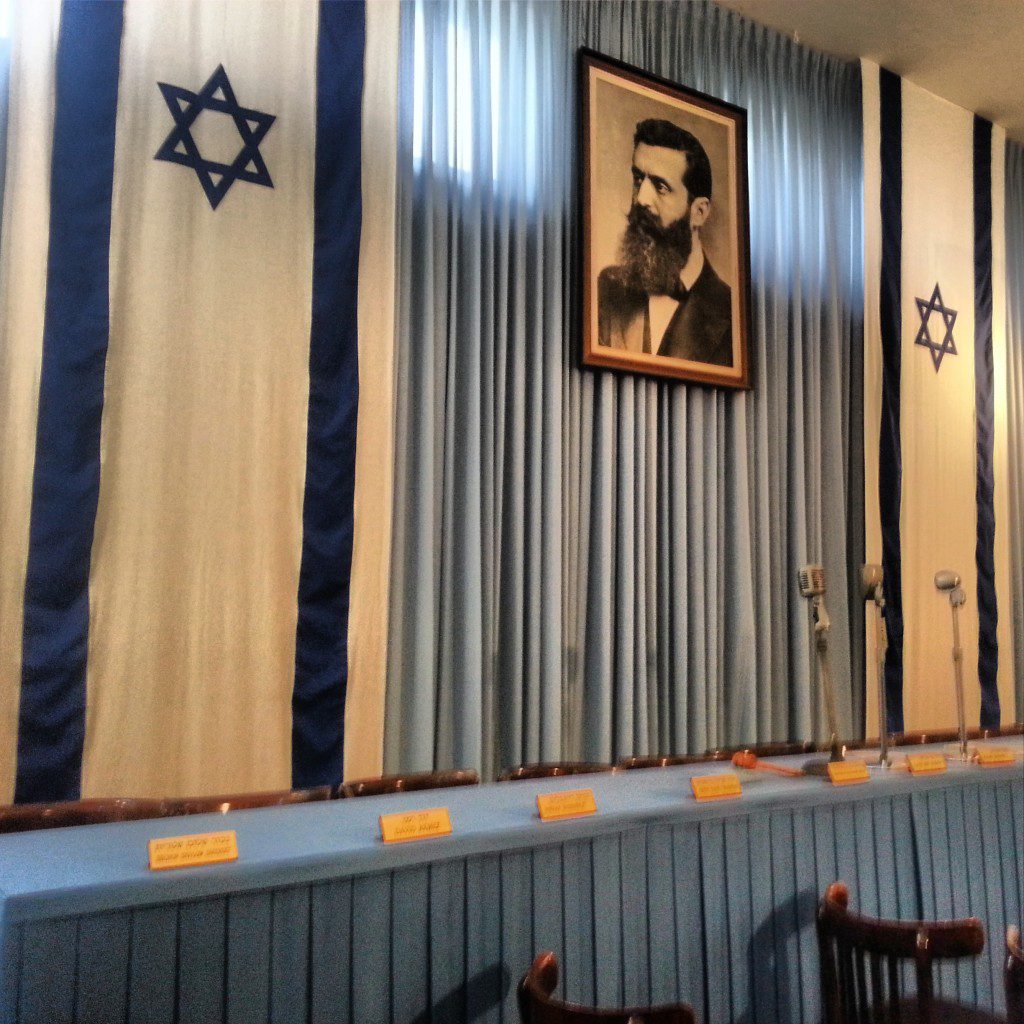
I have been to the Independence Hall a few times and it never fails to get the heart racing. The story leading up to the declaration is, frankly, incredible; both in terms of the long term story and the immediate events of the declaration (for example, the guy with the declaration couldn’t get a taxi to the event and had to flag down passing cars to arrive on time). I love going back there, sitting in the hall and listening to the recording of the declaration.
Bialik Street, Gan Meir and the Trumpeldor cemetery
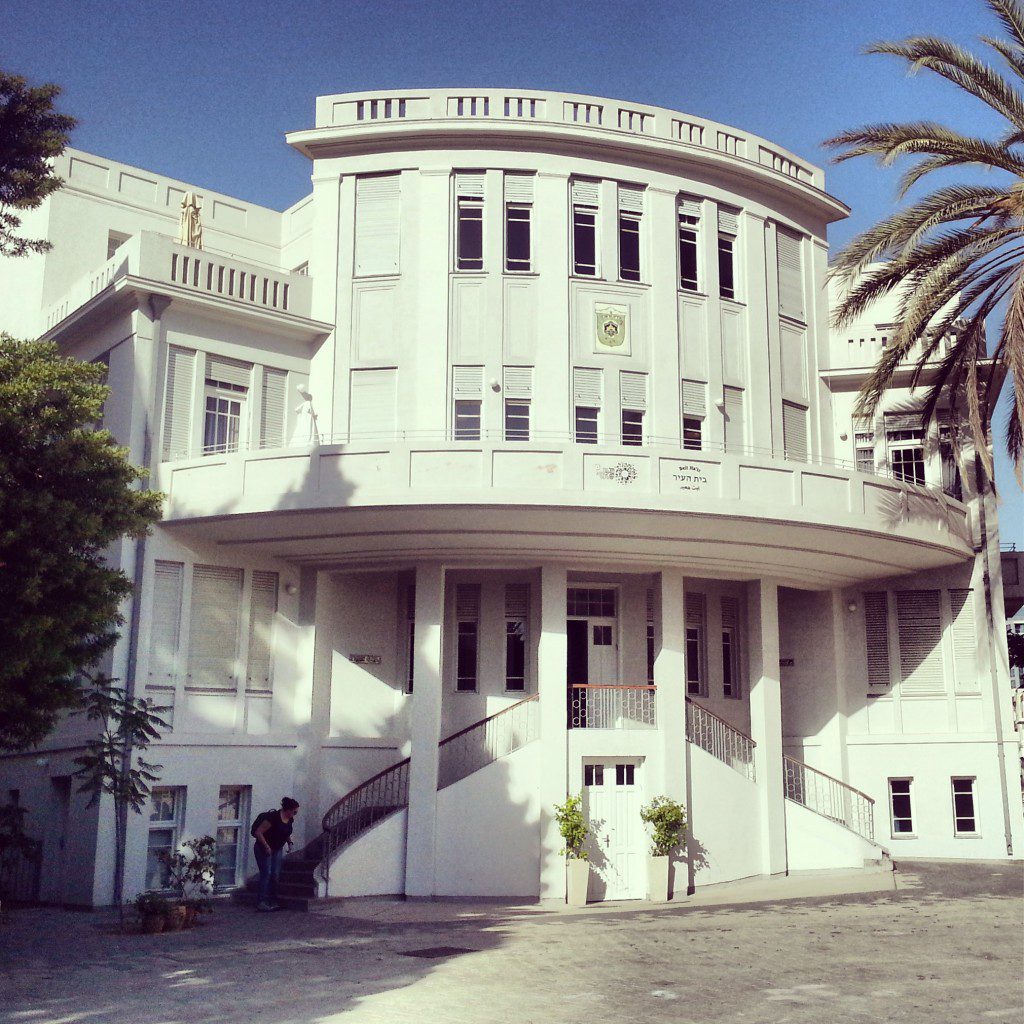
We returned to Rothschild and wandered down the boulevard, our guide pointing out various buildings of historical interest. We then walked up to Bialik St, passing the former homes of the famous artist Rubin and the national poet Bialik, whose home gives the street and the square at its end their name.
After a brief stop in Gan Meir, we walked to the Trumpeldor cemetery, built at the time by Chelouche of Neve Tzedek fame at a suitably distant location from people’s homes – he was sure the houses would never reach this far….now it is bang in the city centre!
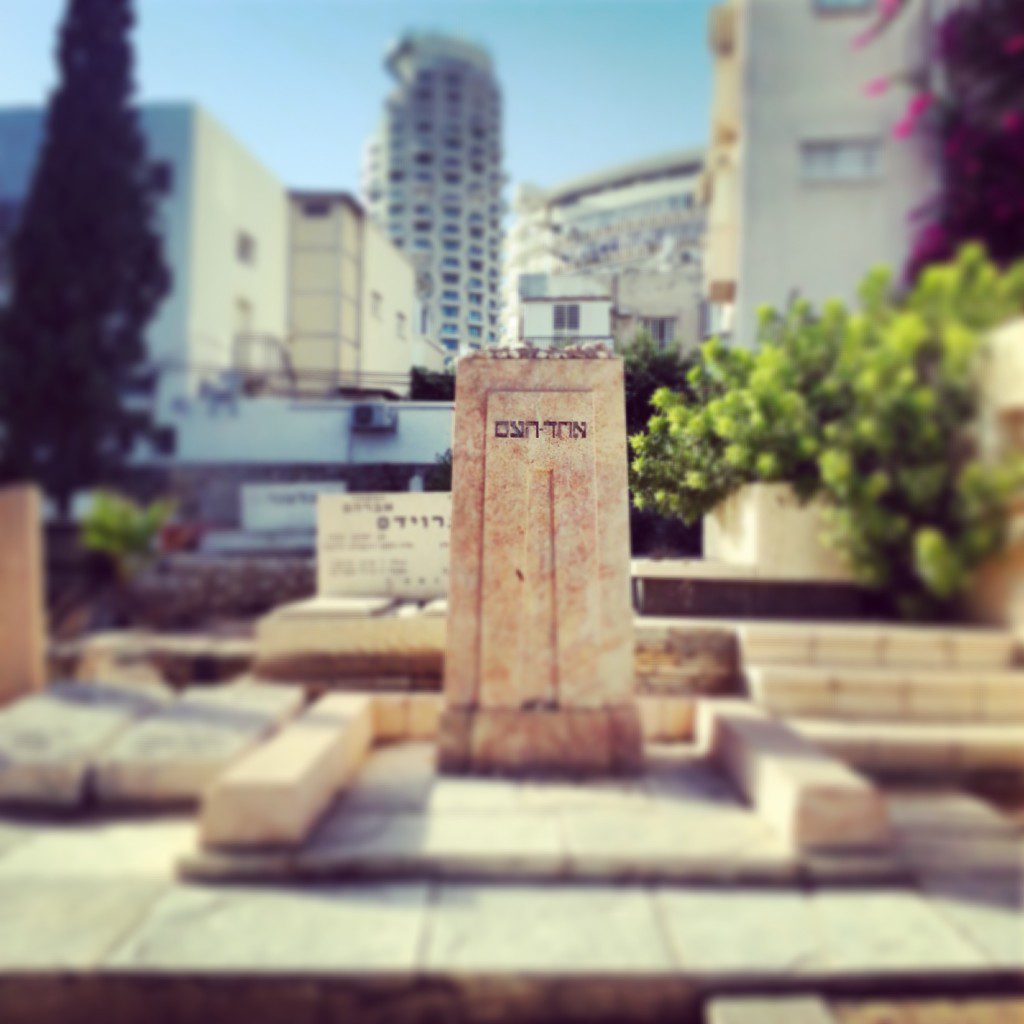
The cemetery contains the final resting places many of the great names of Zionist history: writers and thinkers such as Brenner, Ahad Haam, Bialik, Nordau, Baron; activists such as Sharett, Dizengoff, Golomb, Dov Hoz. People are still buried here and we saw the grave of the great singer Shoshana Damari. She sadly died penniless but her artistic friends clubbed together to buy her a plot in this cemetery.
We heard the stories of many of these founding fathers/mothers of the Israeli state, together with the sad story of the riots in 1920-1 in Jaffa which led to several deaths – some were buried in a mass grave; Brenner was also killed in the riots and can be seen separately.
The Opera Towers and the first Knesset
Our final stop of the day was at the Opera Towers, at the end of Allenby. I was surprised to learn that here was the site of the first Knesset (the Israeli parliament) before Ben Gurion moved it to Jerusalem. If you enter the shopping centre, you can see a picture there of the Knesset in session.
A great time was had getting to know my home city and now I have plenty of information with which to entertain family and friends on their visits!

Leave a comment