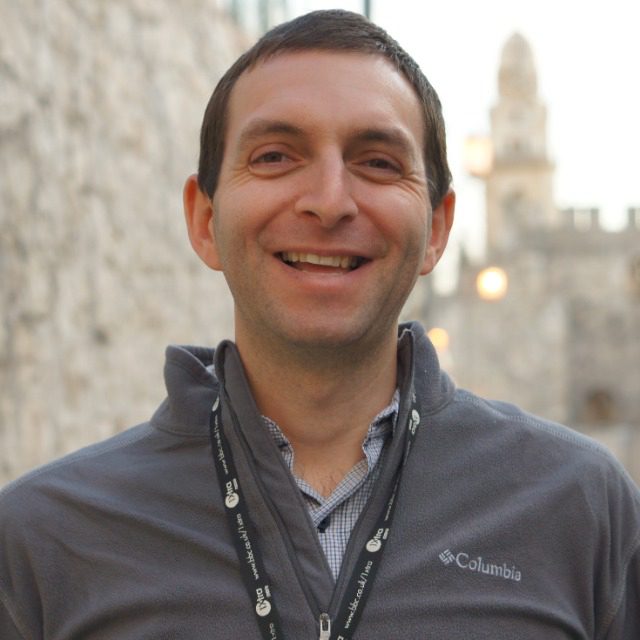
- What stayed with me wasn’t just the food, it was the people behind it.
- We tasted hand-bottled olives, gin from Israel’s first distillery, hummus named for a late father.
- From a cafe inside a rehab centre to an artisan bakery, every stop was a delicious surprise.
In the winter of 2018 I took Israel’s only culinary tourism course for licensed guides, an official Ministry of Tourism certification. The fourth session was the longest. We left Tel Aviv at seven in the morning for the Western Galilee, the strip of hills and coast between Akko and the Lebanese border.
Our guide for the day was Amnon Gofer, who runs tours for the region’s own tourism association and knows it about as well as anyone can.
He set the day up on the drive north with a great line. “Behind every dish there’s a story”.
A region that had to organise itself
Most tourists visiting Israel don’t come to the Western Galilee for a culinary experience. They go to Tel Aviv for the restaurants and Jerusalem for the markets, and the Galilee gets a viewpoint and a drive-through.
Part of why that’s changing is a woman called Michal Shiloach, who runs the Western Galilee tourism association. Hagit Avron, who leads the course, told us her story on the way up, including that her grandfather was Reuven Shiloah, the first head of the Mossad!
She came from outside the tourism industry, having been chief executive of the Givatayim Theatre. When the association hired her it barely had a budget.
But then the JNF donated a new visitor centre, in the heart of the Old City of Akko, inside the market. And Michal used that as a launchpad. She turned it into what Hagit called a gateway to the whole Western Galilee, deliberately promoting the whole region rather than just the city it sits in.
Amnon is her partner in the association, which is why he was joining us today.
A restaurant with a greater purpose
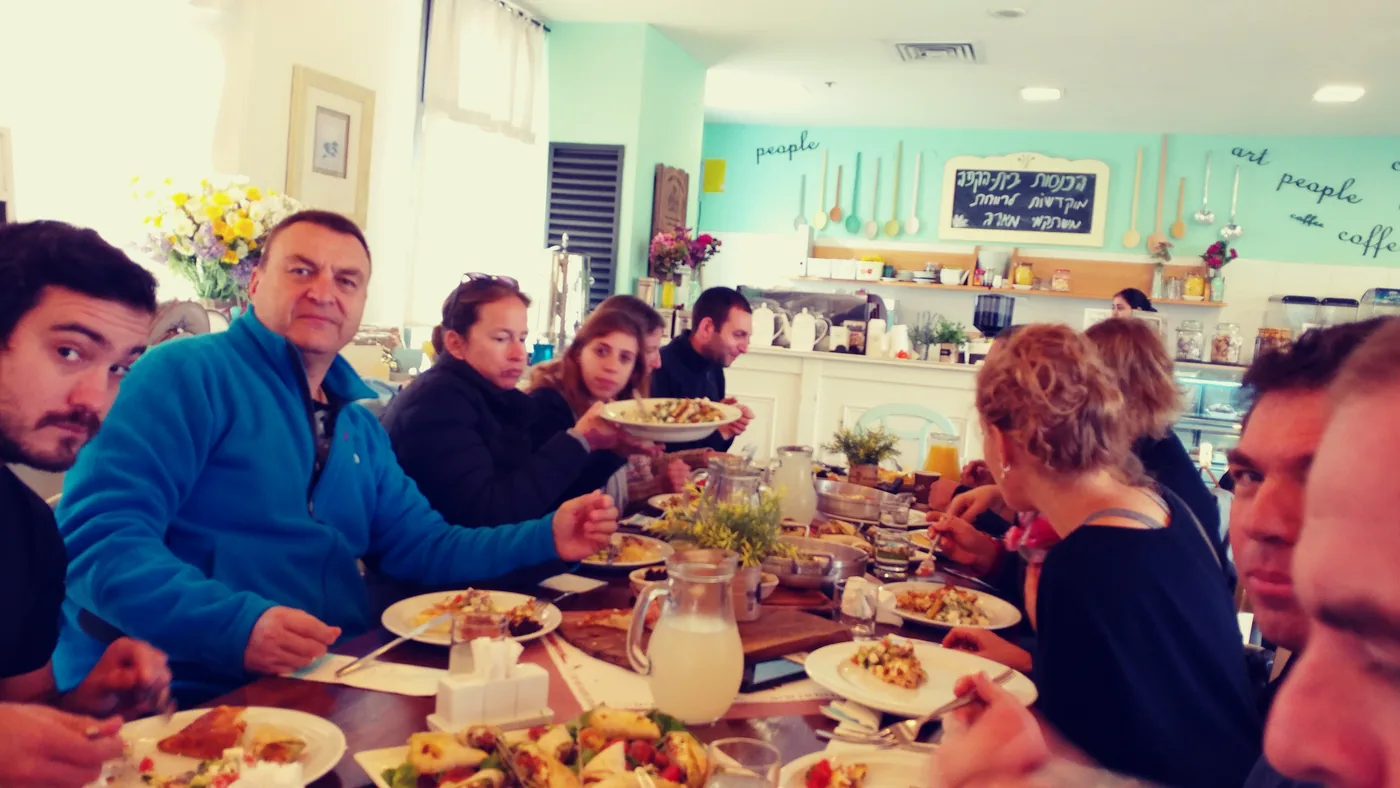
The first stop was Marag, up in the hill town of Kfar Vradim. It’s a restaurant that serves a great purpose.
That’s because it’s a rehabilitation centre. People with disabilities work in the kitchen and in the art studios beside it, and the cafe and gallery exist to give them purpose and also for them to be able to interact with the guests.
The hall it all happens in is the only events hall in Kfar Vradim, so the village holds its weddings and bar mitzvahs there. It’s also the residents’ dining room. The same room changes character several times a day.
Kineret, who manages the cafe, explained the thing that actually turned the business around. For years they had done an open Friday-morning breakfast buffet. Then they added a theme: foods of nations and cultures, a different one each Friday.
They ran Middle Eastern, Greek, Italian and Spanish through the first half of 2017, and it lifted both the takings and the audience. The week we visited they were doing French and Asian. Fifty-five shekels, drinks included; it’s an absolute bargain!
Hagit made an interesting point about Marag later. She knows a lot of social businesses, and what’s different here is that nothing about the place trades on pity.
It doesn’t ask you to come because they need your help. It presents itself as a good cafe with workshops attached that happens to do something worthwhile, and that’s what makes it a success, as well as being a great experience. Everything we tasted was full of flavour and Amnon had to urge us to pace ourselves so we’d have space for what was coming later!
Madeleine’s olives
From there we drove to Mi’ilya, a Greek-Catholic village built around a Crusader castle, and to Madeleine’s house.
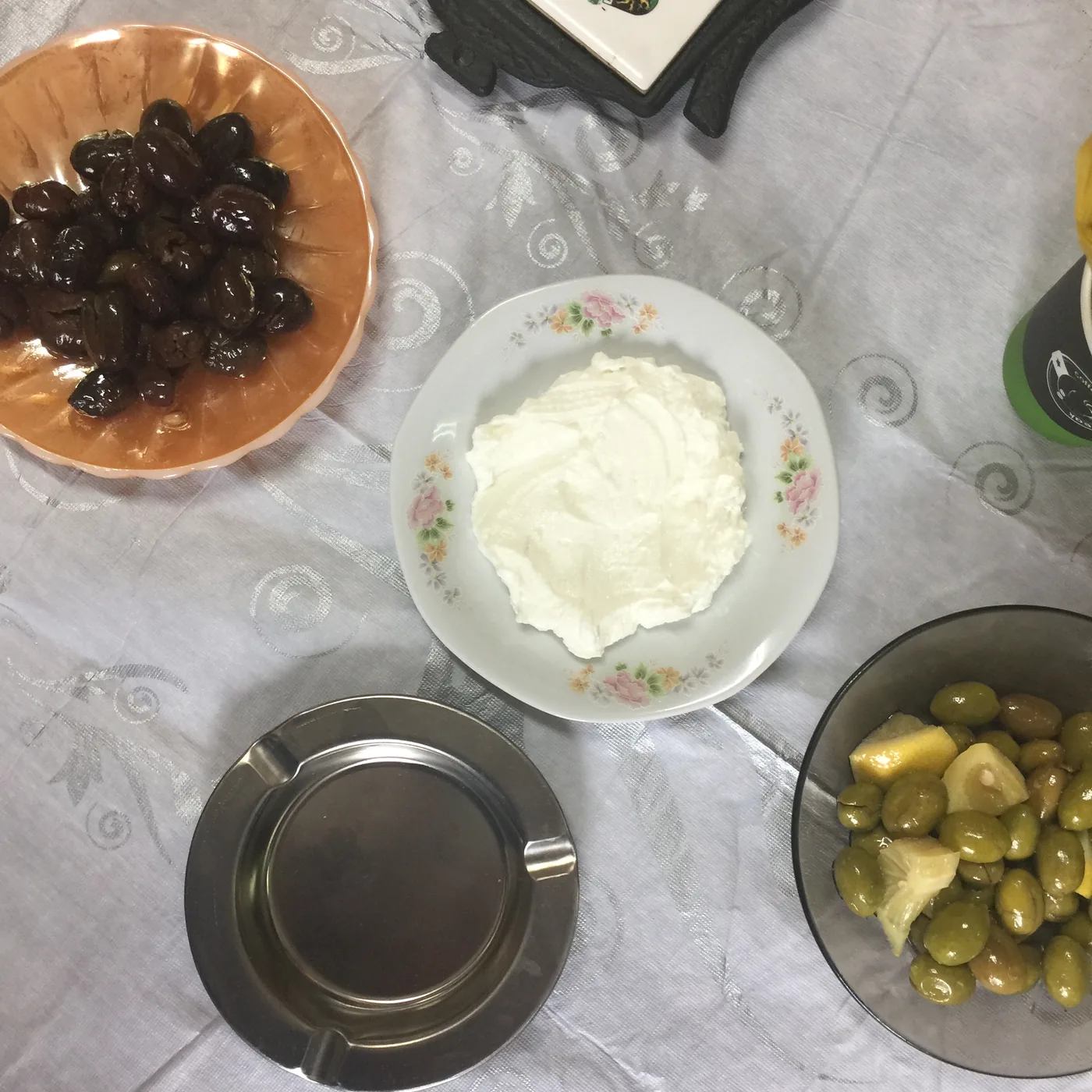
Her husband died eight years previously and she’d thrown herself into cooking. She’d laid a table with her own olives, labneh, vine leaves, warm bread and coffee.
The olives are what she’s known for. The black ones sit about three months in brine to pull the bitterness out, and she bottles them by hand, one at a time.
Amnon used them to teach us about the herb she puts on top. It’s rue, pigam in Hebrew, and you don’t make black olives here without it.
He explained: it’s a plant credited with driving off evil spirits. In Safed people drink it. Arab families put a sprig in a pouch and fix it above the doorway for a newly married couple on their first night, for luck or against the evil eye.
In Spain mothers scatter the leaves for their daughters. Yemenite families hang a sprig over a newborn’s pram. Maimonides was fond of it and prescribed it for earache.
I’ll confess, I’m not the biggest fan of olives (my son is obsessed with them though!) but everyone assured me these were delicious. I can attest that the freshly-made bread dipped in labneh, together with the vine leaves, was fantastic.
The logistics manager who became a baker
We continued to Nahariya, a northern coastal town. Here our destination was Brioche, a boutique bakery, and its owner has the best career-change story of the day.
Hagit Stern did a first degree in international relations and a master’s in public administration, then spent years as a logistics manager. Her last salaried job was running an assembly logistics line for Ford in Ghent.
But she’d had enough. So she quit to follow her dream. A year in France, six months in Germany learning French baking, another year training in Israel, and she came home and opened a bakery on a family plot that used to be a vineyard.
She now runs it as much as a workshop as a bakery, and she gave us a bread lesson while we were there.
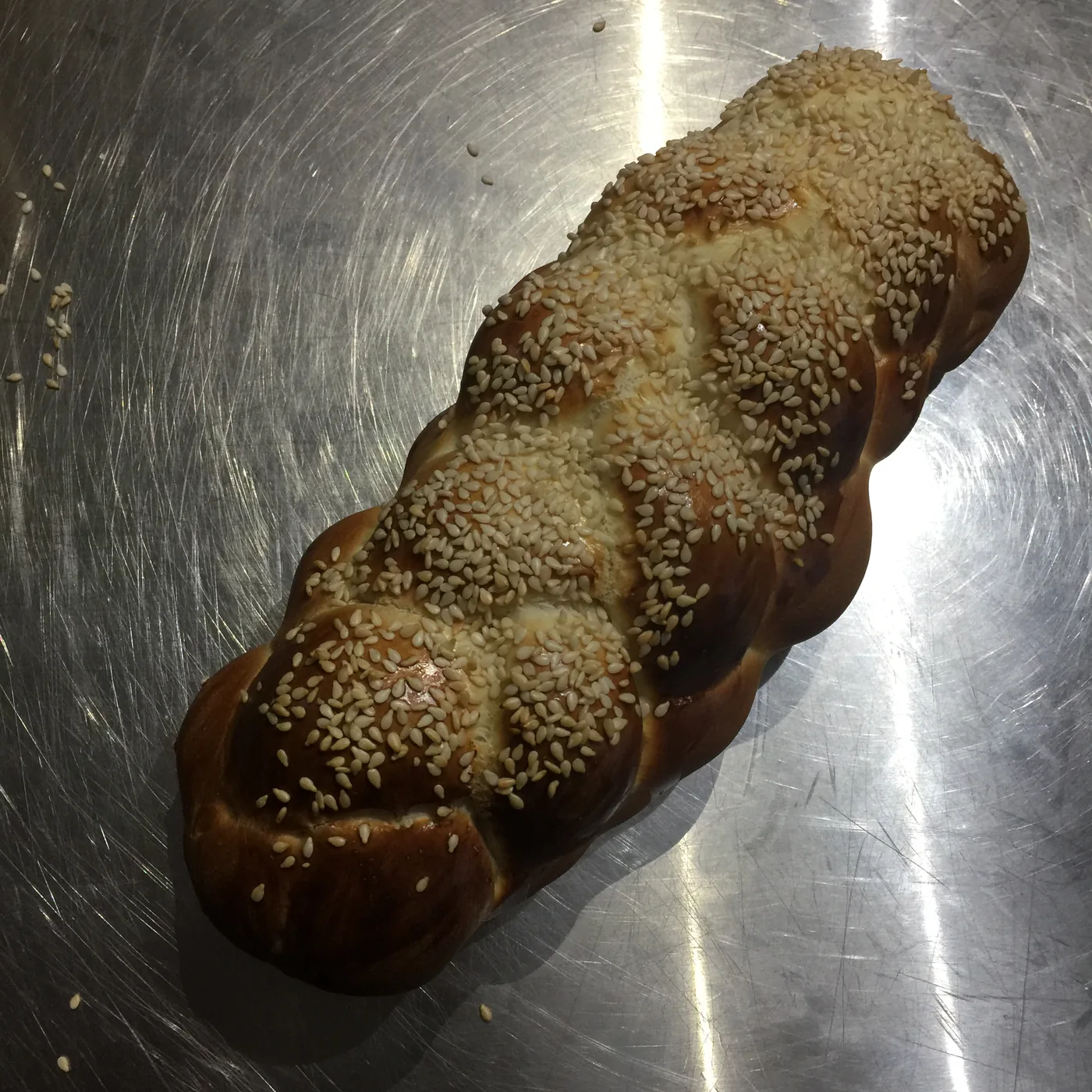
She is quite a purist when it comes to bread. Four ingredients: flour, water, salt and a raising agent, either yeast or a starter. Anything else is a different product with a different name.
She led us in a bread-making workshop, and as Shabbat was approaching, we made challah. I even managed to plait it in a way that didn’t look too horrendous, and it tasted pretty good too!
The country’s first boutique distillery
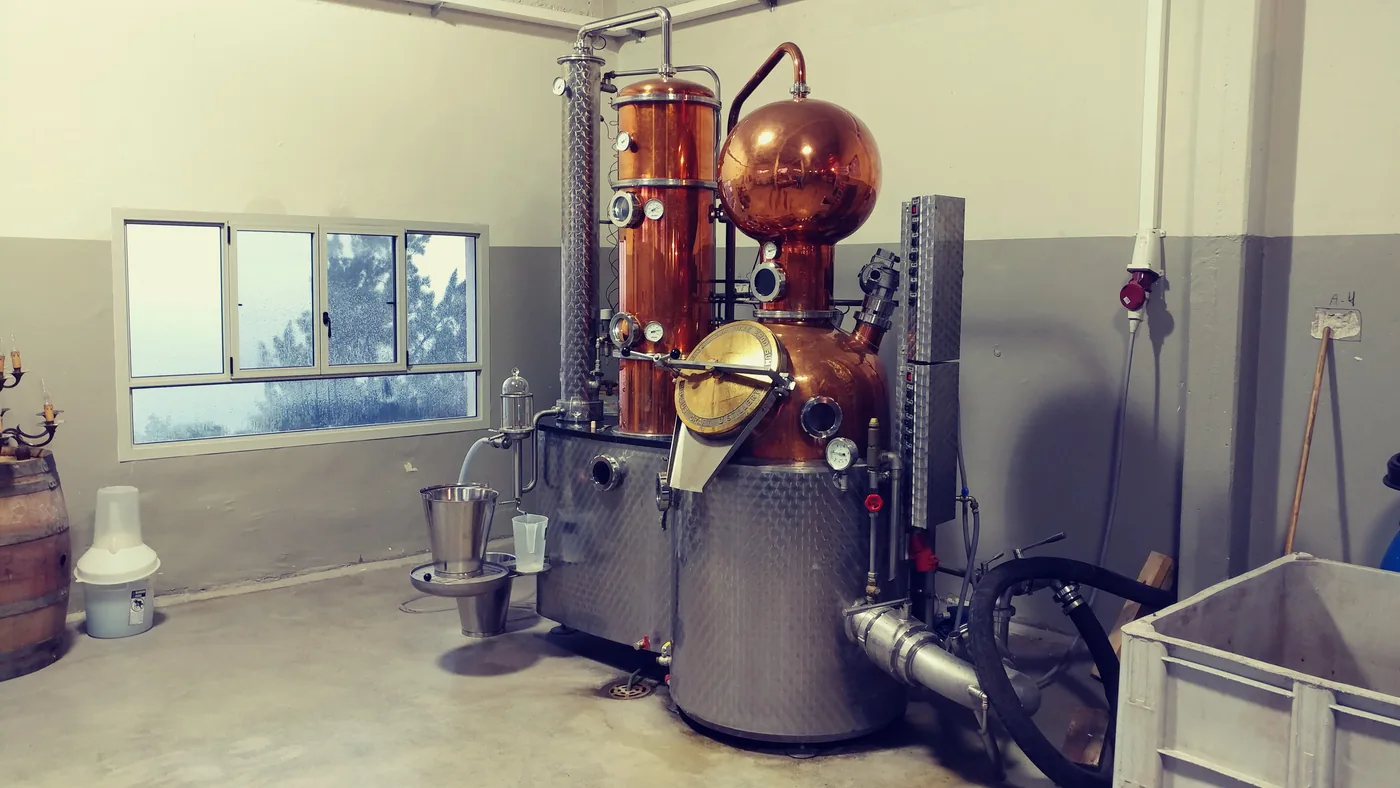
Next we went up to Kibbutz Hanita, right next to the Lebanese border, to Julius. Founded by Yuval in 2008, it was the first boutique distillery in Israel, and for a long time the only one.
It had moved into an abandoned metal factory on the kibbutz a few months before we came, and he’d done the building up himself. It still looked like a work in progress!
His flagship product is a craft gin. Yuval told us that traditionally a gin was named after the port nearest the distillery, because gin travelled as ships’ supplies for the British navy: London gin, Plymouth gin.
So his is called Akko, after the port down the coast, and the bottle reads Akko Wild Gin of Galilee. Akko has different spellings in different languages, so he considered Acre and Akka, but went with the Hebrew spelling on the grounds that it’s the oldest recorded form of the name.
The juniper comes off Mount Meron, a little further east in the Galilee, near Tzfat. He also distils clementines, which he thinks makes him one of very few distilleries anywhere doing it.
Yuval also makes schnapps in the Black Forest style, grappa and eau de vie. It’s all only made with local Galilee ingredients: grapes, stone fruit, citrus.
He ferments the fruit, distils it up to ninety per cent, then brings it down with water or puts it in barrels. No sugar, no flavourings, no extracts. He was firm about that.
The whole place runs about as green as a distillery can. The water is recycled and there are solar panels over the buildings, so on a sunny day the distilling runs on its own electricity.
This was a slightly dangerous stop because after the tasting some of the group definitely looked a little wobbly on the way back to the bus! We kept the driver well away from the factory.
The hummus place named for a father who never saw it
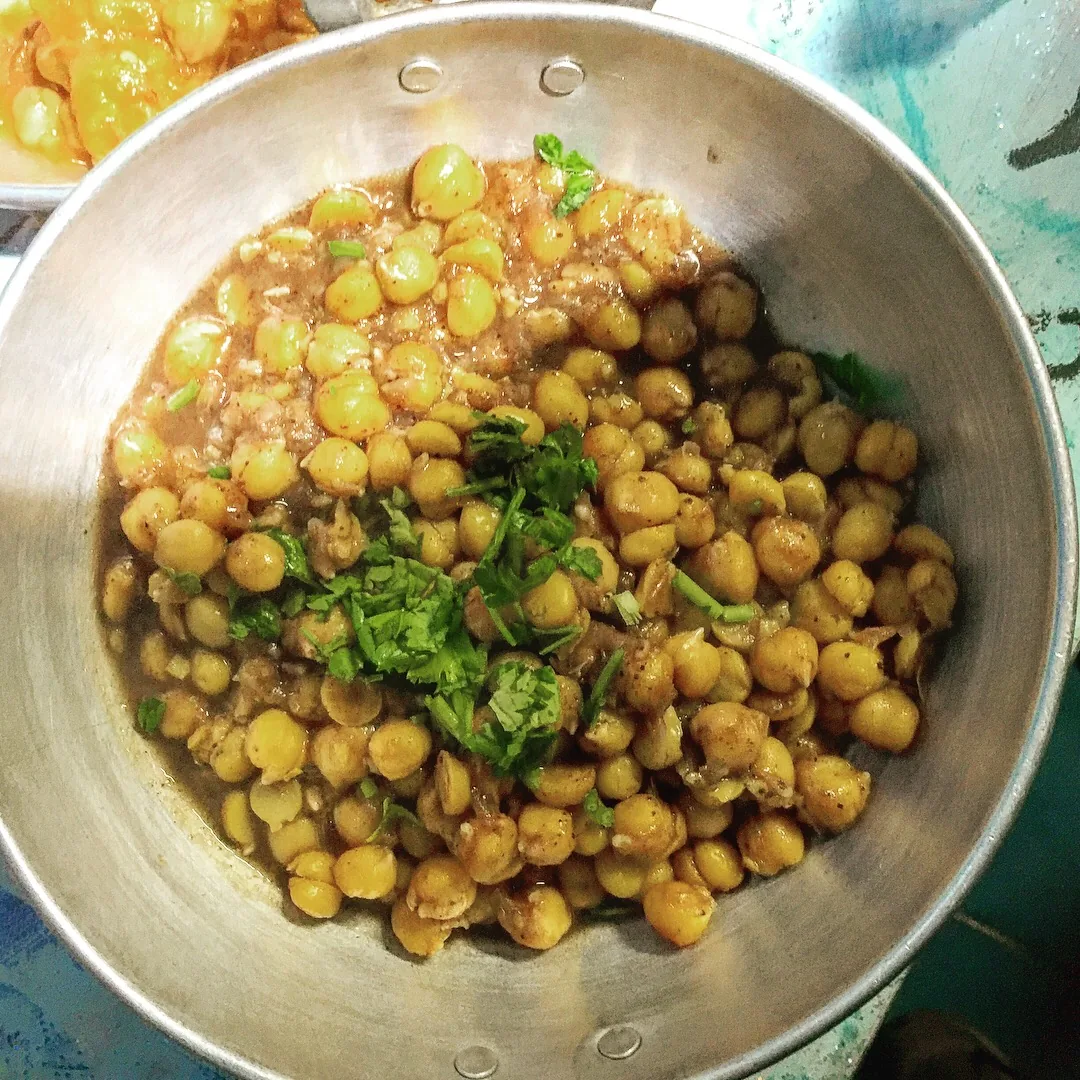
Our final destination was Akko itself. Our first stop there was at Hummus Al Abed Abu Hamid.
Arin Abu Hamid grew up in this building. Her mother had a souvenir shop in it. Her father had a restaurant nearby called the Migdalor, the lighthouse, and before that, in 1967, one called the Western Galilee. She was in the kitchen from the age of about eight, starting on the potatoes.
She didn’t go into food. She studied criminology and sociology at the Western Galilee College and went to work with youth at risk and broken families, which is what she’d always been drawn to.
In 1999 her father said he wasn’t feeling well and asked her to take him to hospital. It turned out he’d had a stroke, and his career ended that day. He lived another seventeen years without much quality of life, and she carried the family through it financially.
Eventually she told him she was leaving social work and turning the souvenir shop into a hummus restaurant. He argued with her. A shop is simple, he said, nothing spoils, no staff.
He’d had enough of restaurants. Three months later he went into intensive care and died. He never saw it open.
She opened it a year afterwards and named it after him. People told her the name was hard to remember. She said it was her gift to him, for all the years they had together.
Akko is full of hummus, so she differentiates by serving the food of her parents’ table: Fatteh, pita and yoghurt with garlic, chickpeas, almonds and butter, the dish they eat in Ramadan when the fast breaks. Musaqa’a, chickpeas with onion and aubergine. Kubbeh in yoghurt and kubbeh in tahini. Tartor, fish cooked with onion and tahini. Sayyadiyeh, fish with onion, rice and turmeric.
She pointed out something about her menu: the ingredients are cheap. These are dishes built out of vegetables and pulses by people who didn’t have money, and the skill went into making them worth eating.
Her father used to tell her that wherever they went, out of everything she saw, what she would remember was the food. That’s what stays with you from a place, he said.
I can tell you this place definitely stayed with me. I was genuinely moved by Arin’s story and her passion. And wow, the food was something special. I’ve eaten a lot of hummus in my time but here were really unique dishes, still using chickpeas, but in very different ways. I’ve taken clients to eat with Arin several times since and it’s always been a highlight.
Knafeh, and what the day was actually about
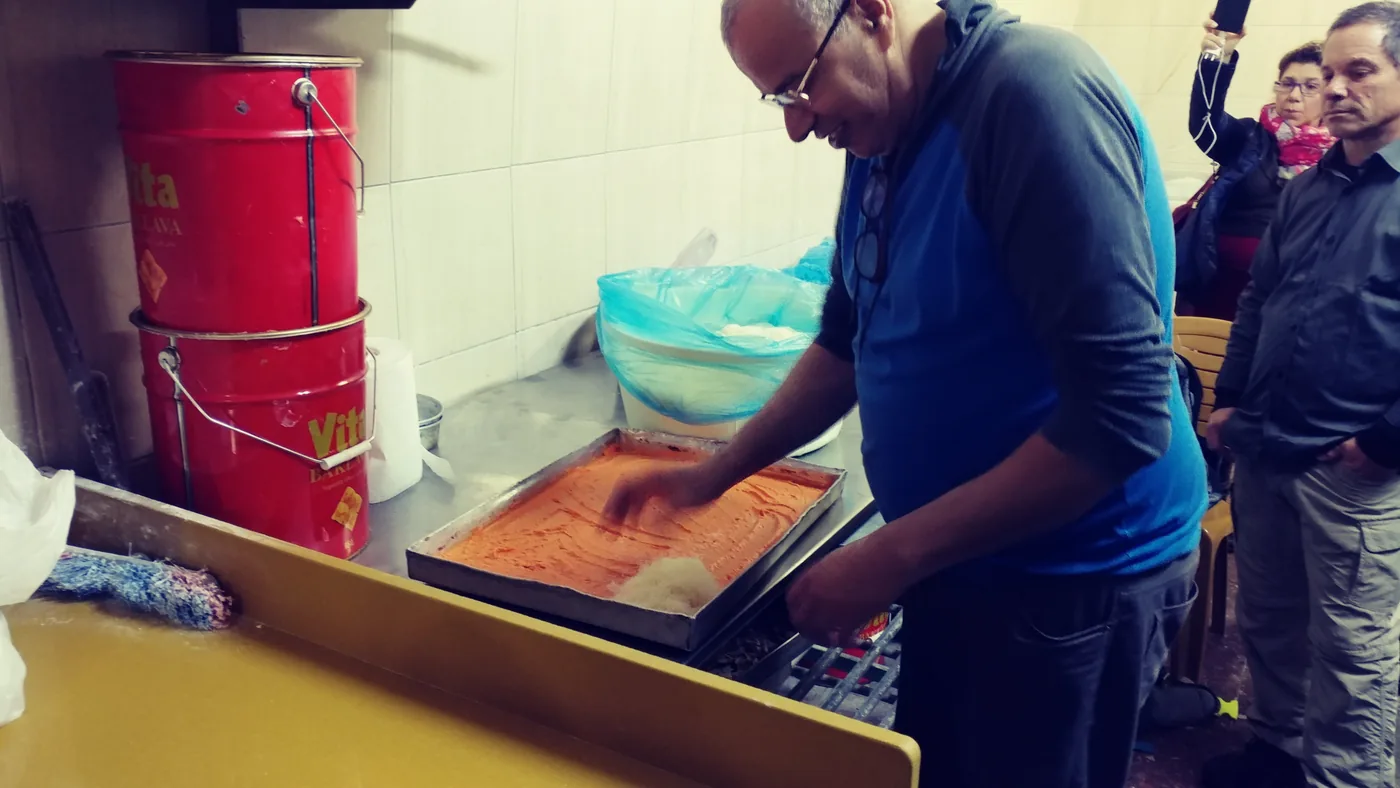
The last was Nazareth’s Sweets, in the market, for knafeh: warm cheese under shredded kadaif, soaked in syrup. It’s owned by the Kilani family who moved to Akko from Nazareth, and they do everything themselves in house.
I’m a big fan of knafeh but had no idea how it was prepared: upside down! As we got a demonstration in how it was prepared, we learned that a key ingredient was jibneh cooked with semneh, a homemade clarified butter, with no colouring.
The machine that shreds the kadaif into fine hair takes up close to half a room, and watching it work was mesmerising. Tasting the results was even better! Sadly, Nazareth’s Sweets has since closed its doors.
It was dark by the time we turned south, fourteen hours after we’d set out. It was a fantastic day, filled with fantastic food and truly inspiring stories. I really think that the passion everyone had for their cooking made everything taste that much better.
That was the last of the long field days. The final session was back in Tel Aviv, in the Carmel Market.
If a day eating your way across the Western Galilee sounds like your kind of thing, it’s exactly the sort of day I can build into a trip. You can see where it fits in my Israel: a culinary melting pot itinerary.
Leave a comment