
Click here to read about Day 2 or Day 3 of the campus
Time for the final campus of the course, one which I unfortunately missed last year due to sickness, but was eager to attend now – three days of touring in the area of the Negev desert.
The Negev, in the south of the country, consists of around 55% of Israel’s territory, but due to its barren nature and its relative inaccessibility, it is much less frequently visited than the tourist hot spots of Jerusalem, Tel Aviv, the Judean Desert & the Galilee.
Indeed, there is much less history here than in the north of the country, but there are a great deal of stunning landscapes, fascinating geological features, and also the odd archaeological site for the historians among us.
Quick facts & guide tips
| Where | Northeast Negev, southern Israel; between Yerucham and the Scorpions’ Ascent (Maale Akrabim) |
|---|---|
| Key sites | Yerucham Park and dam, the Large Makhtesh (HaMakhtesh HaGadol) with its fossilised trees, Ein Yorkeam spring, the Scorpions’ Ascent lookout |
| Period | Geological formations from many tens of millions of years ago; Roman-period ruins at Ein Yorkeam; mid-20th-century Palmach and Israeli history |
| Best for | Full-day desert exploration combining geology, scenery and modern history; pairs well with Mitzpe Ramon as an overnight base |
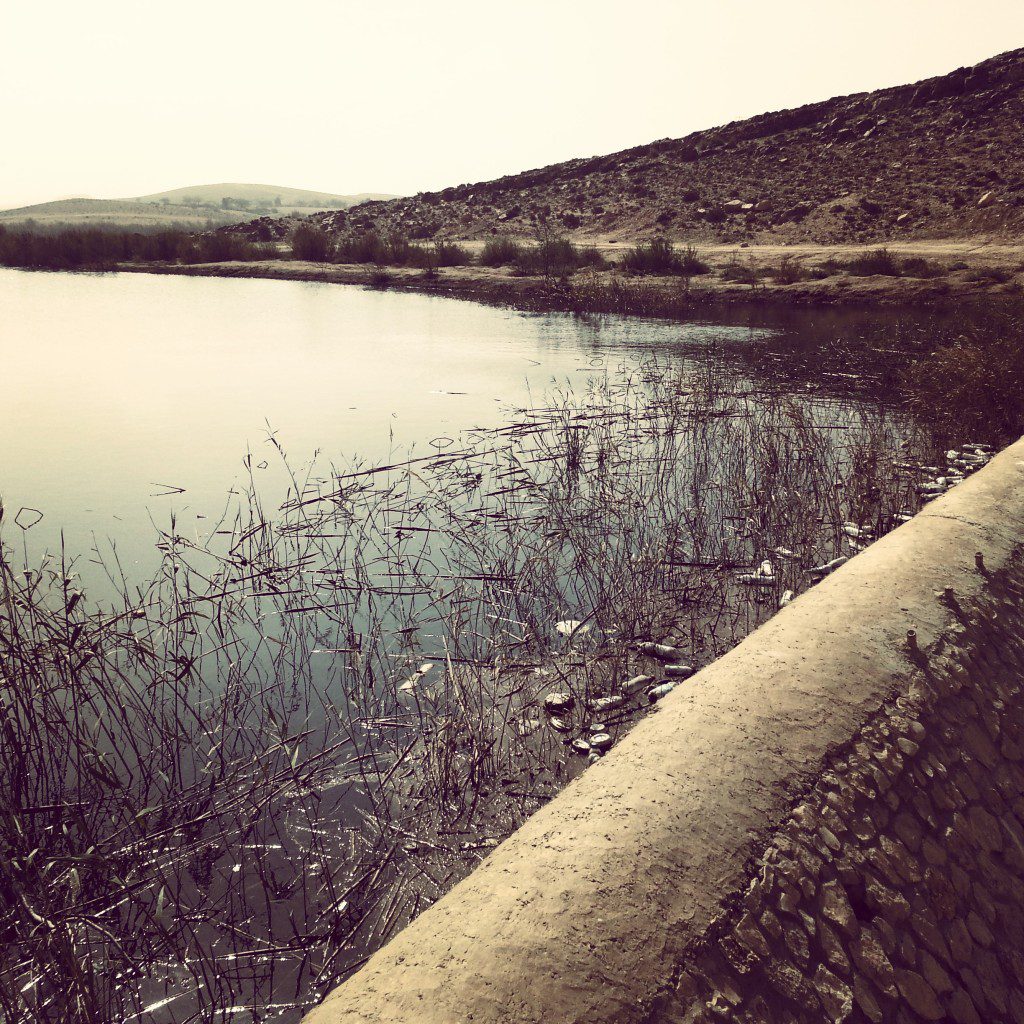
Yerucham Park
Our first day was dedicated to the area of the peaks of the Negev mountains in the north east of the region. Our first stop was in the Yerucham Park. We visited the ancient well and then the more modern dam and man-made lake, learning about the modern history of the area and the struggles of Yerucham to break away from its development-town status. Unemployment is a major problem in the Negev in general and the government actively encourages business to relocate to the area in the hope of encouraging more people to move and improve its status.
The Large Makhtesh
From Yerucham, we travelled east to the area of the ‘Large’ Makhtesh. A makhtesh is an unusual type of crater, formed through a lengthy process of erosion and weathering. There are only around 8 in the world and 5 of them are in the Negev (others are in the surrounding area – the Sinai and in Jordan) and their unique nature means the word Makhtesh has now entered international geological parlance as the word to describe this phenomena.

Enjoying a stunning view from Mt Avnon over the ‘Large’ Makhtesh (in Hebrew: HaMakhtesh HaGadol), we learned about the theories about how these craters developed.
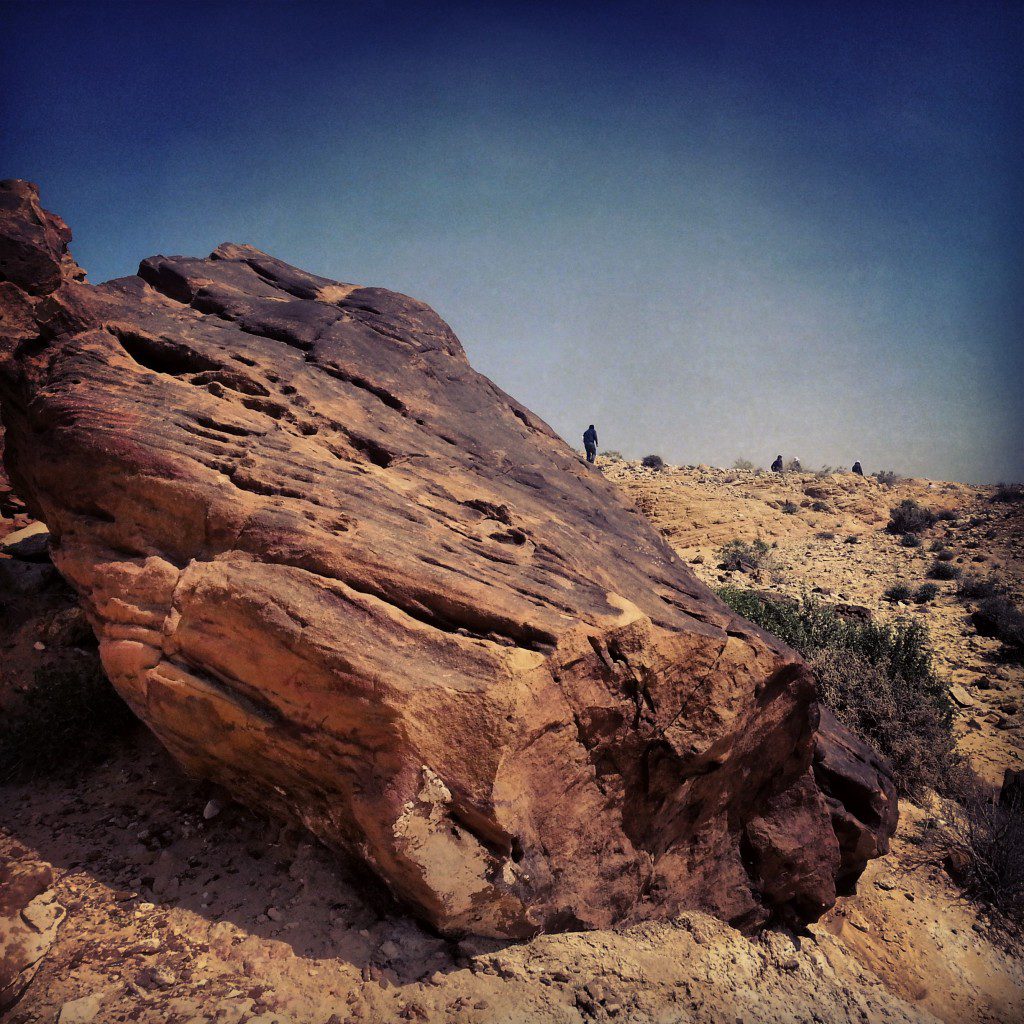
Descending into the makhtesh, we stopped to sit on some unusually shaped and coloured rocks, only to learn that these were in fact fossilised (or petrified) tree trunks. The huge size of these rocks are testament to a completely different climate in the area many tens of millions of years ago; indeed the large amount of the campus that was dedicated to geology helped put into perspective the tiny amount of time man has impacted the planet. One analogy was that if all of the earth’s history was represented by a calendar year, the time man has existed amounts to the final hour!
Ein Yorkeam and the Scorpions’ Ascent
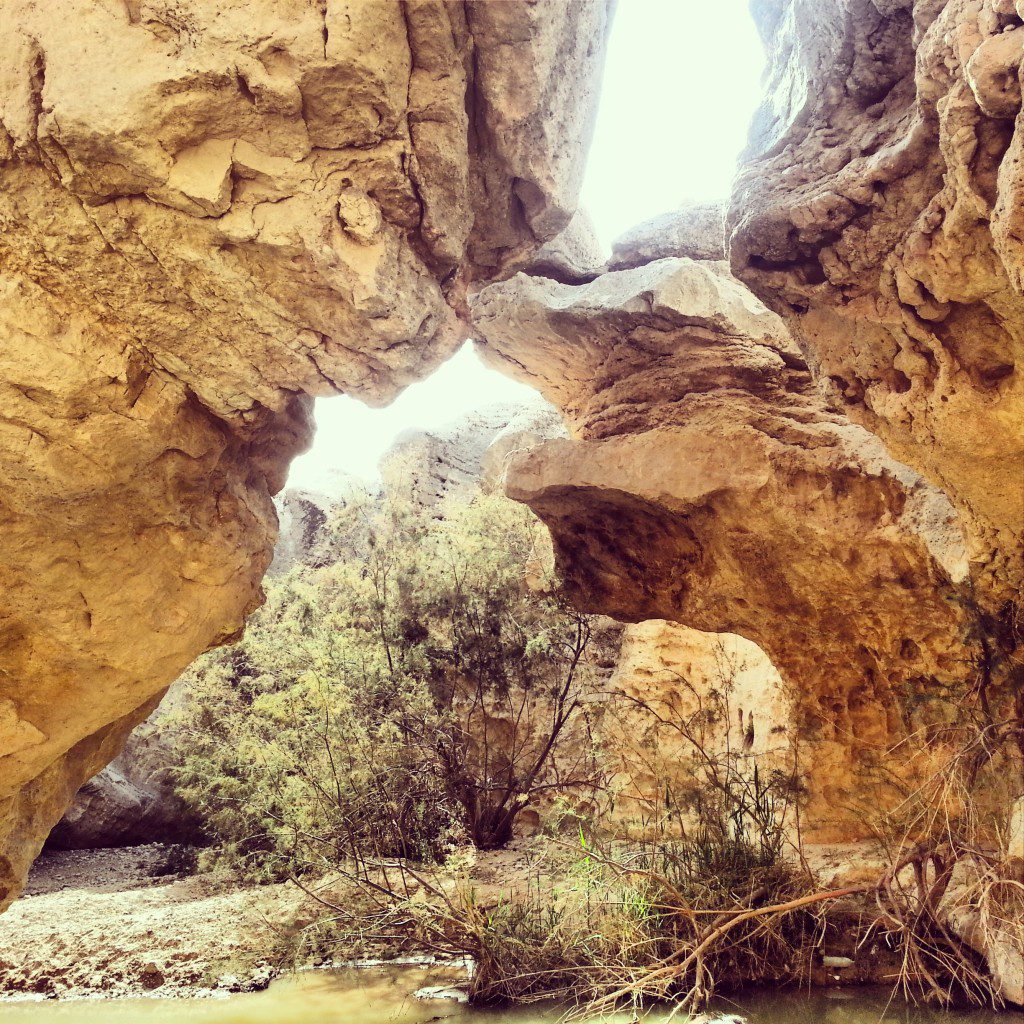
We continued our journey through the crater, noting the different coloured sand layers and the rugged scenery. Exiting the other side, we proceeded to the spring at Ein Yorkeam, a desert oasis with ruins from the Roman period and an accompanying story of a grand Palmach trek in the 1940s.

Our final stop for the day was a lookout over the Zin river bed and the twists and bends of the Scorpions’ Ascent which leads from the mountainous region of the Negev down towards the valley of the Dead Sea. Here we heard the tragic story of a terrorist attack on a tourist bus in the 1950s; this led to new roads being laid through the Negev down to the Red Sea at Eilat, meaning that today the area is almost deserted.
With the sun setting on our first day in the Negev, we travelled west to our hostel at Mitzpe Ramon to prepare for the following day’s adventures.


Leave a comment