
Today’s trip was dedicated to the Nabateans, an ancient people of the Middle East. We don’t know a huge amount about them as they did not record their own history (or if they did, we have not found it), so their story is told through their encounters with others and archaeological evidence.
They were however clearly a very impressive people who built a massive trading network from modern day Yemen to the port in Gaza, navigating the desert wilderness and building ingenious cisterns that would collect the limited rainwater from the area and prevent it from evaporating so that they could be relied upon by the camel trains. Their capital was in Petra, now in Jordan (and famously featuring in Indiana Jones and the Last Crusade) whence they would set out across the Negev desert to the Gaza port and their spices and later wines would ship across the western world (their wine jugs were even found in the UK).
They originally constructed small waystations in the Negev but eventually these grew into larger settlements. As the Nabatean community in the Negev grew, new towns were constructed in the wilderness. The remains we have are from these larger, later settlements, dating from the Byzantine or late Roman period and have been designated a world heritage site by UNESCO.
Quick facts & guide tips
| Where | The Negev: Mamshit sits a few kilometres east of Dimona; Avdat is further south, on the road between Beer Sheva and Mitzpe Ramon, just south of Kibbutz Sde Boker. |
|---|---|
| What’s there | Mamshit: a compact city with Nabatean residential and military architecture, Roman-era frescoes, and two Byzantine churches. Avdat: a hilltop city named after the Nabatean king Oboda, with watchtower, ancient wine press, churches and a visitor centre showcasing the spice and incense trade. |
| Period | Founded by the Nabateans (around the 1st century CE for Mamshit; earlier for Avdat) and developed through the Roman and Byzantine periods; both part of the UNESCO Incense Route inscription. |
| Access | Both are Israel Nature and Parks Authority national parks with ticketed entry. Desert sites with limited shade; sun cover and water essential. |
Mamshit

Our trip was based around two of these settlements, Mamshit and Avdat. We began with the former, situated not far from the town of Dimona. Mamshit was in fact a later settlement (from around the 1st century), in Greek called Mamphis; indeed the epicentre of American rock and roll was named after Mamshit, although having been there a year or so ago I can testify that the surroundings of Tennessee are quite different! As we wandered the ruins our guide taught us about the Nabatean culture, how to identify their architecture and to marvel at the way they managed to live in the desert. We also learned about their assimilation into Roman culture and indeed it seems that Roman soldiers were garrisoned in this city as evidenced by the baths complex and the large stash of coins that were unearthed; probably present to pay the soldiers. We noted an ancient fresco of the story of Cupid and Psyche as further evidence of the absorption into Roman culture; indeed our guide argued that these later Nabateans should be called ‘Descendants of Nabateans’ in order to maintain a distinction between those who maintained the original way of life and those who did not.
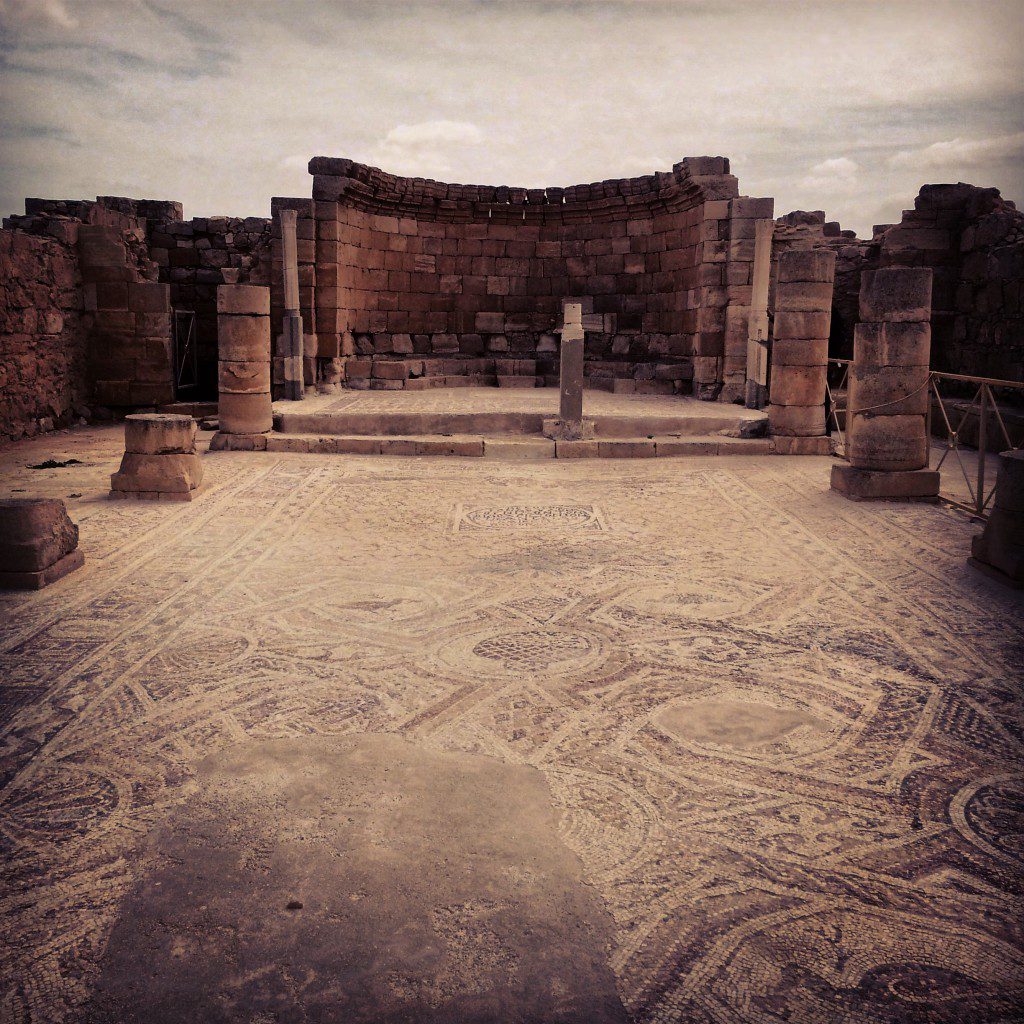
We also marvelled at two ancient churches in the complex, both with beautiful mosaic floors. These Nabatean communities adopted Christianity when it became widespread in the Roman Empire, and the baptisterium which they would have used in their proselytising of the surrounding nomads.
Avdat

We headed further south to the jewel in the crown of the Nabatean cities in Israel, Avdat (also known as Ovdat). Named after its founder Oboda, this large city sits atop a hill a little south of Kibbutz Sde Boker. Its inhabitants were early proponents of Ben Gurion’s dream to make the desert bloom; we witnessed the remains of their networks of small channels and aqueducts to make the most of the 80mm of rain a year and to irrigate their terrace farms. In the 50s a small group returned to the area and restored these ancient structures, proving they worked, you can see the small patch of green in the middle of the desert.
At the base of the hill is a visitors centre with a good explanatory film and samples of all the spices and incense that the Nabateans used to transport. Ever wanted to smell myrrh? Now’s your chance!
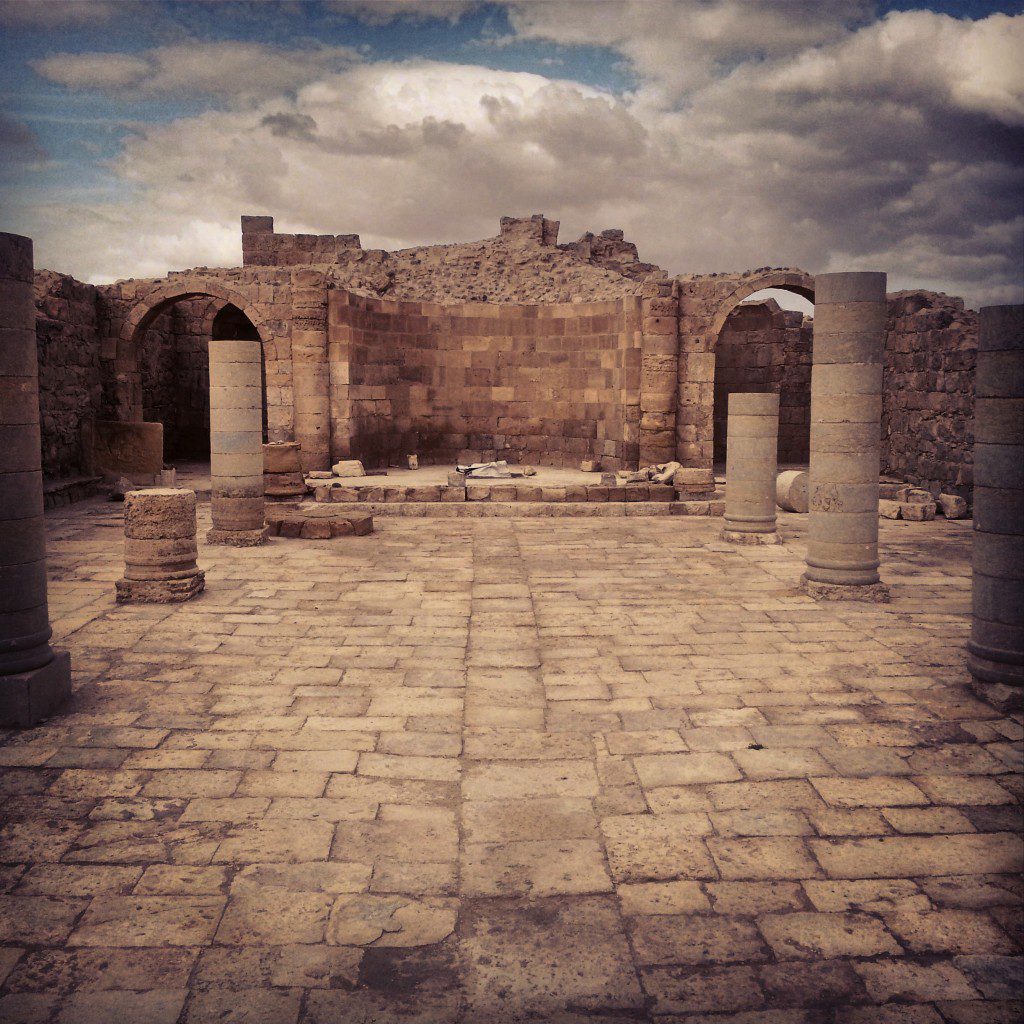
We explored the complex, including a burial cave only for women (possibly priests in a temple to Aphrodite) a former camp site for Roman soldiers, a watch tower and more magnificent early churches. In one, marble inscriptions on the floor marked the final resting places for those who had served the church 1500 years ago. The site is a place of pilgrimage for Christians of today and we witnessed a group of French Catholics performing a mass inside one of the ancient church structures. It was quite moving.
Once Christianity became widespread in the Roman Empire the Land of Israel grew in importance as the birthplace of the religion – there was a great desire for wine from the Holy Land for religious ceremonies. We saw the remains of an ancient wine press and learned how it would function, also visiting wine cellars at the base of the hill.
Sadly our trip was cut short due to our driver (probably the most important person on the trip) suffering from awful toothache and we missed out on the bathhouse and nearby vast and impressive cistern, but it’s good to save something for the return visit!


We don’t know a huge amount about them as they did not record their own history This is wrong. They described themselves as Arabs. You know and you can google it.
Hi Reem
Thanks for the comment. I did Google it and couldn’t find this information, or any information about a recorded history written by the Nabbateans themselves. Feel free to share any relevant links!