
- Two opposite wineries, side by side. Tishbi went big, Somek stayed boutique.
- Carignan was Israel’s scorned grape, but it’s making a comeback.
- It wasn’t just wine. We explored a craft brewery, and a pit-cooked meat restaurant.
In the winter of 2018 I took Israel’s only culinary tourism course for licensed guides, an official Ministry of Tourism certification. This was the third session, a week after the day we spent among the farms of the Sharon.
Our lead instructor, Hagit Avron, had billed it as the wine day, around Zichron Ya’akov and Binyamina. She brought a second guide along, Beni Ben-Israel, who lives up that way and knows the wine country properly. He also later became a minor celebrity after appearing on the Israeli version of Masterchef!
Hagit told us that she’d deliberately not stacked four wineries in a row, because past a certain point one tasting room starts to look like the next. So the day also included beer, coffee and a unique dining experience.
By the end of it I was less interested in the wine than in the people pouring it. Which, I think, was the whole point.
A winery that turned into a village
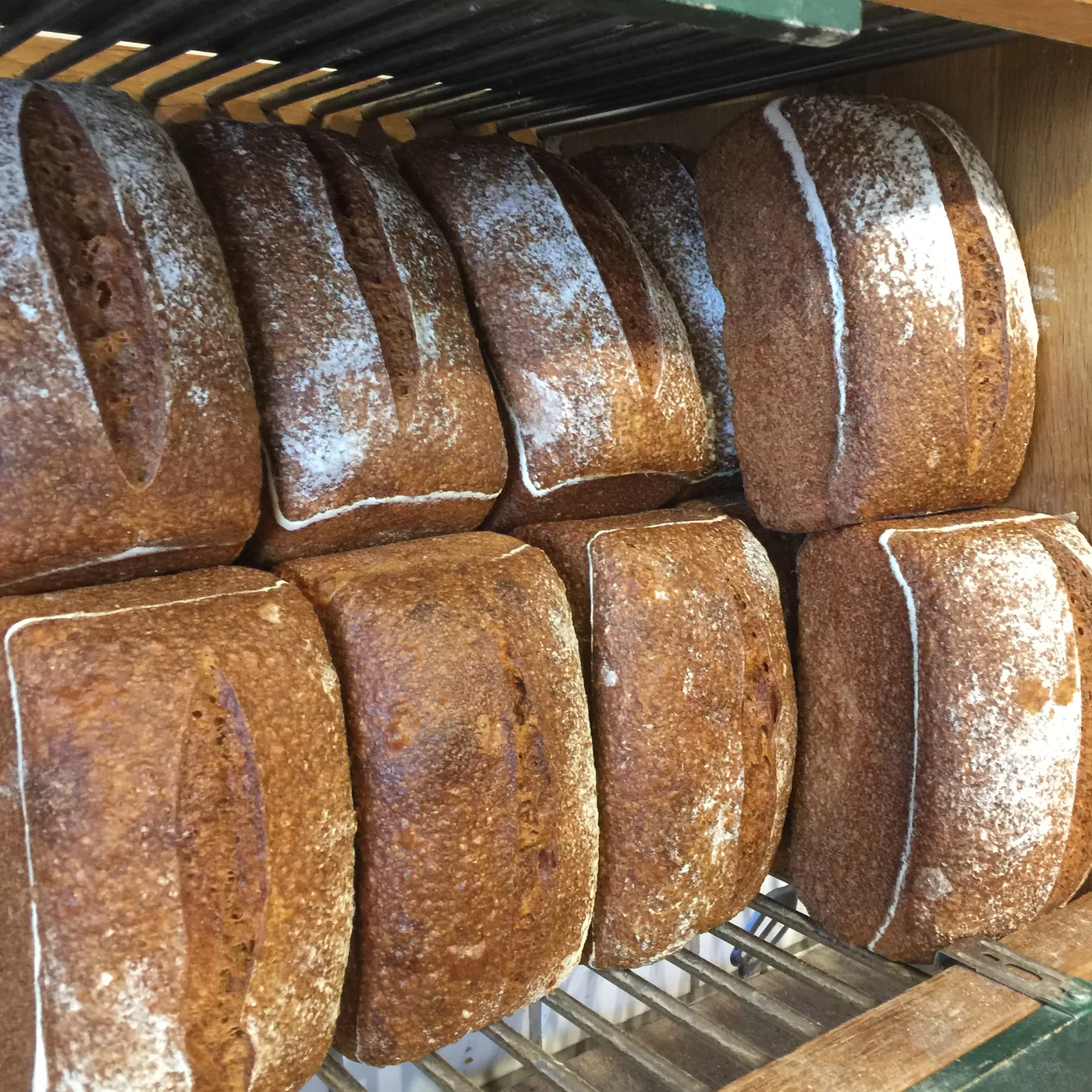
The first stop was the Tishbi winery. But to call it a winery is a bit misleading, because it’s turned into something much more.
Golan, the fifth generation of a family that has grown grapes here since 1882, walked us round what the place has become. There is a flour mill, a bakery with a wood-fired stone oven, a chocolate room (he was the exclusive importer of luxury brand Valrhona in Israel) and a barbecue smoker he brought over from Missouri.
He put the change simply. Over about thirty-three years the family had to stop being farmers and learn to be marketers, bakers, pastry chefs, pitmasters, carpenters and builders to keep the business growing.
He didn’t choose the wine part either. In 2001 he was sent to New Zealand to study oenology, and he was clear with us that he hadn’t wanted to go. But he eventually fell in love with it and took over the family business.
The barbecue was his idea. It only runs on Fridays. Brisket goes into a brine for eight to ten hours, then a dry rub, then four or five hours of smoke over offcuts from their own oak barrels, then it’s wrapped in butcher paper he brings in from Canada and cooked for hours more. Fourteen hours in total. When the meat runs out he shuts. The queue reaches the road.
He had a reason for only doing this one day a week, and closing up once it’s all finished instead of making more. He called cooking more meat than you can do properly “food abuse”, and he would rather sell out for the day and go home to his four children.
It wasn’t my first time at Tishbi, but I’d had no idea about the depth and breadth of what was on offer. It was really impressive, there was a real passion for pursuing excellence in everything they were doing, and the wine and paired chocolate tasting was quite splendid.
The winery in somebody’s back yard
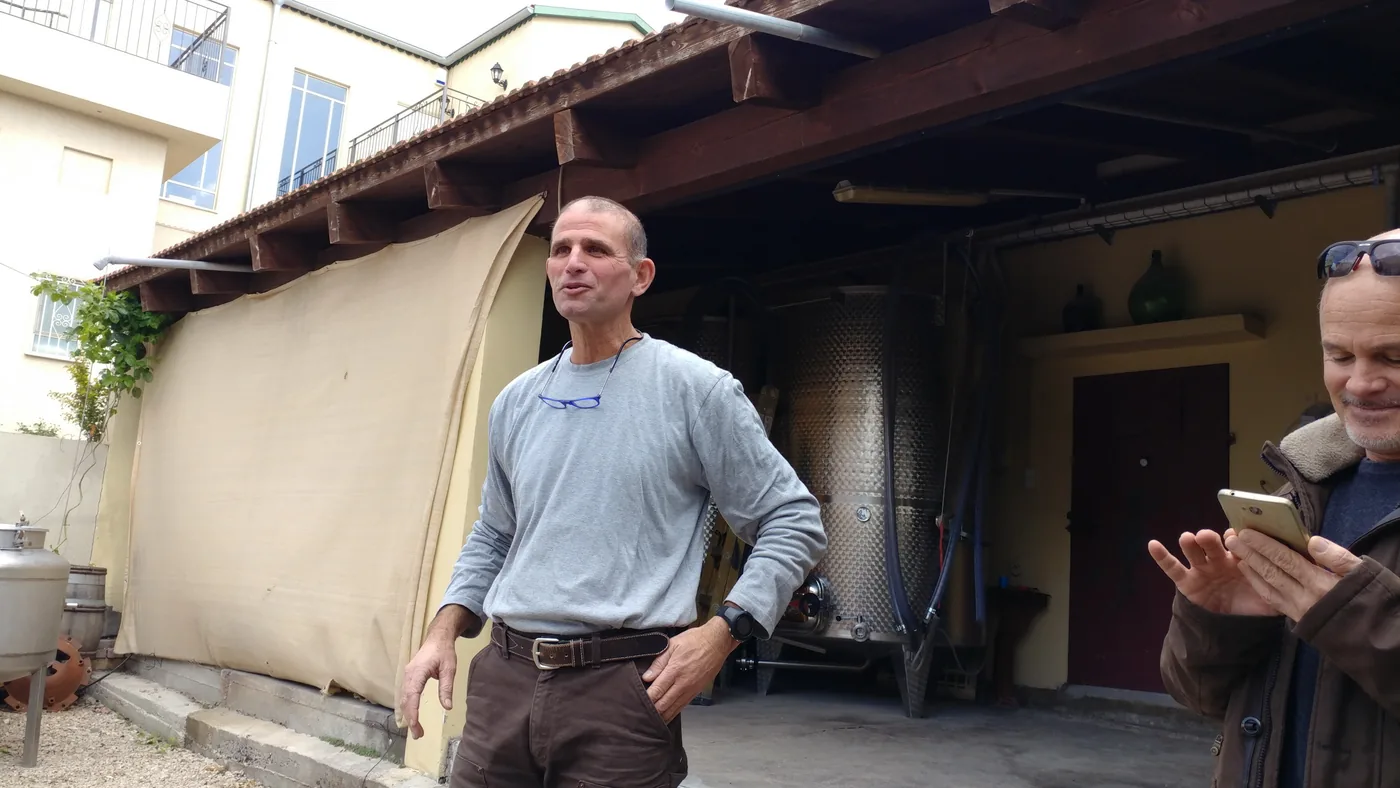
Somek, a few minutes away, could not have been more different, which was exactly why Hagit put the two together.
You walk in off a residential street into a working winery. Barak Dahan’s family have been in Zichron since 1882 as well, one of the founding families, and they have grown wine grapes the whole time. For most of that history the grapes went to Carmel, the big winery down the road.
Barak’s first trip abroad, straight after the army, was to Bordeaux. He’d wanted to go for years. What surprised him there was not the big estates, because he’d grown up next to one of those, but how many tiny wineries there were, one in almost every yard. That’s where his idea started: to do the same thing at home.
He spoke to his wife and they decided that if they were going to do it, they would do it properly. His wife took a master’s in oenology in Adelaide while he went and worked harvests around the world. The first vintage was 2003 and it was three thousand bottles.
They now make twenty thousand a year and have decided to make that the cap. He wants it to stay a small family operation. He packs the export cartons himself and drives them to the port.
About sixty per cent of everything they make is sold right in their home to people who walk in off the street. He told us about a French couple who had been through that week and left with six bottles, and made the obvious joke about France being short of wine.
I loved the way that he and the family were so hands on with the wine production, taking real care over every single aspect, managing the timing of everything so carefully, in their pursuit of perfection.
The grape Israel used to look down on
During our tasting, Barak went into detail about the Carignan grape, which we’d also tasted the previous week at Vitkin.
Israel has a long and ancient wine history (in Roman times wine from Judea made it as far as England!) but after the Arab conquest in 638 it began to die out. With a majority of the population becoming Muslim, there wasn’t the demand for wine.
This tradition was revived towards the end of the 19th century with the beginning of major Zionist immigration. Baron Rothschild’s supported a lot of the early immigrants (Zichron Yaakov is named for his father) and his people set up the wine industry here in 1882. They didn’t want to invent new grape varieties but to choose the right existing ones to fit the local soil and climate.
They picked what they then called the southern varieties, from the south of France, which we now call Mediterranean. Carignan was one of the stars of that list.
Then it got ruined. The wineries paid growers by the kilo with no measure of quality attached, so growers watered and fertilised for weight.
Where a grower might sweat to get a ton and a half of Cabernet off a dunam (a thousand square metres, about a quarter of an acre), Carignan would give three or four without trying. The wine was poor, and Israelis concluded the grape was poor. It became the cheap stuff students drank.
Barak told us what that looked like from the inside. In the late 1970s, before his army service, he was hauling grapes to the cellar by tractor and trailer, and he turned up with an enormous load of Carignan, huge bunches fat with water and fertiliser. He was proud of it. It was so handsome that the Carmel winery photographed it for a postcard and used it in an advert.
He showed it to Chaim, a veteran Russian cellarman. Chaim picked a grape, tasted it, and then told him: “from these grapes, and from potatoes and sugar, I can make the same wine”.
He didn’t understand it at the time. It took him years of making wine before he saw how right the man was.
What saved the grape was the plots nobody bothered to pull out. Their oldest Carignan is close to fifty years old, dry-farmed with no irrigation and no fertiliser, and it yields about five hundred kilos to the dunam. Tiny bunches, almost nothing on the vine, and the quality speaks for itself.
That wine now sits on the list at a Michelin-starred restaurant in Dresden. Barak had seen the list, six hundred wines, three full-time sommeliers, every famous name in the world on it. And then, he said, you see Israel, Zichron Ya’akov. “For us that’s reaching the Olympics”.
Beer, and the man who brought espresso to Israel on a horse cart
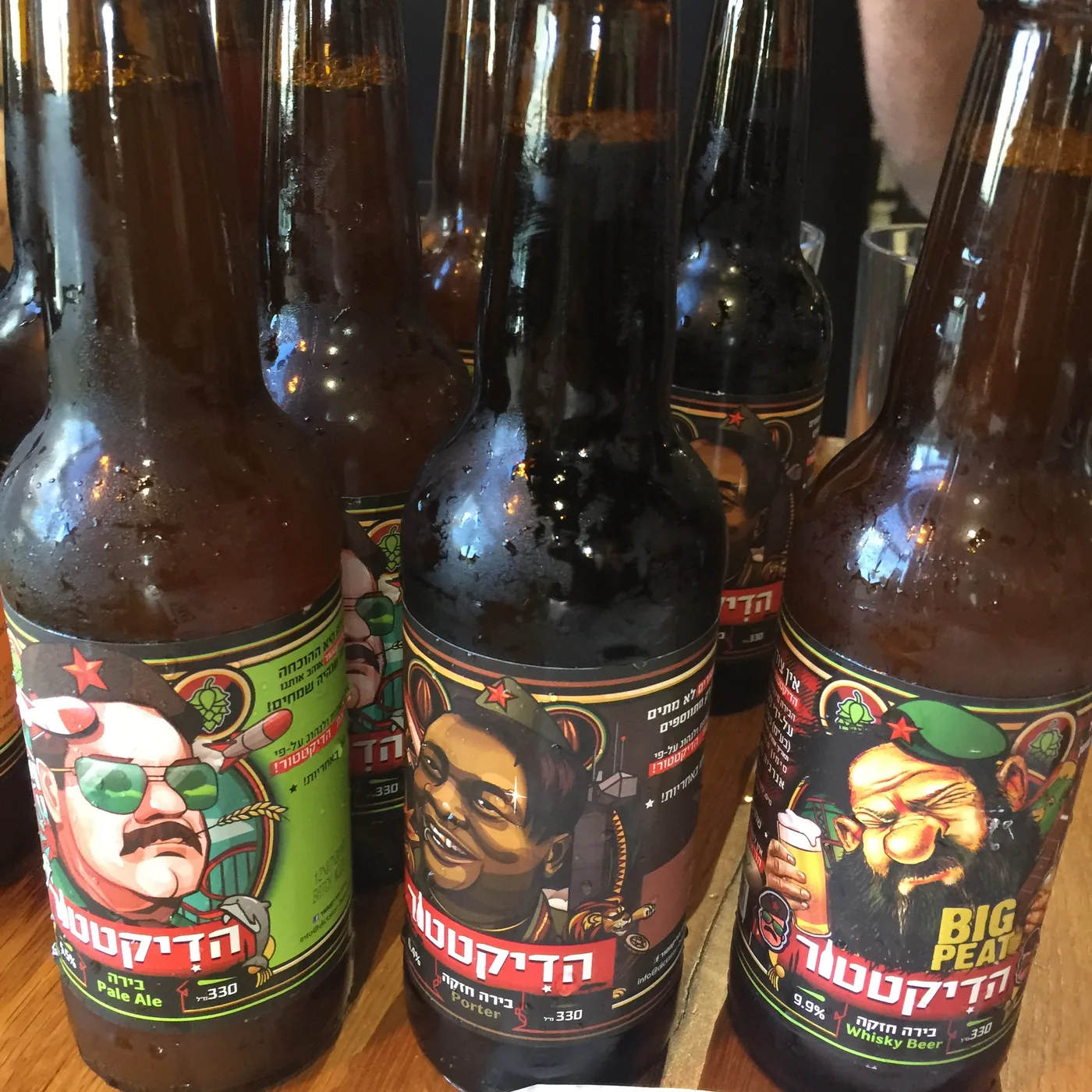
The afternoon moved to the nearby Binyamina industrial zone, to the Wolf brewery, and it turned into an unexpected coffee lesson before we got to the beer.
Beni set it up on the way over. Ten years earlier, he said, sophisticated people drank wine and talked about it, and everybody else drank beer and got drunk. Then beer grew up. It helps that beer is far simpler to certify kosher than wine is, which is why the boutique breweries multiplied so fast.
The man who owns the place is Greg Wolf, who moved here from New York in 1994. Before any of the beer, he started Coffee To Go, the first espresso carts in Israel. The carts were genuine old American horse carts shipped over from Oregon, with pumps and electricity fitted inside them.
The first one stood at Meir Hospital in Kfar Saba. Then inside the maternity ward, then at every hospital, then the railway stations, and eventually the business was bought and became Elite Coffee.
He walked away from it for a very ordinary reason: his wife is a doctor, and he didn’t fancy them both spending every day in a hospital.
Next he opened a cafe in Tivon in the Lower Galilee, and called it Cafe Greg. His mentor in those first years was a Haifa roaster who had been roasting since 1948 and who made him his house blend.
It grew into a small chain which he later sold, and the chain with Greg’s name over the door now runs to something like a hundred and twenty branches. Most of us have had a coffee in one without ever wondering who Greg was.
After that he opened a small group of cafes in Brooklyn, and then came back and started brewing beer in an industrial zone in Binyamina.
Then Yotam Baras, who ran the Dictator beer brand, took over. His origin story is that he had his first accidental sip of beer at eight, and five years later, when the family took a bar mitzvah trip, his older brother wanted Euro Disney and he wanted the Heineken brewery in Amsterdam. He got Amsterdam. This was before the internet, and as far as he was concerned beer came from Holland.
We tried a bunch of beers and I was particularly struck by his explanation about the pale ale. It smells of passionfruit and mango, so everyone assumes there is fruit in it.
But there’s no fruit at all. It’s hops, added right at the end of the boil, the same principle as putting the tea in once the water has boiled. Early gives you bitterness, late gives you the fruit.
Dictator has since folded. Yotam gave himself two years to find an investor and grow the brand. He grew the brand but the backer never came, so if you go looking for the beer now you won’t find it. But plenty of other craft breweries have sprung up in its place.
My great-grandparents were hops traders in rural Bavaria, so I felt like I was connecting to my roots with this visit!
The horse farm that became a restaurant
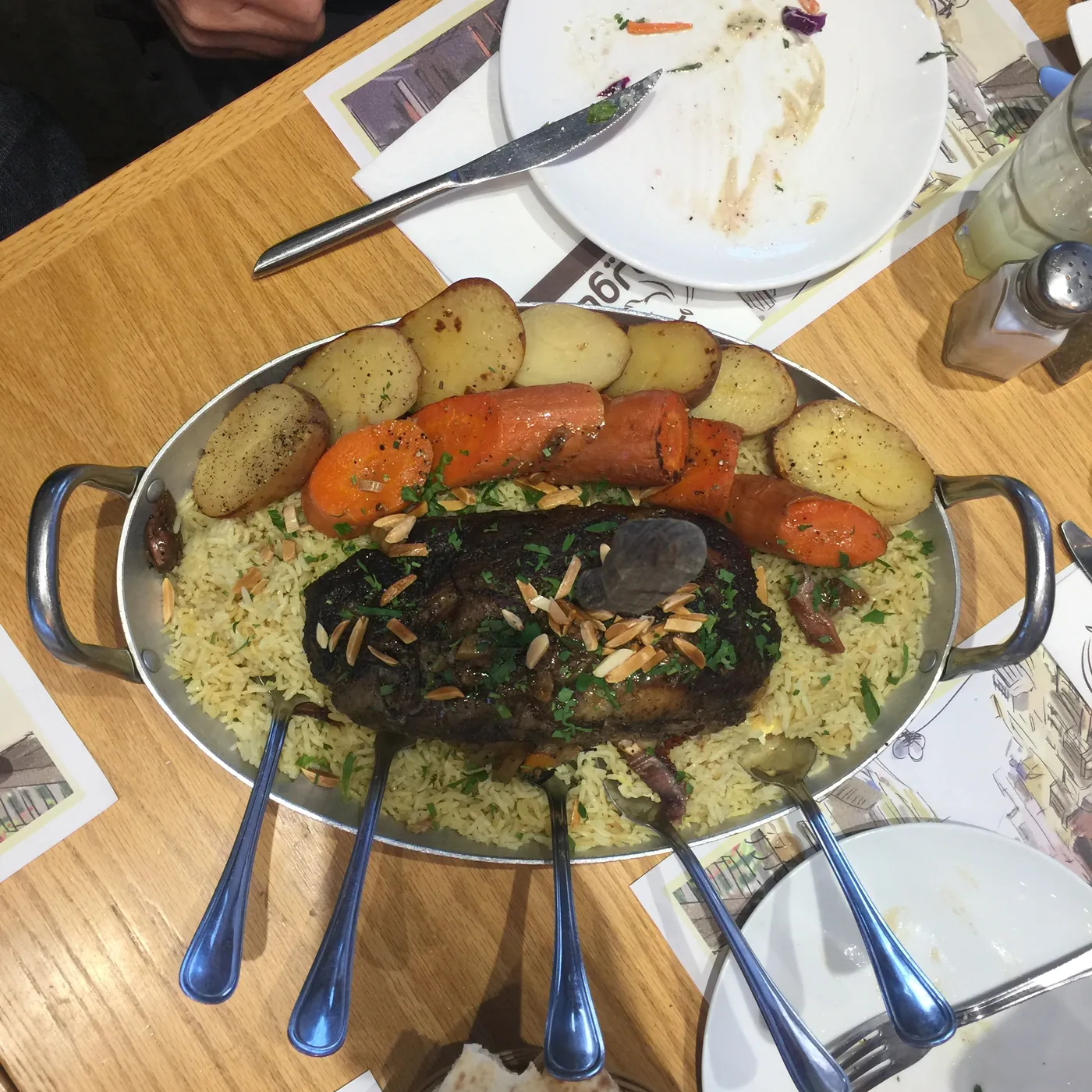
The last stop was the one Hagit had added at the last minute, having driven out to see it herself the week before. It was an Arab-run farm and restaurant in Zemer, right up against the Green Line, a place called Ajawed at the Al-Bawadi farm.
It exists because of a horse. The owner, Hitam, has a daughter who is a doctor and who wanted to ride, so he built somewhere to keep a horse. Then people asked whether they could bring their children. Then somebody asked whether, since they were there anyway, they might get a coffee and a bit of food. Everybody told him it was a mad idea. He built the restaurant anyway.
Our host for the afternoon was Tamim. We got a proper briefing on the area first. Zemer is a council of four villages, about seven thousand people, put together under one name only in 1988. Nobody could agree what to call it, and the name they landed on comes from a wadi over near Nablus.
We discussed the separation barrier between Israel and the West Bank. Tulkarm, a major West Bank town, is about five kilometres away, and people used to shop there and work across it without thinking. Now, with the crossings and the detour round through Taybe, it has become such a headache that they give up. It’s now easier to get to Tel Aviv.
We then moved to the food, which all agreed was the best of the day. The meat is buried and cooked slowly in a pit in the ground. He calls it zarb. Hagit had warned us on the bus not to call it matfuna, which is the Bedouin term for the technique, because he has his own name for it and takes real offence.
I did not unfortunately make the most of this visit as I didn’t eat the meat for kashrut reasons, but the salads were delicious and I loved the knafeh, a traditional dessert in the Middle Eastern kitchen.
Interestingly, my yemenite father-in-law also uses the same technique with a pit in his garden, although these days he barely uses it; he says it’s too much effort!
Bringing everything together
Hagit closed the day on the bus. The wine, she said, was only the excuse. Think about everyone we had met: Golan in the morning, then Barak, then Greg, then Yotam, and then the story of Hitam.
What links them is a kind of obsession. Each of them want to perfect what they’re doing, and they’re all a little quirky, in a wonderful way.
It is the most useful thing I took from the whole course, and it’s not really about food. If you build a day around people like that, the food takes care of itself.
The following week we were up in the Western Galilee, from Kfar Vradim to Akko, on the longest day of the course.
If a day of small producers around Zichron Ya’akov and the Carmel sounds like your sort of thing, it is exactly the kind of day I can build into a trip. You can see where it fits in my Israel: a culinary melting pot itinerary.

Leave a comment