
Today we headed north to visit two significant sites just south of the Sea of Galilee; Belvoir Fortress and Beit Shean (also known as Scythopolis). This trip was a catch up; there are a certain number of trips which you need to complete to finish the course and to take the exam. I missed quite a lot when I was sick and over the next few months need (and also want!) to go through them all; fortunately the place where I am studying has several courses running in parallel in Tel Aviv, Jerusalem and Haifa so it is not too complicated to join a trip with another course. Today was a bit of a treat – there is an English speaking course in Jerusalem and I was joining them. Although I enjoy the challenge of studying in Hebrew it certainly made my life a lot easier to spend the day in English!
Quick facts & guide tips
| Where | The Jordan Valley, just south of the Sea of Galilee; Belvoir sits on a hilltop above the valley, Beit Shean on the valley floor a short drive south. |
|---|---|
| What’s there | Belvoir: a complete Crusader fortress with sweeping views into Jordan. Beit Shean (Scythopolis): the Roman and Byzantine ruins of a major regional capital, including bathhouses, the cardo and a near-original theatre. |
| Period | Belvoir was built by the Knights Hospitaller in the 12th century. Beit Shean was inhabited from the 5th millennium BCE; what’s visible today is largely Roman and Byzantine (and earthquake-collapsed since 749 CE). |
| Access | Both are Israel Nature and Parks Authority national parks with ticketed entry; sensible shoes and sun cover are essential, particularly at Beit Shean which is fully exposed. |
Belvoir Fortress

Our first site was the old Crusader fortress of Belvoir, dating to the 12th century. It was clearly an extremely impressive fortification, commanding a fantastic view (hence its name) over the Jordan Valley to the Gilead mountains in modern day Jordan. The fortifications were necessary when Saladin attacked; in fact it took him two attempts to take the castle, and he respected the knights so much that he gave them free passage to Tyre. The fortress was only destroyed around 50 years later, and its bottom floor has survived largely intact.
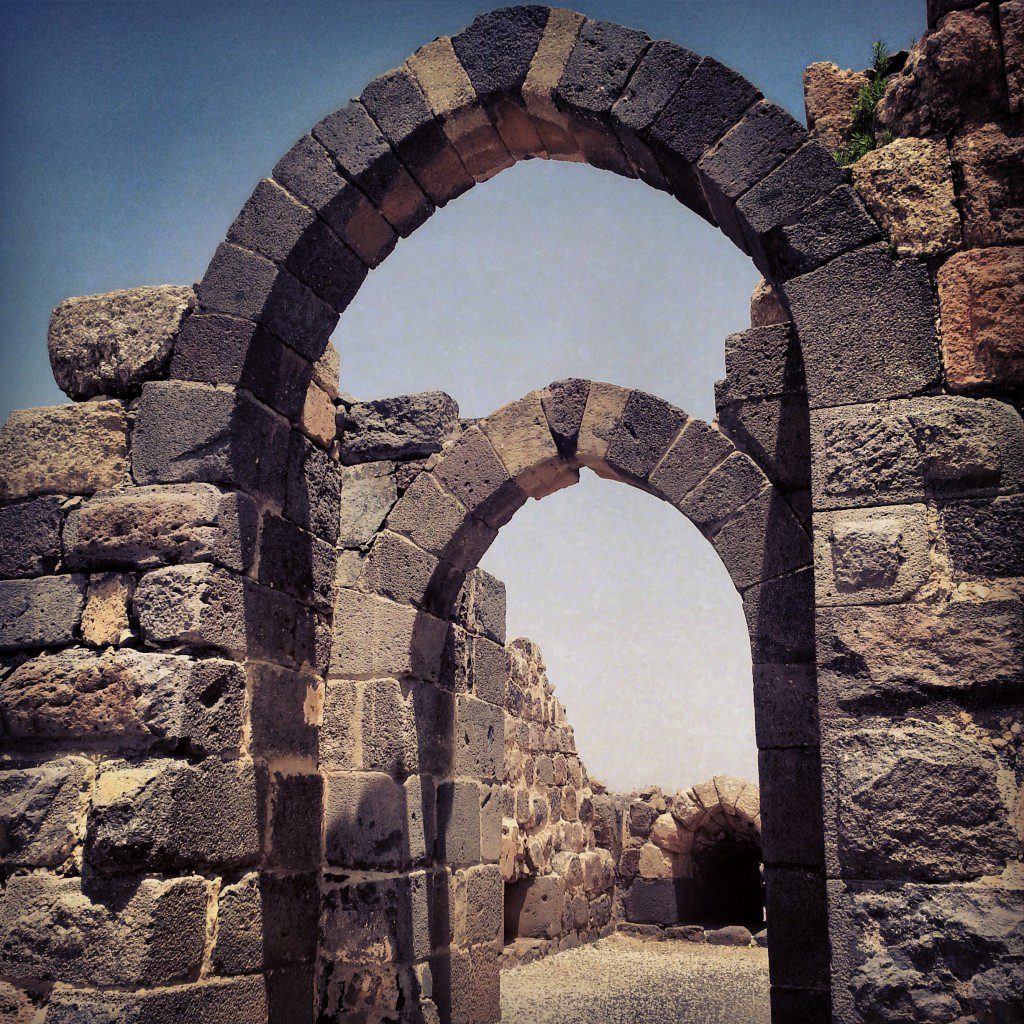
It was extremely impressive to see such a complete Crusader fortress and our guide painted a very good picture of how it would have been to live in and defend it, bringing the story of the site very much to life.
Beit Shean (Scythopolis)
Our second site of the day was the ruins of Scythopolis, or Beit Shean. We entered in the back late, ascending to the ancient tel. The earliest settlement on the site seems to have been from the 5th millennium BCE; on the top of the tel you can see some remains dating to the Egyptian conquest of the area in the 15th century BCE; this was the centre of the administration for the region and there are column bases in what would have been the governor’s house dating to this period.

As we came over the top of the tel, the excavations of the Byzantine city were laid out before us. It was quite simply breathtaking (the 44C heat may have also had something to do with that, but still the site really is quite awesome). The excavations cover a significant part of what was believed to be the city centre, although based on archaeological surveys they estimate that they have only unearthed around 2-3% of the Roman city of Scythopolis.
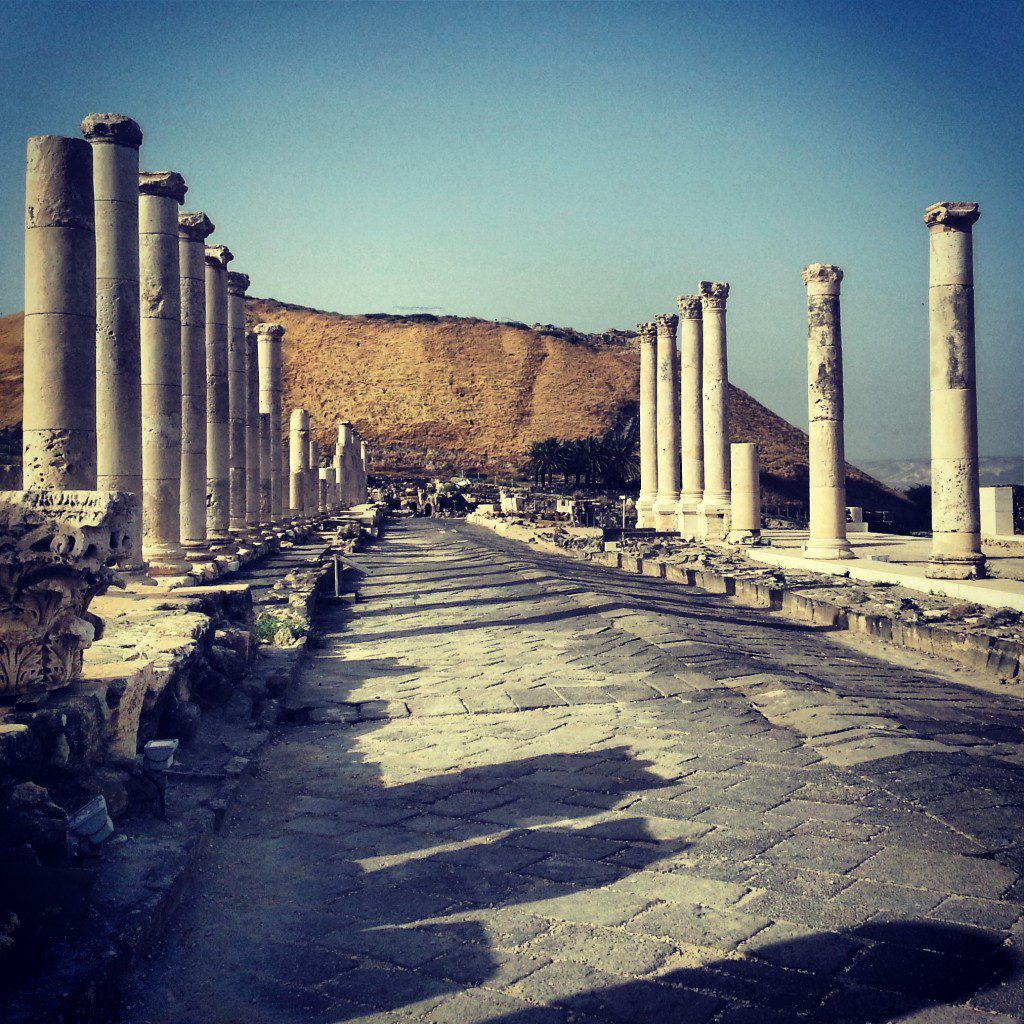
Scythopolis was the Roman capital for the northern part of the country, known as Palestina Secunda. It was a flourishing city, although most of what is visible today is from the slightly later Byzantine period. It is possible to wander through two of its bathhouses (including enjoying one of the best preserved Byzantine toilets in the world), its main shopping street (cardo), and perhaps most impressively, its theatre, which is nearly entirely original and is still used for concerts today.
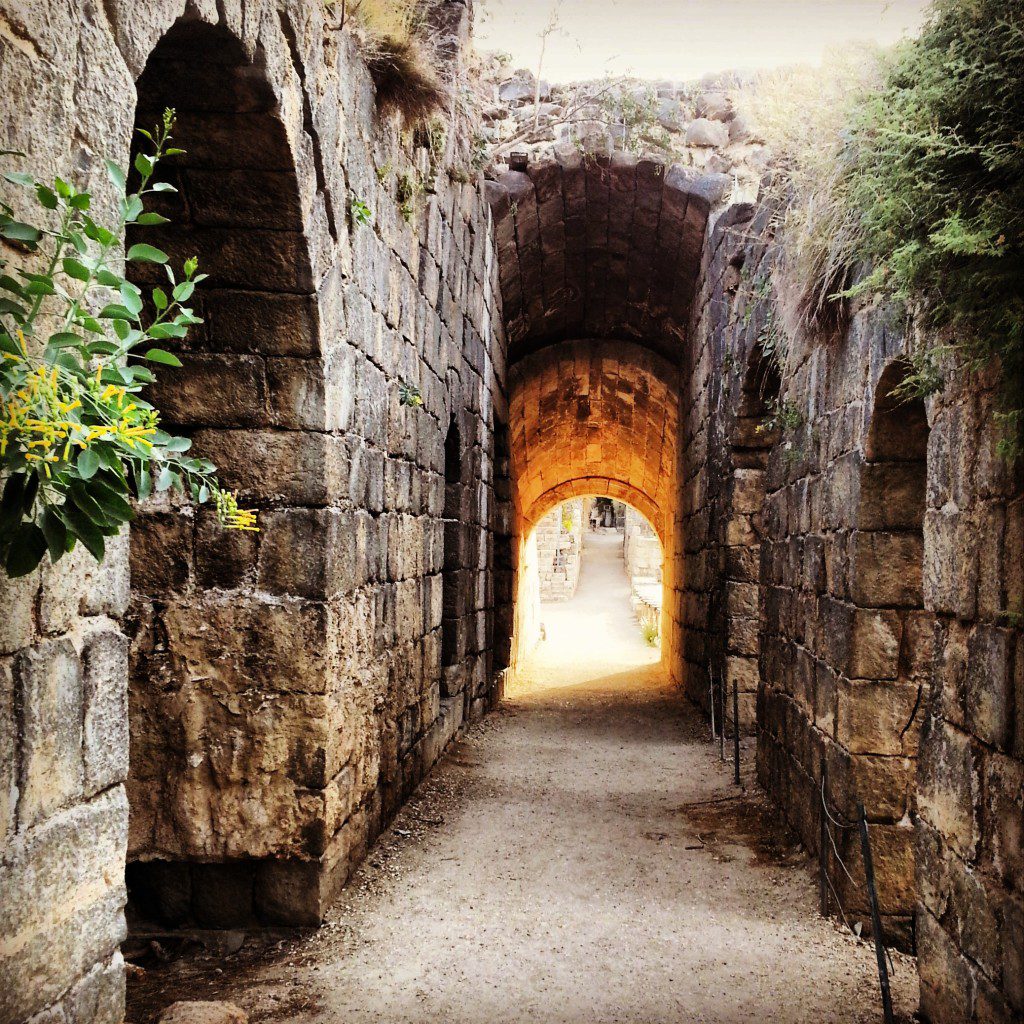
It is also quite remarkable to see the results of the huge earthquake that hit the area in 749. Whole facades have collapsed into the earth; huge columns have smashed into paving stones. It almost feels as if the earthquake just happened and you are wandering through its wreckage.
Guiding in the heat
As a side note, I mentioned that it was an extremely hot day. We were suffering in the heatwave, but as we have been told before, the tour guide course goes out into the field, even through fire and water (or, as we experienced in December, hail). Our guide made the point to us that if a tourist comes to Israel for a short trip and that is the only time they have, then that is when we will need to guide them. So part of our studies is getting used to dealing with the heat, and thinking about where and how to deal with the hottest parts of the day. This course is as physically demanding as it is mentally!
All in all, a really fascinating trip, and both sites are definitely well worth a visit for anyone heading to the north.


Leave a comment