
Walk through almost any museum of classical sculpture and you pass rows of white marble: white emperors, white gods, white goddesses, every one of them the colour of the stone it was cut from. But it turns out that this isn’t the version a contemporary Roman would have seen.
This came up on the guide-training day on Roman religion I did this summer (I wrote about that day, and the biggest temple in the Roman world, in an earlier post). The lecturer told us that a Roman statue, when it was made, was painted in full, bright colour, from the hair to the hem.
Quick facts & guide tips
| The myth | Ancient statues were pure white marble |
|---|---|
| The reality | They were painted in bright colour; the white is weathering plus later taste |
| Why we forget | Pigment wore off underground, and collectors admired (and copied) the bare stone |
| See it in Israel | Original painted walls at Masada, Herodion and the Herodian Quarter in Jerusalem; Roman sculpture at the Israel Museum |
| Guide tip | At any Roman site, picture the stone painted. It changes what you are looking at. |
The white marble is a mistake
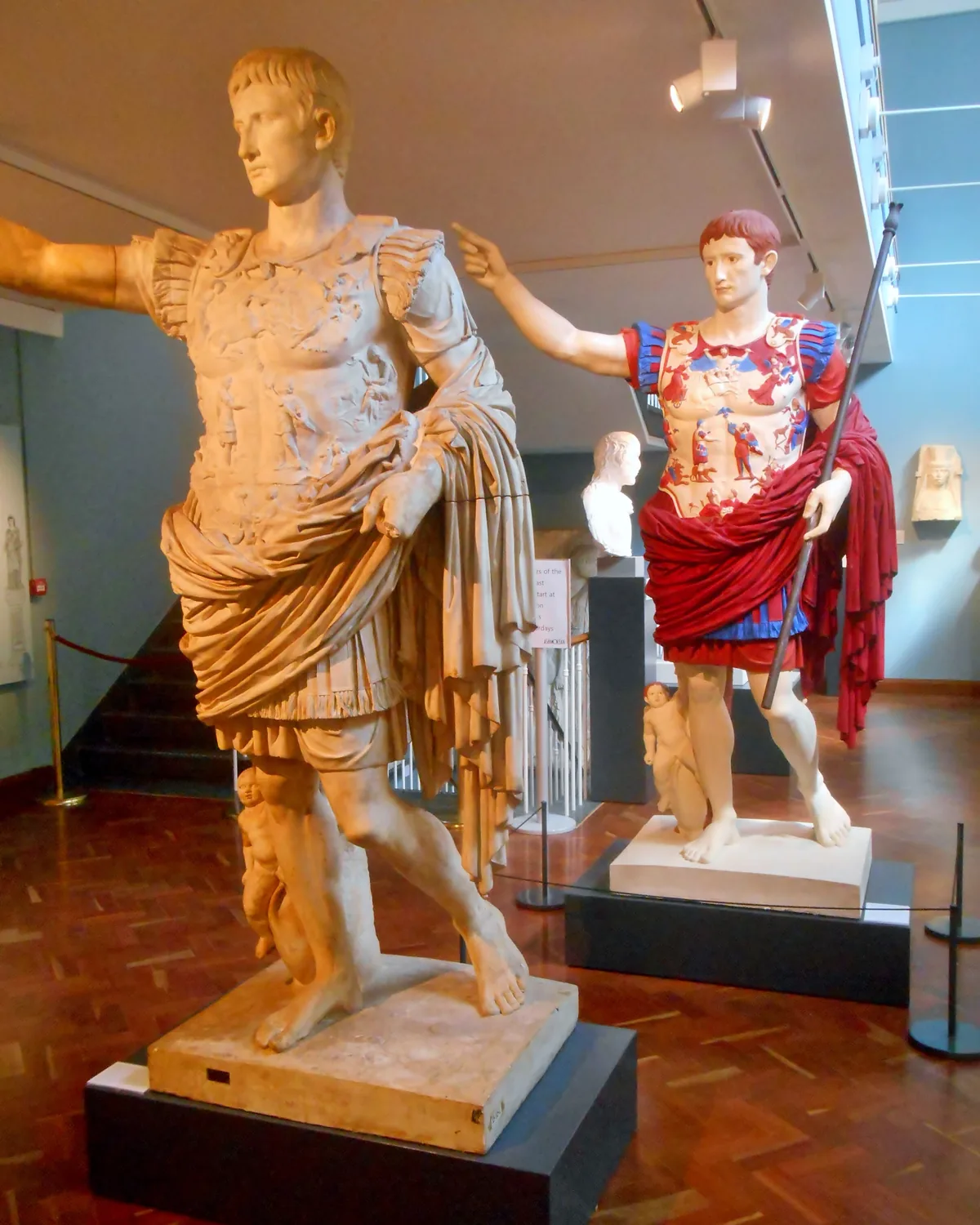
The plain white statue we associate with Rome is a historical accident, not an artistic choice. Greek and Roman sculpture was brightly coloured: skin tones, coloured eyes, patterned and dyed clothing. Over centuries in the ground the paint wore away, and when Renaissance collectors dug these figures up they found them bare or faded, admired the clean white stone and restored them to match. White became the taste, and later sculptors worked in white marble deliberately, in imitation of statues that had never been white in the first place.
Modern science has settled it. Under the microscope, faint traces of the original pigment still survive on famous statues, and specialists have used them to rebuild the colours. The results look strange if you grew up on white marble. The one the lecturer showed us was an Athena, the Medusa head on her breastplate picked out in colour that looked almost gaudy to a modern eye.
Roman faces were real, not perfect
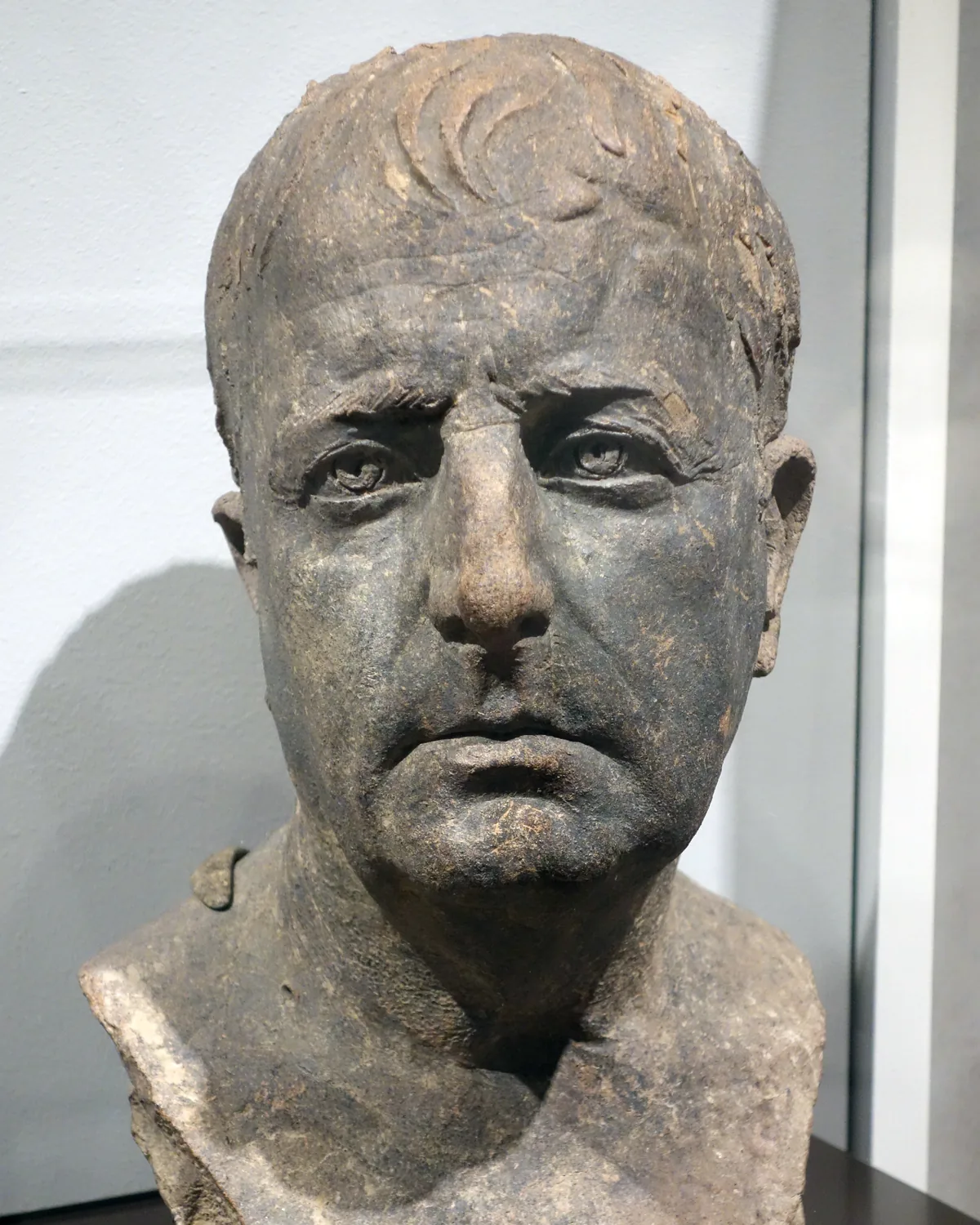
Colour is only half of what we misread. The other half is the faces. Greek sculpture leaned towards the ideal: young, balanced, flawless bodies that no real person quite has. Roman portrait sculpture went the other way. It’s honest: receding hairlines, heavy jowls, warts and deep wrinkles.
There’s a reason for the realism. Roman families kept portrait images of their dead as a kind of household religion; the ancestors watched over the living and were honoured at home. A portrait wasn’t meant to flatter but to be that exact person, so the family could remember them as they really were. Duty to the dead ran deep in Roman life, and the theory is that it shaped the way they carved a face.
How to spot a Roman copy of a lost Greek statue
Here’s a practical tip. A great many “Greek” statues on display aren’t Greek at all; they’re Roman marble copies of Greek originals that no longer exist. The originals were usually cast in bronze, which is light and strong and can support itself. Marble is heavy and brittle, so when a Roman workshop copied a bronze into marble it had to prop the figure up. Look low down, near the legs: if you see a tree stump, a strut or a spare block of stone doing no obvious job, you’re almost certainly looking at a Roman copy of a lost bronze.
Where you can see the colour in Israel
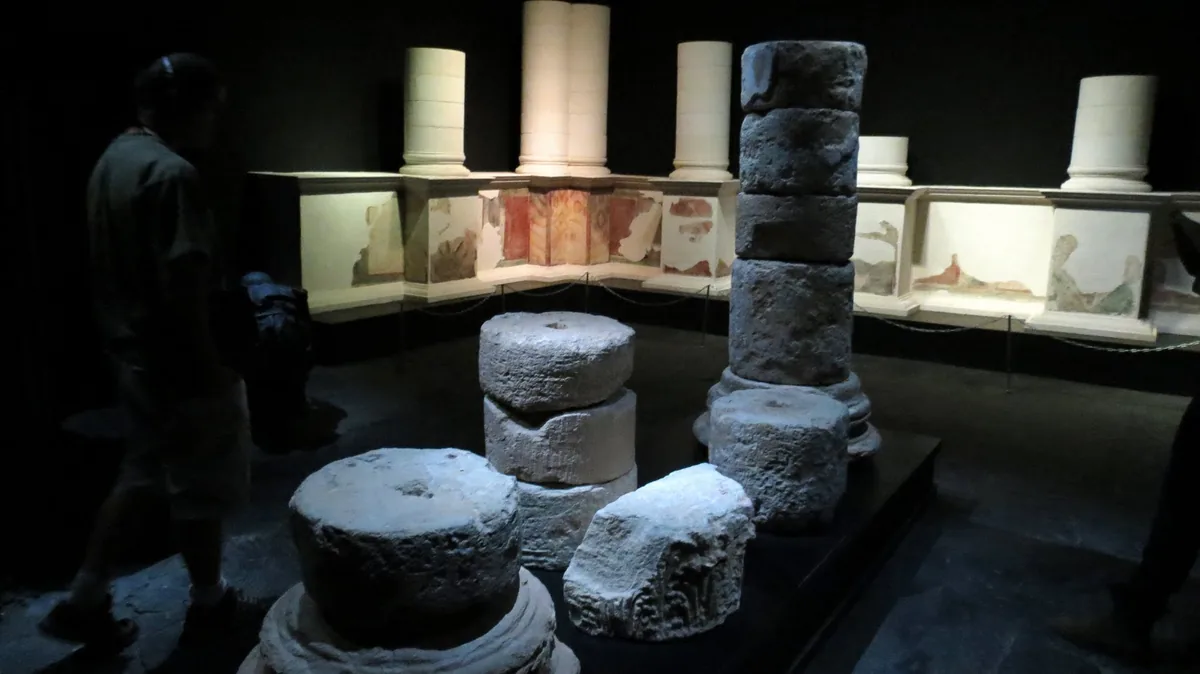
You don’t have to go to Rome for any of this. The statues lost their colour, but in a few places in Israel the paint on the walls survived, and it helps us get a sense of what things would have looked like.
The best example is at Masada. In Herod’s northern palace, built on terraces down the cliff, the lower terrace still has its original wall decoration: plaster coloured to look like panels of marble, and columns finished to look finer than the stone underneath. When I take people there I talk about Herod’s opulence. Here, in the middle of the desert, he was obsessed with making everything look beautiful.
Herodion, his palace-fortress near Bethlehem, has painted plaster from the same period. In Jerusalem, the Herodian Quarter (the Wohl Archaeological Museum, under today’s Jewish Quarter) shows how the city’s wealthy families lived in the first century, with painted walls and mosaic floors. And at Magdala, on the Sea of Galilee, you can still see traces of first-century painted walls.
At Caesarea you need your imagination. On a high platform overlooking the harbour Herod built a temple to the goddess Roma and the emperor Augustus, and inside it stood two colossal statues, Augustus posed as Zeus and Roma as his queen, the first thing passengers saw as their ship came into port. Little of the temple survives above ground now, but it’s a good place to imagine the painted world these temples were built for.
Further east, Bet She’an (the Roman Scythopolis) is a grand Roman city and worth a day on its own. The Israel Museum in Jerusalem is worth a visit too, if you’d rather see sculpture and mosaic under one roof.
What this changes when I am guiding
When we’re standing in a Roman gallery or on a temple platform, the white stone gives the wrong impression: that the ancient world was cool, restrained and pale. In fact it was full of colour, with very individual faces and gods painted to look alive.
On a day’s touring, at Masada I can show you Herod’s painted walls; at Caesarea I can show you where the two colossal statues stood; and anywhere else I can help you picture the stone painted.

Leave a comment