The green and hilly region of the Galil in the North of Israel is divided into two, largely based on topography. The Lower Galil is lower in two senses of the word; it is both further to the South and has lower hills (affectionately referred to as mountains in Hebrew).
The Galil is a beautiful place to visit. The rolling green hills make a beautiful backdrop; they are filled with hiking trails. It is also an area of great historical significance. The Galil contains the city of Nazareth, the childhood home of Jesus, and a lot of the miracles he performed took place here. From a Jewish perspective, it became one of the main Jewish centres after the second temple was destroyed; there were several towns here which hosted the Sanhedrin, the Jewish parliament, and indeed the Mishna (Oral Law) was codified in one of these towns, Tzippori.
Quick facts & guide tips
| Where | Northern Israel, between the Jezreel Valley to the south and the Beit Hakerem Valley (the dividing line with the Upper Galilee) to the north; the major city is Nazareth. |
|---|---|
| What’s there | Rolling hills with hiking trails; the city of Nazareth (childhood home of Jesus); Tzippori, where the Mishna was codified; archaeological tels, Muslim Arab villages, Crusader and Byzantine remains, and a patchwork of communal villages established from the 1970s onwards. |
| Period | Inhabited from the Bronze Age through Canaanite, Israelite, Roman and Byzantine periods; later a centre of Jewish life after the Second Temple, with Ottoman-era Arab villages and modern Zionist and communal settlements layered on top. |
| Best for | Visitors with a half-day or more who want an overview of the region’s geography, mixed Jewish and Arab life, and the deep historical layering of the north; combine with Nazareth, Tzippori or the lower Sea of Galilee for a fuller day. |
Tel Chanaton
But neither Tzippori nor Nazareth were the focus of today’s trip. Rather, we were to get an overview of the region. This overview began at Tel Chanaton. A tel is an archaeological mound. This means that it was a dwelling place for man over several centuries, and was destroyed and rebuilt several times. Each time it was rebuilt, the new settlement was constructed on top of the remains of the old one, and the mound grew.
Tel Chanaton was a dwelling place of man from the Bronze Age up until the end of the Persian rule in Israel, roughly a period of 3000 years, and then intermittently afterwards. It is mentioned in ancient sources including letters between Canaanite kings and indeed the Bible. From our lookout on the tel we learned about the topography and geology of the Galil in addition to the importance of its situation close to several ancient trade routes. It was a place for people to stop off while travelling and restock food and water. In later times it was also used to collect taxes from travellers.
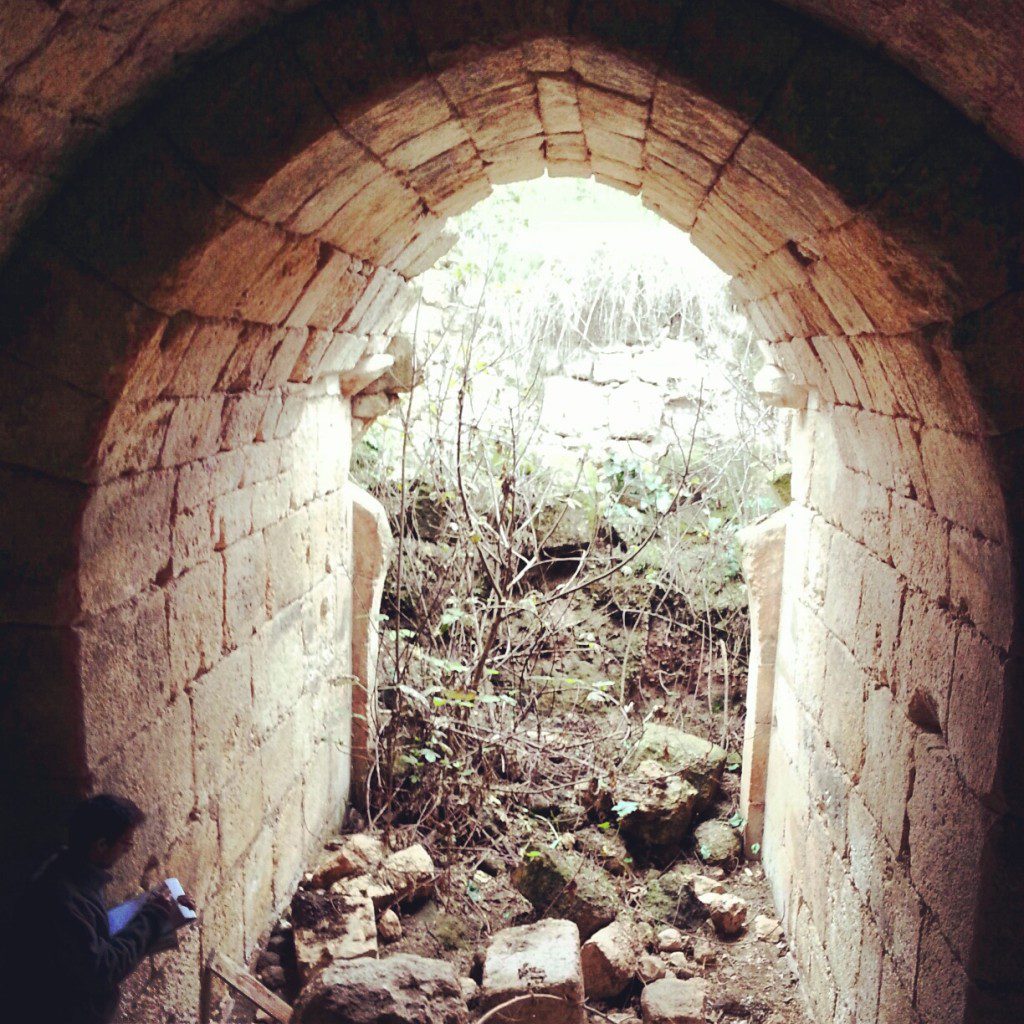
Israel is full of these mounds and many have been extensively excavated, but Tel Chanaton has not yet. Some excavation has taken place though and you can squeeze into a small tunnel that takes you into the remains of a Crusader fortress that was based here. There is something quite remarkable about being inside it, knowing that it was not originally buried in the earth. It helps understand the other mounds you see, knowing that all the remains were originally like this.
Kaukab Abu al-Hija
We moved on from the tel to the Muslim Arab village of Kaukab Abu al Hija. This village is named after the great Husam ad-Din Abu al-Hija, a lieutenant of Saladin. He was known as a righteous man, a man of the people, who encouraged good relationships between Jews and Muslims. We heard a couple of the legends of his time in charge of the area.
In more modern times, this village stood out in the area by embracing the arrival of new Jewish villages. While other Arab villages protested, the mayor of Kaukab Abu al Hija argued in favour of the new arrivals saying that they brought with them better infrastructure and services to the area. He participated in cultural festivals that they organised and tried to develop his village for tourism. To this end, it was the first Arab village in Israel to have a ‘tzimmer’ (a sort of boutique BnB retreat) and they also developed a sculpture garden in the 1990s using work from Jewish and Arab artists in Israel.
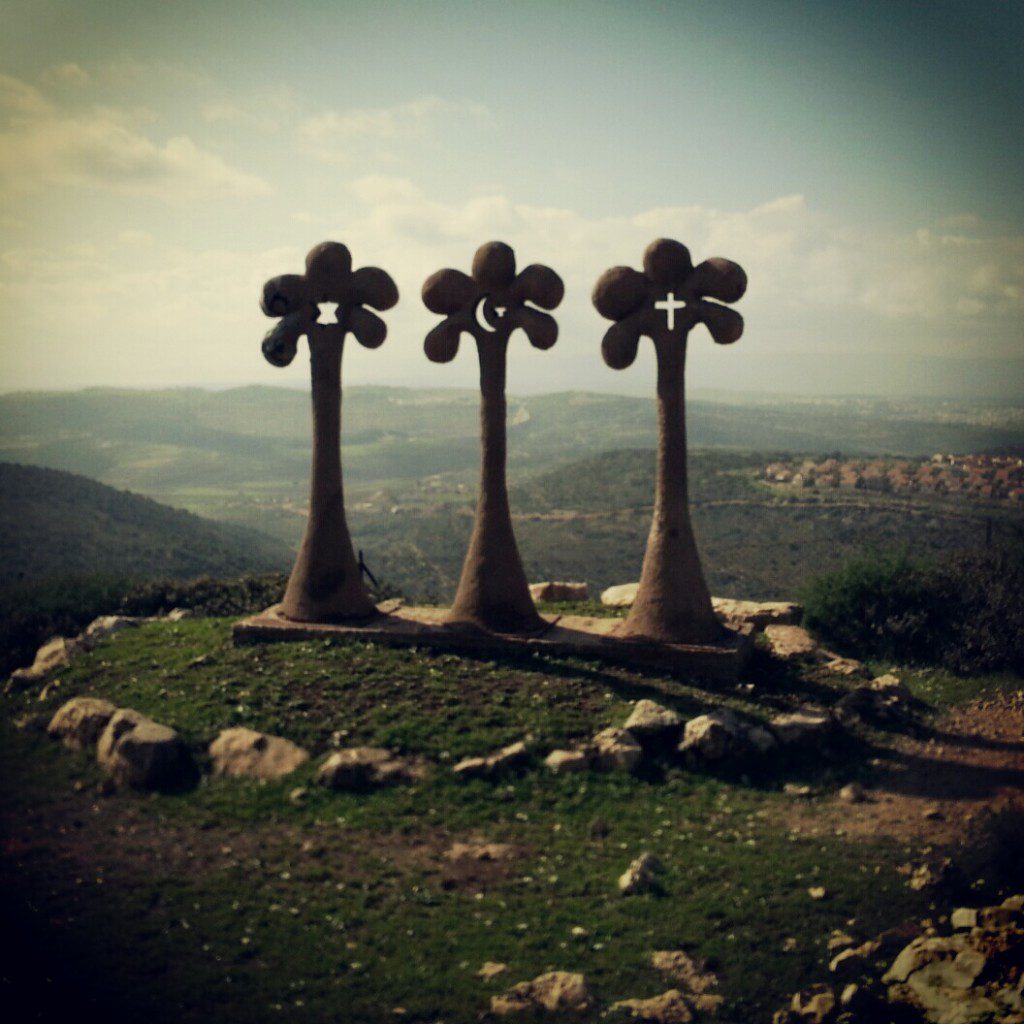
There were many interesting sculptures in the garden, many connected with thoughts and hopes of peace. I found particularly striking the sculpture pictured of flowers of the symbols of the three major faiths against a stunning backdrop. Sadly our guide told us the flower with the Star of David was frequently broken (you could see where it had been restored); and the flower with the cross was torn down after the Pope made a speech a couple of years ago which was understood to have slandered Mohammed. Although this is sad, the encouraging thing is that the village council has consistently restored the sculpture. And hopefully it will endure.
Yodfat

We moved on to a viewpoint over a small hill (not a tel, we were told) which used to house the ancient city of Yodfat, where we heard the story of its demise. When the Jews rebelled against the Romans in 66 AD, the military commander Vespasian was dispatched with his son Titus (of the arch’s fame) to subdue them. He set out into the Galil to destroy Yodfat which was a key centre for the rebels, under the command of man called Yosef ben Mattityahu. The Romans broke the city walls after 47 days; most of the town had committed mass suicide but Yosef ben Mattityahu survived. He returned to Rome with Vespasian and latinised his name, taking on the surname of his new mentor. The new Josephus Flavius became the official historian for the Roman empire in this region and his accounts are vital for us today in understanding what took place here under the Romans and indeed in locating important archaeological sites.
Hararit and Lavra Netofa
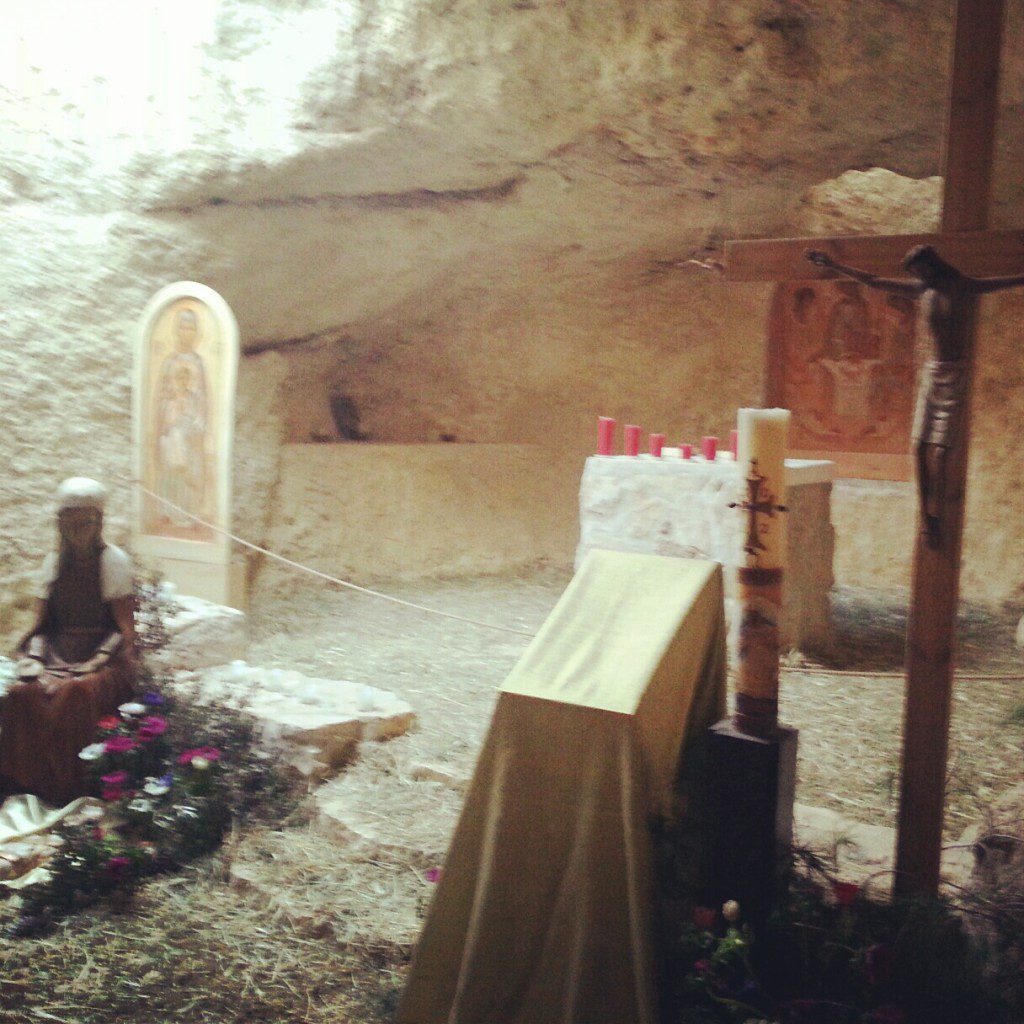
Our next stop was at the communal village of Hararit, where the inhabitants are followers of Transcendental Meditation and meditate together as a community. We passed through the village though to the fields behind it and to the Lavra Netofa. We heard the story of two Christian monks who came here to live an ascetic lifestyle in isolation, with a few followers. They found a Byzantine period cistern which they converted into a small chapel which was beautifully decorated for Christmas. It was incredibly peaceful and calm, and an appropriate setting for the story of the monks. The last of them passed away in 2005 but the chapel and community is now maintained by a group of nuns who moved here on their request for this purpose.
Avtaliyon
We left Hararit and travelled a short distance to the communal village of Avtaliyon. Here we heard the story of the programme to encourage more Jews to move to the area of the Lower Galil in the 1970s and 1980s. At the time, the traditional founders of new communities, the kibbutz, moshav and youth movements, were waning in their strength and influence. So a new concept, that of the communal village, was created. The idea was that people would form a group based on shared interests; perhaps it would be Transcendental Meditation, as in Hararit. There were other new communities created by graduates of the Technion, or employees of Rafael. These communities have remained small but now exist in the Galil and all over the country. Our guide argued that they had helped transform the Galil into an area not known for a good standard of living to an area with a good lifestyle, good education and good employment.
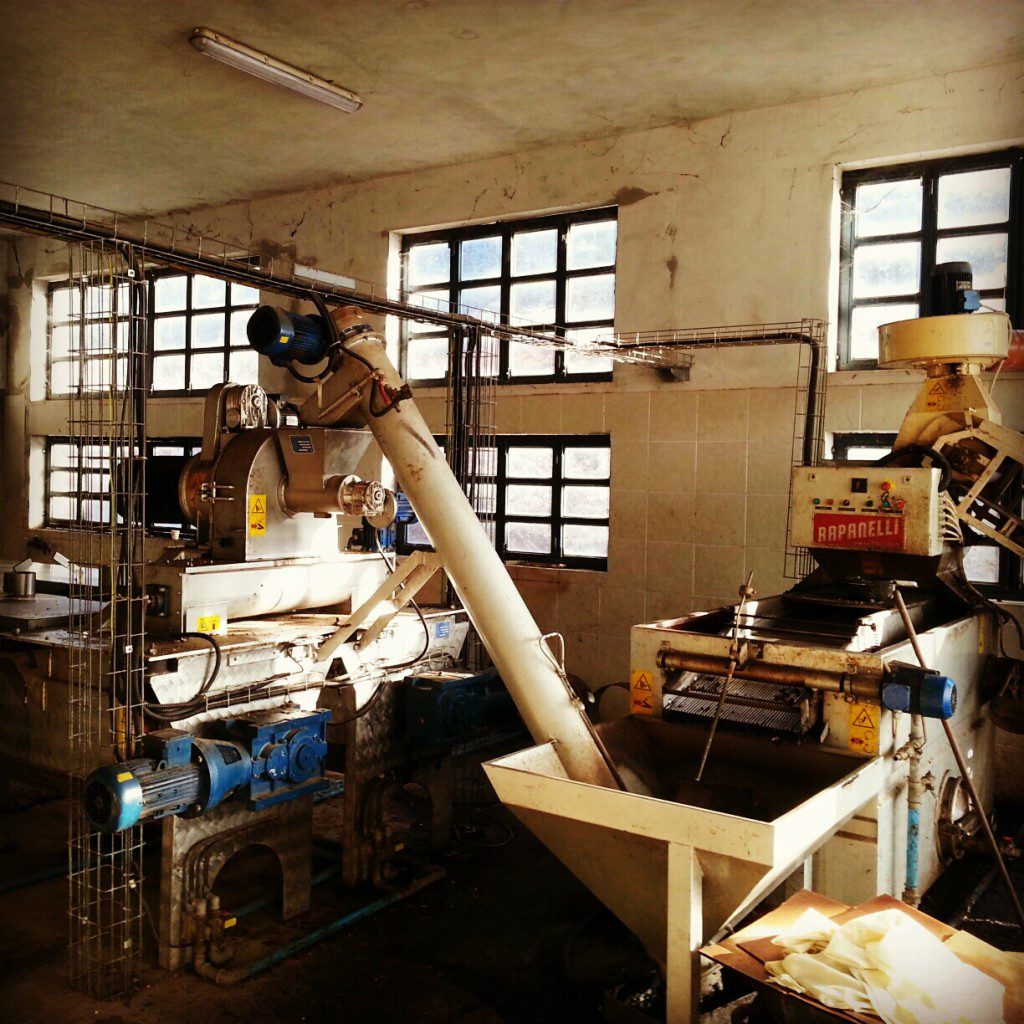
Here, we also learned about the manufacture of olive oil. 90% of olive oil in Israel comes from the Lower Galil. It is all made in the Arab villages except for in Avtaliyon, where they have their own press. Sadly, there was no time for tastings; a return visit is probably warranted.
Deir Hanna
Our final destination was the Muslim Arab village of Deir Hanna. The Arabic name translates as Monastery of John the Baptist, as a tradition says that he was born there. It is a large Muslim village with the ruins of an 18th century fortress at its centre. We visited the fortress and heard the story of its ruler, a local Sheikh called Daher el Omar who stood up against the Ottoman rulers, making himself an intermediary in their tax collection, and while doing so transformed the Galil region. There was barely a place around here that he did not influence, for example he built the city walls in Tiberias, in Akko, and even took a small village called Haifa, fortified and enlarged it.
Sadly for Daher el Omar, the Ottomans had enough of him after around 50 years and having grown in strength they sent a military force to wipe him out. No one replaced him and the Ottomans remained in full control until WWI.
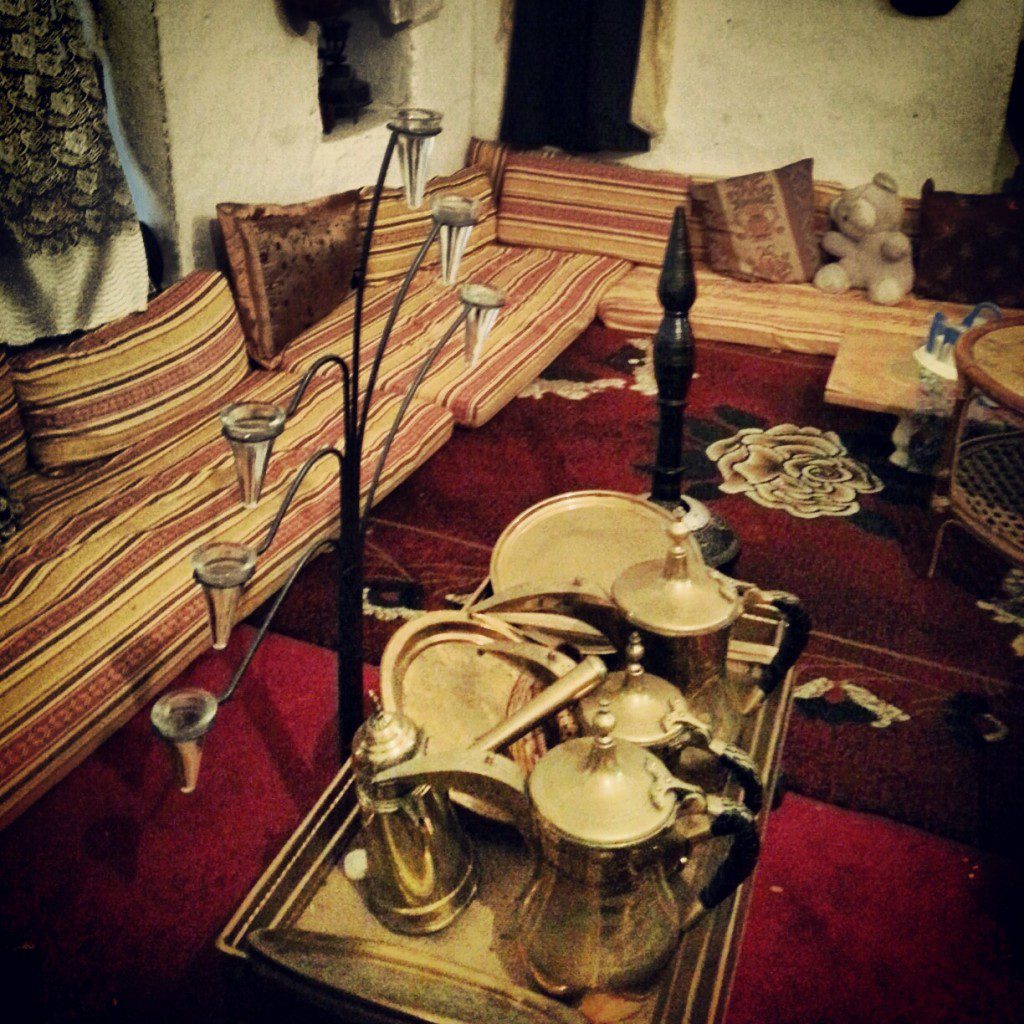
While in the village we visited a local home where the family hosts tourists and explains to them about traditional Arab culture, accompanied by traditional Arab cuisine (not to be sniffed at!). We learned about the traditional way of living and enjoyed some homemade olives (our course fees did not stretch to baklava and coffee, sadly). As the sun set, the call to prayer sounded around the village, and it was time for us to head home.


Leave a comment