Hanukkah (also spelled Chanukah) is the eight-day Festival of Lights, and in Israel you’ll know it’s coming well before the first candle, because doughnuts appear in bakery windows. In 2026 it starts on the evening of Friday 4 December and runs until Saturday 12 December.
It isn’t a public holiday, so shops, buses and sites all run as normal. But there is a change in atmosphere. You’ll be able to see candles in windows, public candle lightings and, because it’s school holidays, a lot more families out and about.
Quick facts & guide tips
| What it is | The eight-day Festival of Lights, remembering the Maccabees’ rededication of the Temple in Jerusalem. |
|---|---|
| When | Eight nights in late November or December (it moves with the Hebrew calendar). In 2026, from sundown Friday 4 December to Saturday 12 December. |
| What closes | Nothing. It’s not a public holiday, though schools are mostly off. |
| The feeling | Candles in windows, public lightings, city illuminations and doughnuts everywhere. |
| Guide tip | Sites popular with Israeli families get busy. Leave the early evening free for candle lighting (and a doughnut). |
What is Hanukkah
Hanukkah remembers the Maccabees, a family of Jewish rebels who rose up in the 160s BCE against the Seleucid king Antiochus IV, after he had banned Jewish practice and desecrated the Temple in Jerusalem. They retook the city and rededicated the Temple (Hanukkah means “dedication”) on the 25th of the Hebrew month of Kislev, in 164 BCE.
The family went on to rule as the Hasmonean dynasty, whose later history is a good deal more complicated than the story we tell children (it ended in civil war and, eventually, Roman rule).
The best-known part is the miracle of the oil. The Talmud tells that the Greeks had defiled the Temple and its oil, and extinguished the menorah, the seven-branched lamp that was meant to always stay lit.
When the Maccabees expelled the Greeks from the Temple, they immediately wanted to relight the menorah, but only found a single jar of suitable oil, which would only last for one day.
Making more would take eight days, so they faced a decision. Light it now, just for one day, and then have it go out again until enough oil arrived, or wait?
They decided to light it, and there was a miracle: the oil lasted for eight days, enough time to get the new batch of oil in place and keep the menorah lit permanently.
To remember this miracle Jewish people celebrate Hanukkah for eight nights, lighting candles and eating food fried in oil. The Maccabees came from Modi’in, between Tel Aviv and Jerusalem, and I’ve written about visiting the site known as the Tombs of the Maccabees there.
The menorah and the hanukkiah
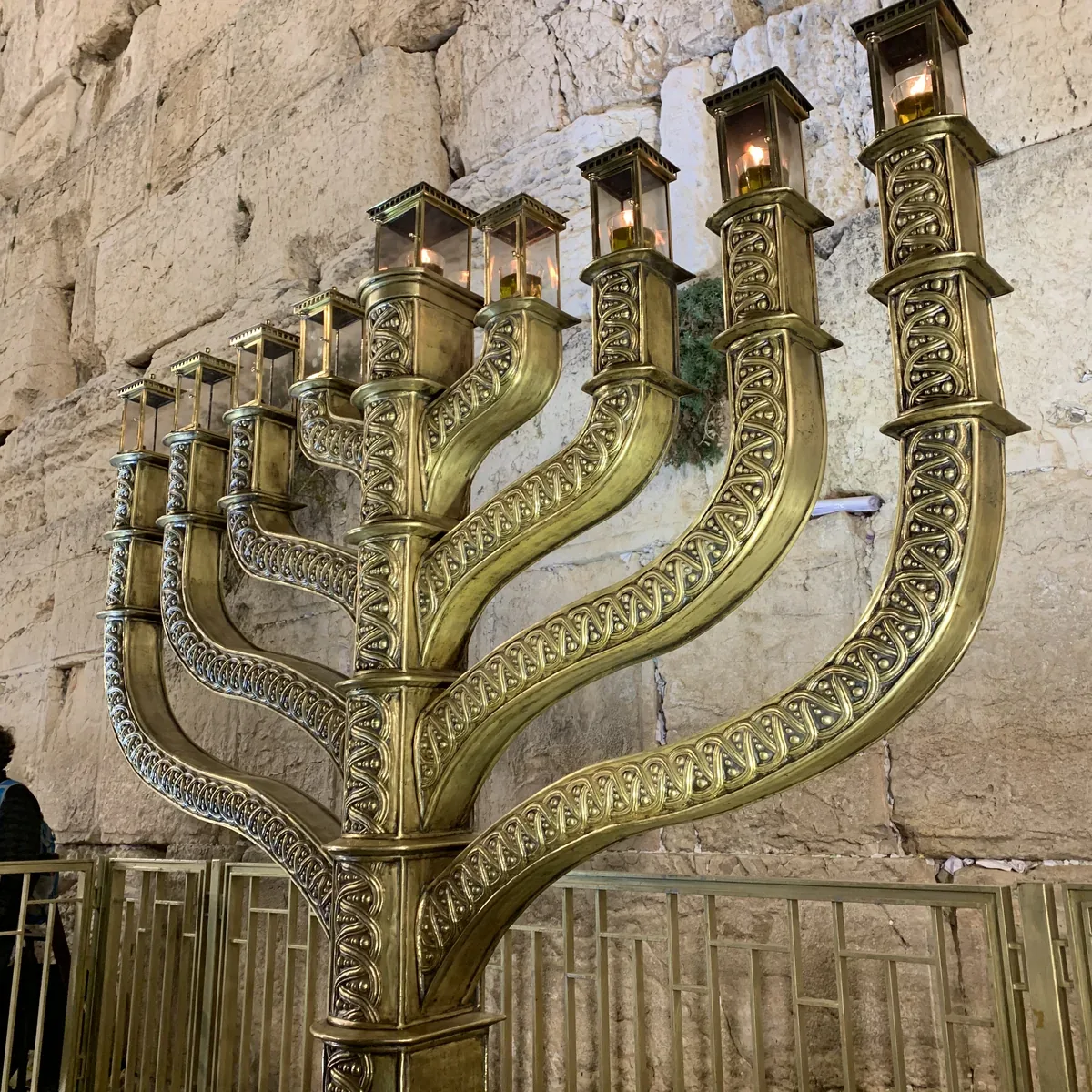
One of the most common mix-ups, especially among visitors from the US, is between the menorah and the hanukkiah. The menorah is the seven-branched lamp from the Temple. It’s also the symbol on Israel’s state emblem, and there’s a large bronze one outside the Knesset (I’ve written about it in my post on Jerusalem’s institutions).
The lamp you light at Hanukkah has nine branches: one for each of the eight nights, plus the shamash, the helper candle used to light the others. In Hebrew it’s a hanukkiah (also spelled chanukiah), and that’s what everyone calls it here. In the US it’s often known as a Hanukkah menorah, which is where the confusion comes from.
How Israelis celebrate
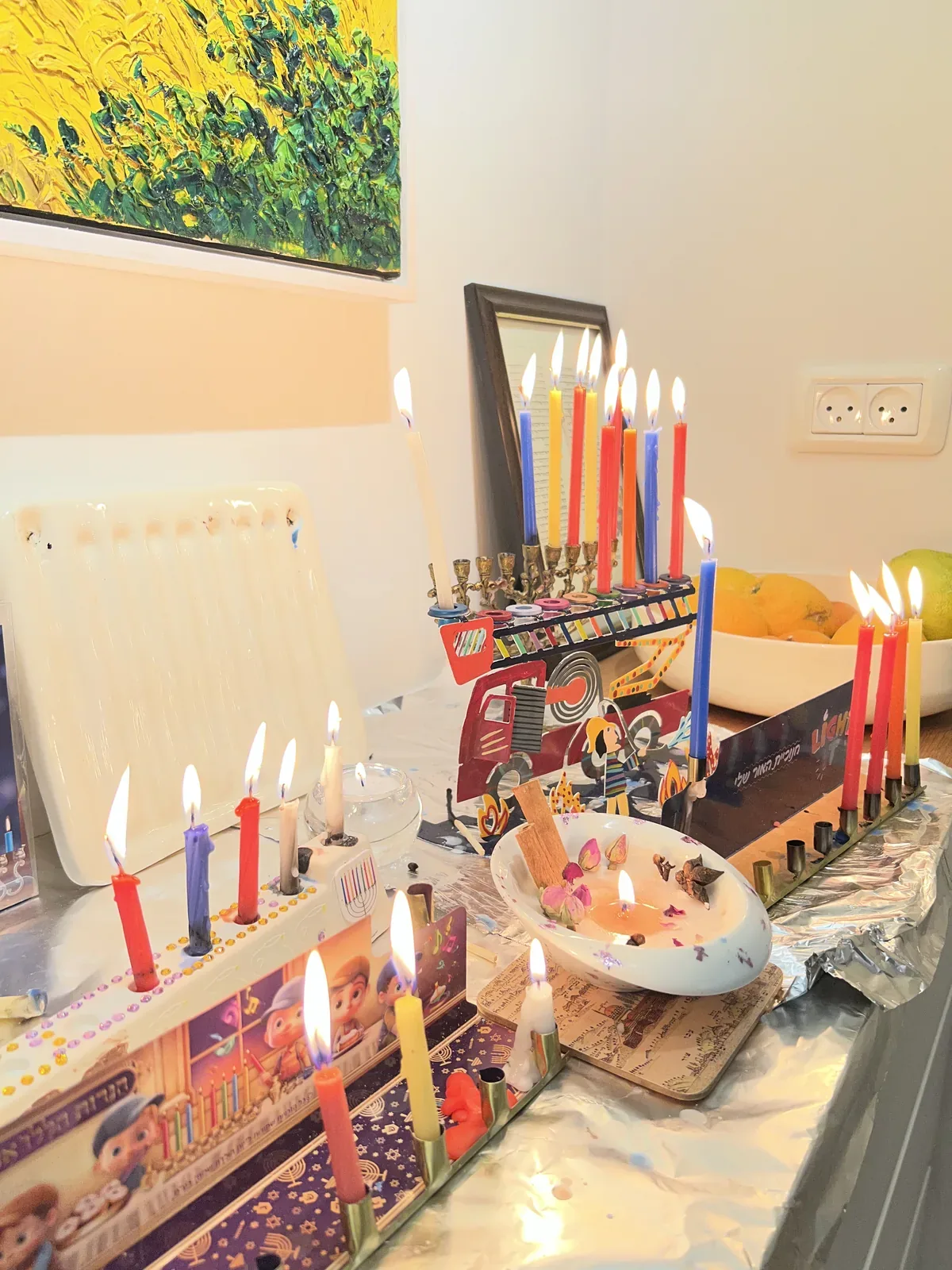
Most Israeli Jews mark Hanukkah whether they’re religious or not. Candles are lit at home each evening, one on the first night and one more each night after that until all eight are burning, plus the shamash. There are candle lightings in workplaces, schools and institutions too, and at family events all week.
One Hanukkah during my guide training, in 2013, was spent in Eilat, where our course ended the day with a communal candle lighting, followed, appropriately, by significant doughnut consumption!
Children (and some adults) spin the dreidel (sevivon in Hebrew), a spinning top with a Hebrew letter on each of its four sides: nun, gimel, hey and pe. Together they stand for “a great miracle happened here”, although outside of Israel, the last letter is a shin, so that it reads “a great miracle happened there”. Advanced techniques involve spinning it upside down!
You can also raise the stakes by turning it into a game. Everyone puts a coin, a sweet or a nut into the middle, and you take turns to spin: nun means you get nothing, gimel means you take everything in the pot, hey means you take half, and pe (or shin) means you put one in.
Then there’s Hanukkah gelt (Yiddish for money): coins for the children, or these days chocolate coins wrapped in gold foil. In Hebrew it’s dmei Hanukkah, Hanukkah money. Many families give presents too, sometimes one for each night, a custom that grew especially in North America, influenced by Christmas.
It’s also the school holidays, so there are more kids about, and the places Israelis like to visit (museums, nature reserves, attractions) are busier than usual.
Doughnuts, sfinj and latkes
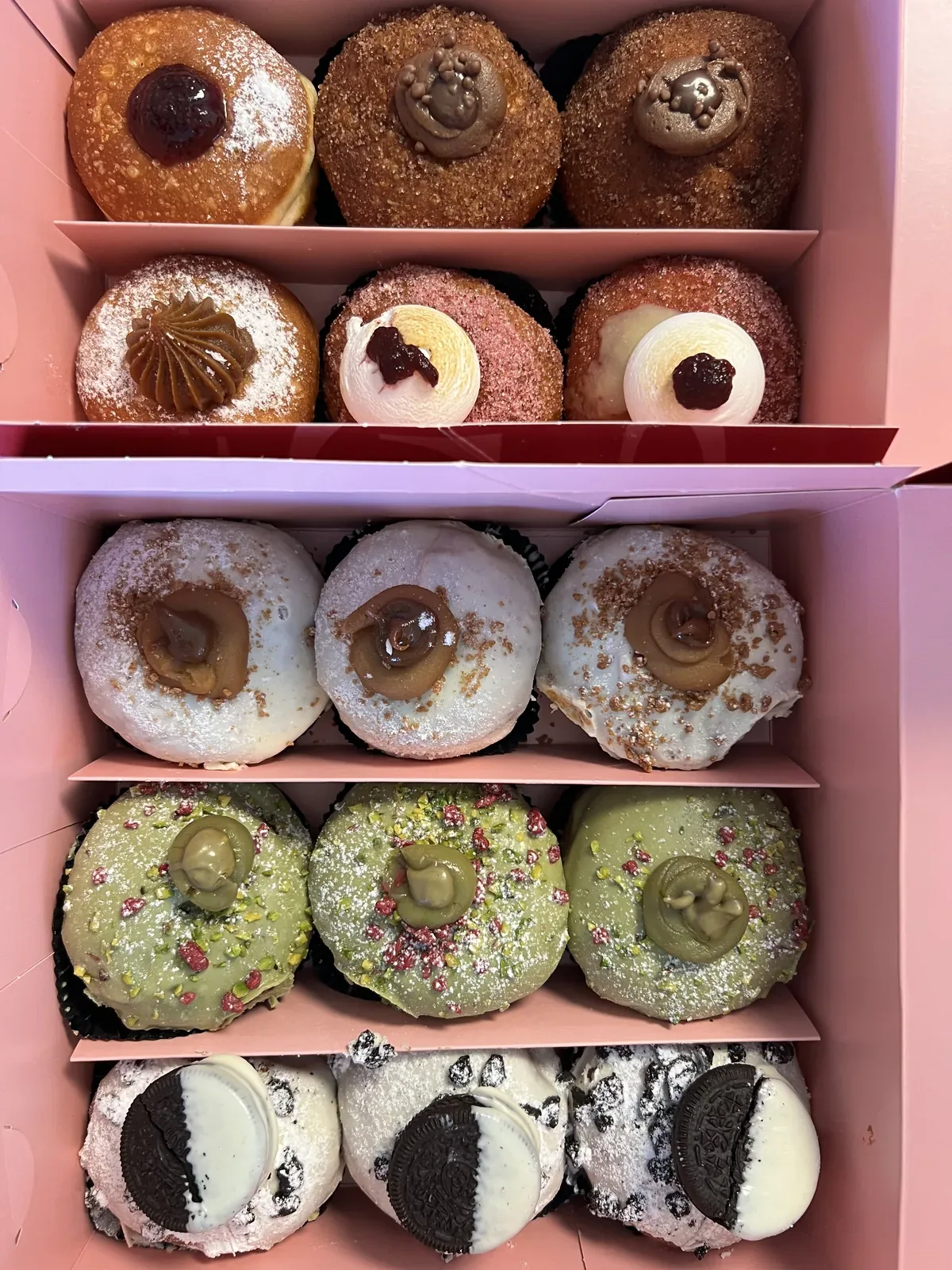
Food fried in oil is an important part of the holiday. It’s definitely not a healthy time of year! In Israel the most popular food is sufganiyot: doughnuts, traditionally filled with jam and dusted with sugar. These days they’re increasingly fancy, piped with everything from pistachio cream to dulce de leche and with all sorts of creative toppings.
The Roladin bakery chain rather owns the holiday from a doughnut perspective, but personally I really like the ones at Shemo. Boutique Central doesn’t fry theirs, so they’re maybe slightly healthier, if that’s a consideration over Hanukkah. You can also find gluten-free and vegan doughnuts if you need them.
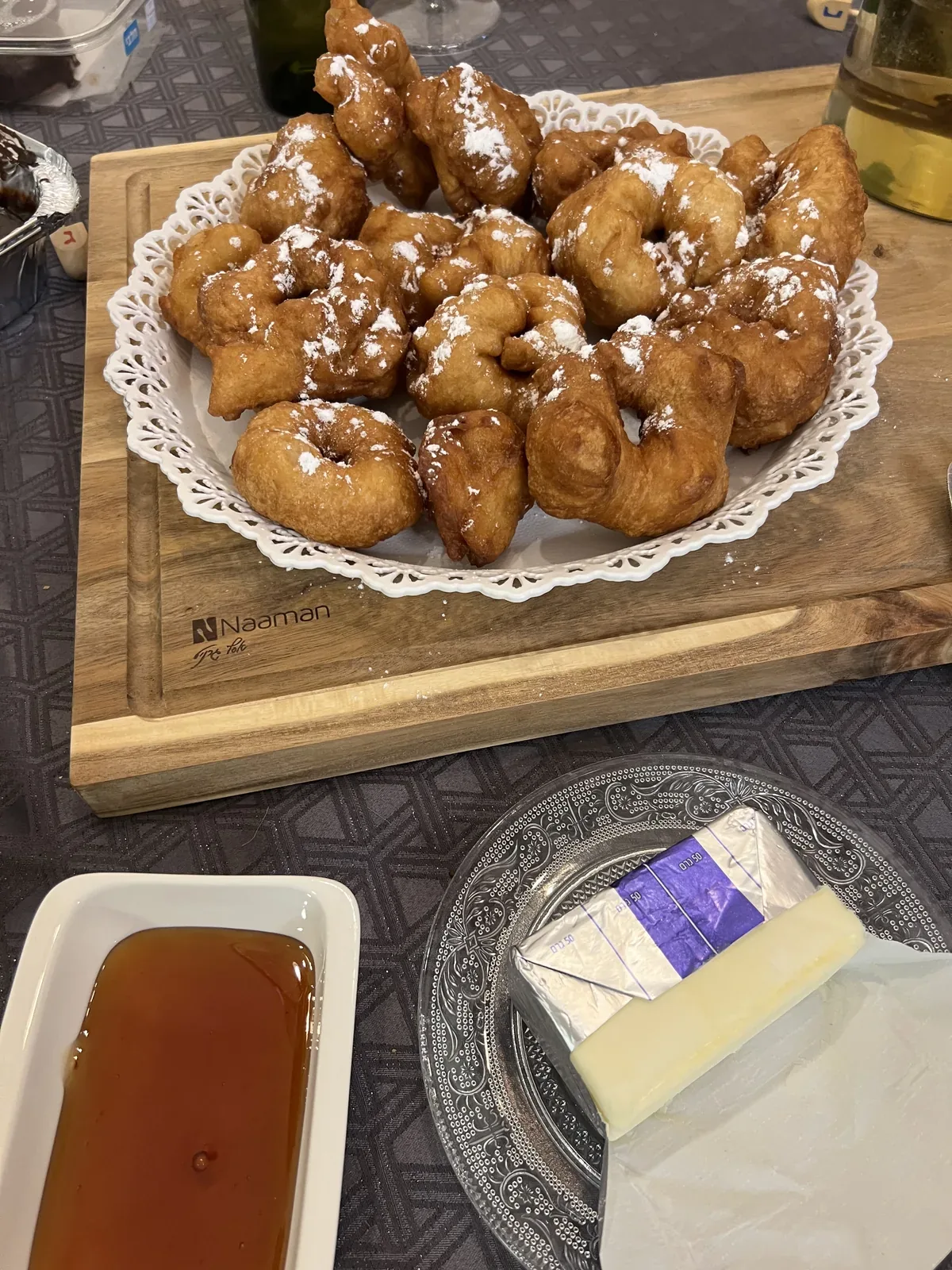
I always like to try some sfinj too, the North African doughnuts eaten over the holiday; you’ll find them in the shuk (the market), whether that’s Mahane Yehuda in Jerusalem or the Carmel Market in Tel Aviv.
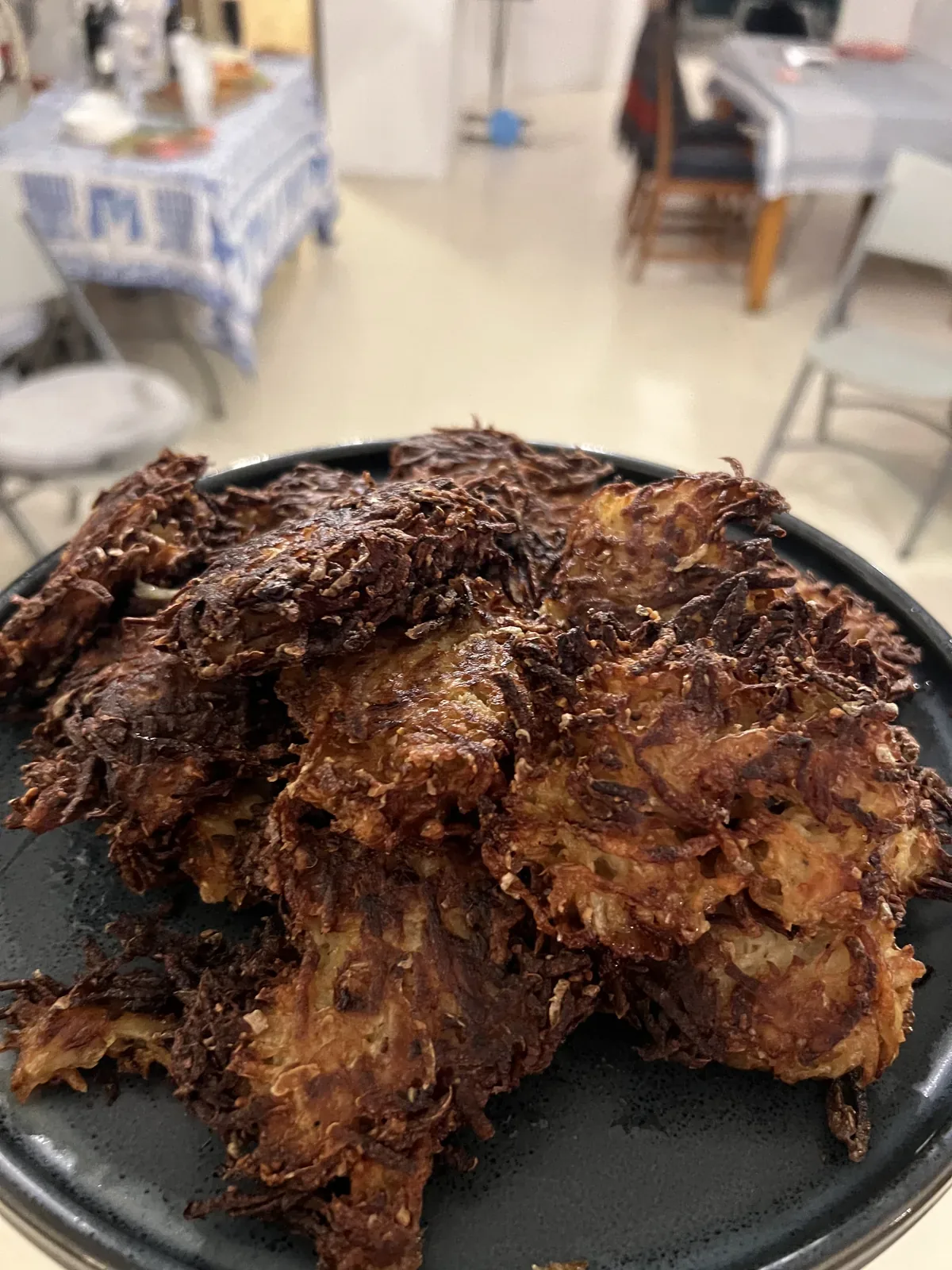
Latkes (levivot in Hebrew), the fried potato pancakes, are normally made at home here. You can increasingly buy them, but not as easily as you can abroad. If you’d like to eat them out, head towards the ultra-Orthodox neighbourhoods: Geula in Jerusalem, or Bnei Brak near Tel Aviv (dress appropriately in both).
Where to see the candles
Many families light by a window or the front door, so the candles face the street, which makes an evening walk one of the nicest ways to see them. Popular places to walk around are Nachlaot and the Jewish Quarter of the Old City in Jerusalem.
There’s a public lighting at the Western Wall every evening of the holiday, which some people like to experience, and every city has public lightings all over the place. Increasingly, cities put up illuminations as well, which can be fun to walk around in the evening.
In 2025 Tel Aviv was lit up with Hanukkah illuminations for the first time, and I made a short reel of it.
It’s possible to go to Mea Shearim too, but you need to dress appropriately and take care with photography.
Hanukkah and your trip
For a visitor, Hanukkah is an easy holiday. Nothing shuts, and the only real difference is that Israeli families are on holiday, so the places they visit are busier. In 2026 the first candle falls on a Friday evening, so it’s lit just before Shabbat begins, and the usual Friday-night closures apply that evening (I’ve written about what to do on Shabbat separately).
Most of my guests over Hanukkah are Jewish families whose school holidays fall at the same time. We make sure to build in time for candle lighting if you’d like it, and plenty of doughnuts! I can take you for an evening walk through the Jewish Quarter to see the candles, spend a day on the trail of the Maccabees around Modi’in, or arrange for you to be hosted for candle lighting.
To learn more about how the rest of the Jewish calendar shapes a trip, take a look at my plan your trip page.

Leave a comment