The base of a Roman temple still sits on the seafront at Caesarea, and it was dedicated to a man who was worshipped as a god: the emperor Augustus, who was still alive when it was built.
This came up on the guide-training day on Roman religion I did this summer. I’ve already written about that day and about the buildings Herod put up on the coast, so this post is about the idea behind them: how a man became a god, and why Herod built him a temple that every ship coming into port would see.
Quick facts & guide tips
| What it was | The Roman imperial cult, the worship of the emperor (and of Rome itself) as divine |
|---|---|
| Who started it | Augustus, from 27 BCE; worship refused in Rome, accepted in the Greek-speaking East |
| Roma | A new goddess, the city of Rome imagined as a divine woman |
| See it in Israel | Caesarea (a temple to Roma and Augustus over the harbour); Sebastia, in the West Bank, is harder to reach |
| Guide tip | At Caesarea, stand where the temple stood and look out to sea; that’s the angle it was built to be seen from |
How Rome made a man into a god
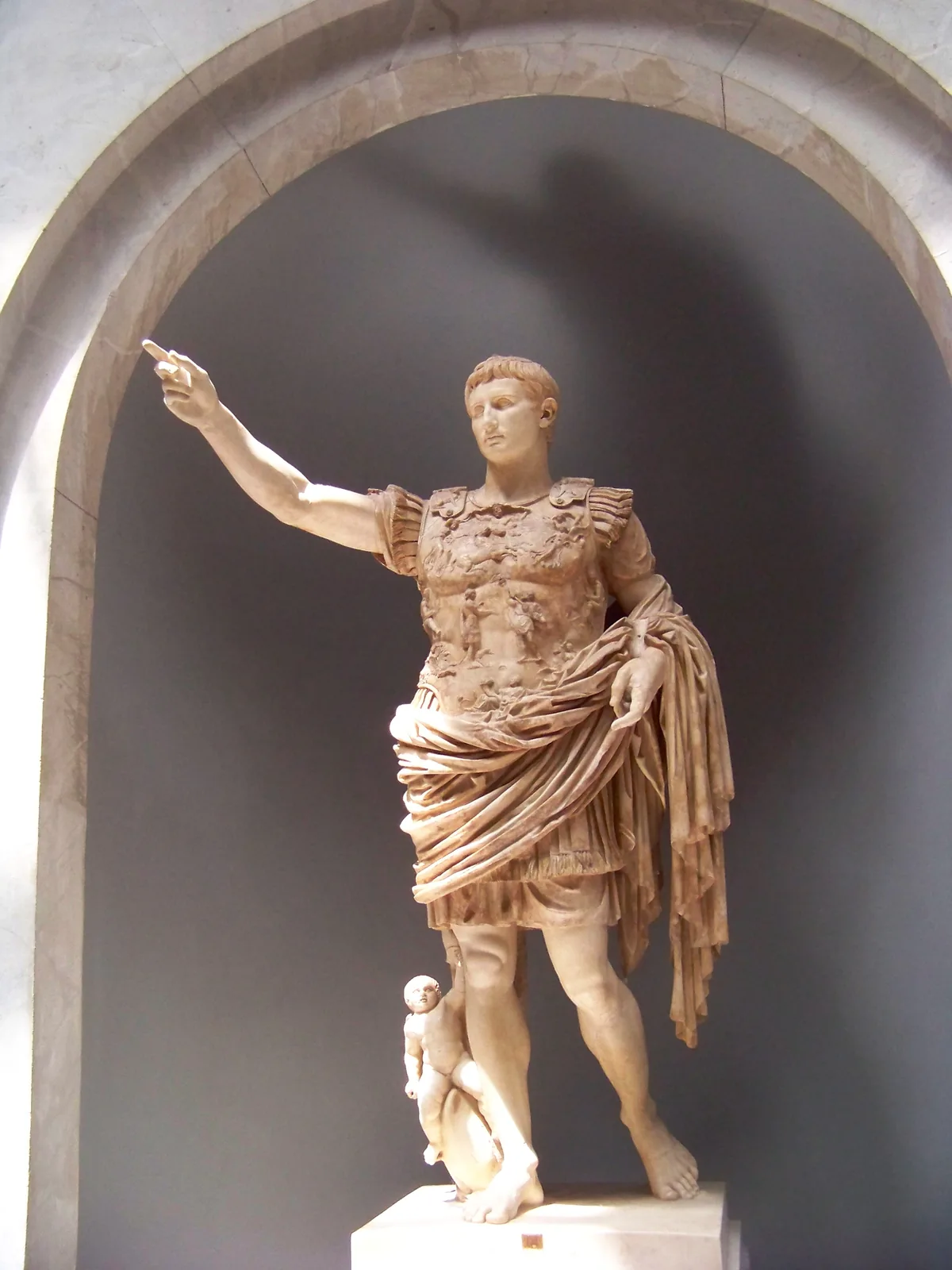
The practice of treating the emperor as a god, today referred to as the Roman imperial cult, began with Augustus. In 27 BCE, a few years after he defeated Mark Antony and Cleopatra, he stood before the Senate and offered to resign, to hand the Republic back. The Senate refused. Instead they gave him two titles: princeps (first citizen) and Augustus, a word that carried a sense of sacred authority without making him a king.
That distinction mattered. The old Republic could live with a first citizen but not with a king, and Augustus kept up the pretence all his life. In Rome itself he refused to be worshipped outright as a god. What he allowed elsewhere was another matter, and that’s where this story reaches Israel.
The idea of a man becoming a deity wasn’t new. Greek heroes like Heracles were said to have burned their mortal bodies away and been taken up to the gods, so the ladder from human to divine already existed in people’s minds. What was new was doing it with a serving head of state, a man people had seen in the flesh.
There were two ways it manifested itself. In the eastern provinces an emperor could be worshipped while he was still alive. In Rome itself, becoming a god usually waited until you were dead and the Senate had voted on it. Herod’s temples belong to the eastern kind, built for a living man.
Why the eastern half of the empire expected a god
In the Greek-speaking East a divine ruler was normal. Long before Rome, the Hellenistic kings who ruled Egypt and Syria had been worshipped as gods; Alexander the Great had been proclaimed one. So when Rome took over the eastern provinces, the people there expected to worship their new master the same way.
Augustus, who turned down divine honours in Rome itself, accepted them here. In the eastern half of the empire, treating the man who ruled you as a god was simply how loyalty was shown, and Rome was happy to let its emperor be divine in the places that expected it.
The worship was officially organised across the eastern provinces, with temples, festivals and priesthoods attached to it. For a client king out on the edge of the empire, supporting this was less about devotion than politics; it showed Rome exactly where your loyalty sat. Herod, who owed his whole throne to Roman goodwill, understood that as well as anyone, and acted accordingly.
A goddess called Rome
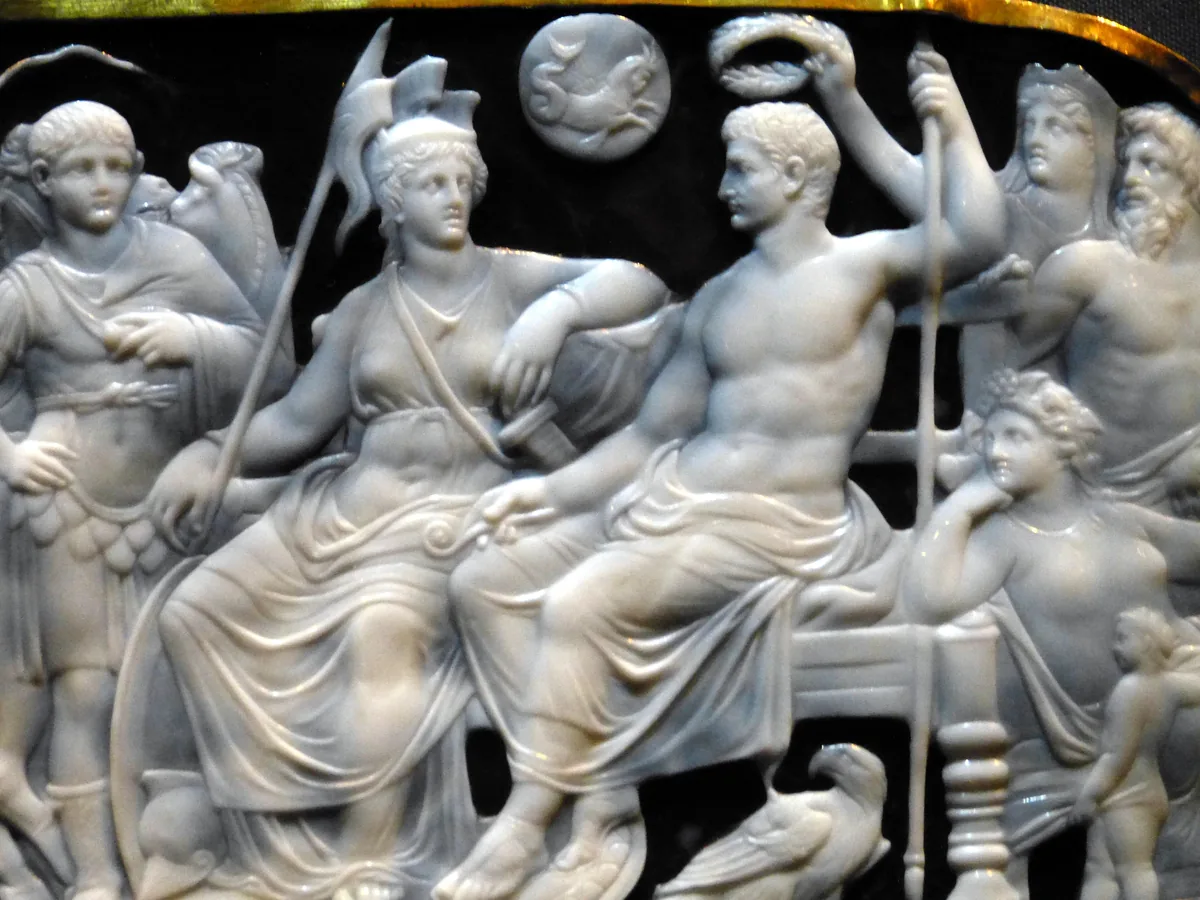
The other new figure in the imperial cult was Roma, the city of Rome turned into a goddess. She was the empire personified, a divine woman who stood for Rome itself, and she was something new in the religious world.
Across the eastern provinces people would normally dedicate temples to her with the current ruler, and Herod followed that formula. Not a temple to Augustus on his own, but a temple to “Roma and Augustus”, the goddess-city and the god-emperor sharing one house. Worshipping Roma and the emperor together was really worshipping Roman power itself.
The temple over Caesarea’s harbour
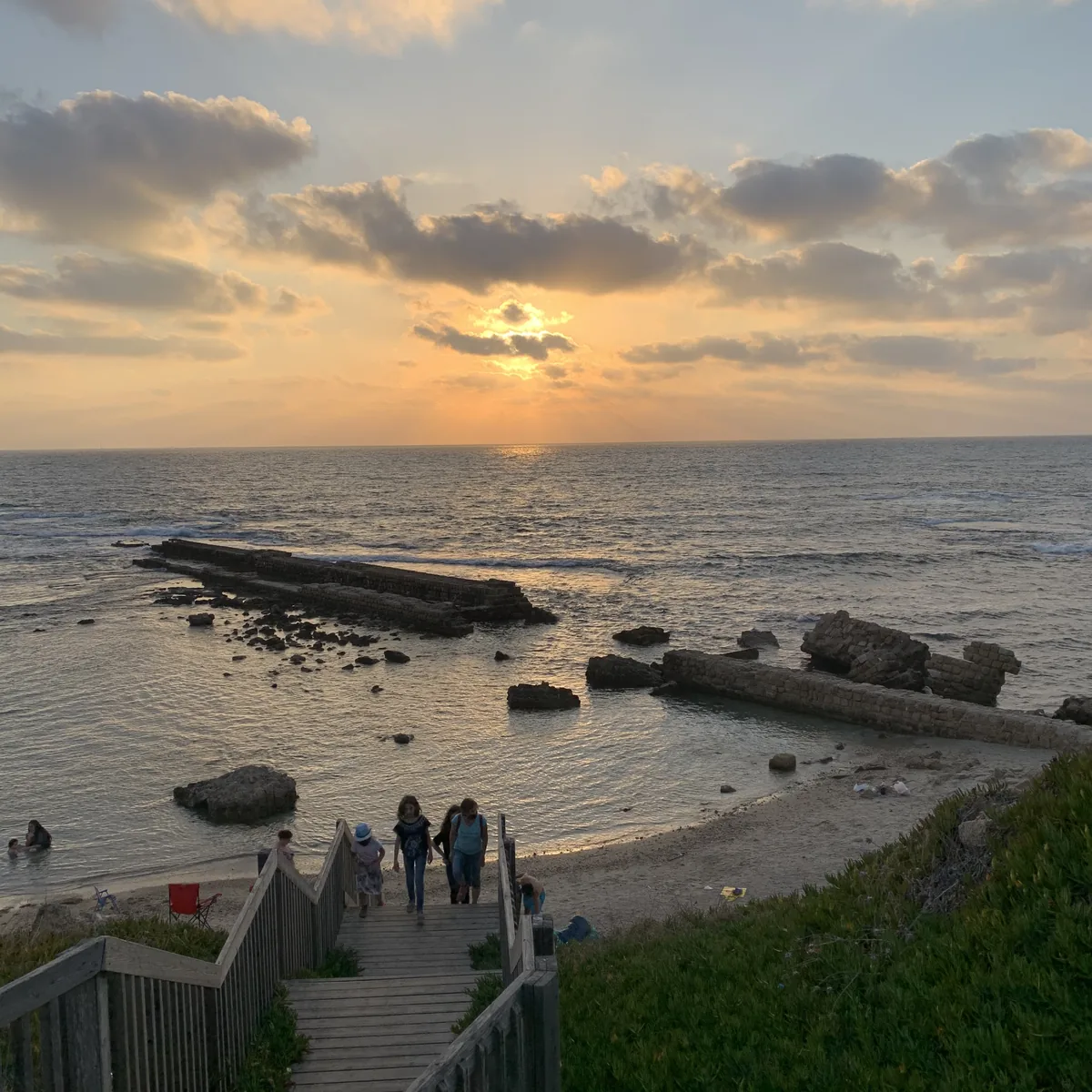
The clearest example in Israel stood on the high ground over Caesarea’s harbour, where Herod built a temple to Roma and Augustus. He built a grand new city on the coast (finished around 10 BCE) and named it Caesarea, “Caesar’s city”, after Augustus, whose family name was Caesar. Its great harbour (which many consider the largest artificial harbour of its day) he called Sebastos, the Greek word for Augustus.
He put the temple where it couldn’t be missed, in the line of sight of every ship coming in. The harbour below it was itself an incredible piece of Roman engineering, built out into the open sea with concrete that set underwater, so the temple stood above a completely manmade port that many had considered impossible. Inside the temple were two colossal statues: Augustus in the pose of Zeus and Roma as his queen. For a passenger sailing in, the emperor-god’s image was the first thing to rise into view.
Little of the temple survives above ground now, because a later Byzantine church was built over it, and later a mosque. What’s left is the podium, whose dimensions can still be measured, and some scattered column drums; excavation has since confirmed the outline of what once stood there.
Sebastia, a city renamed for the emperor
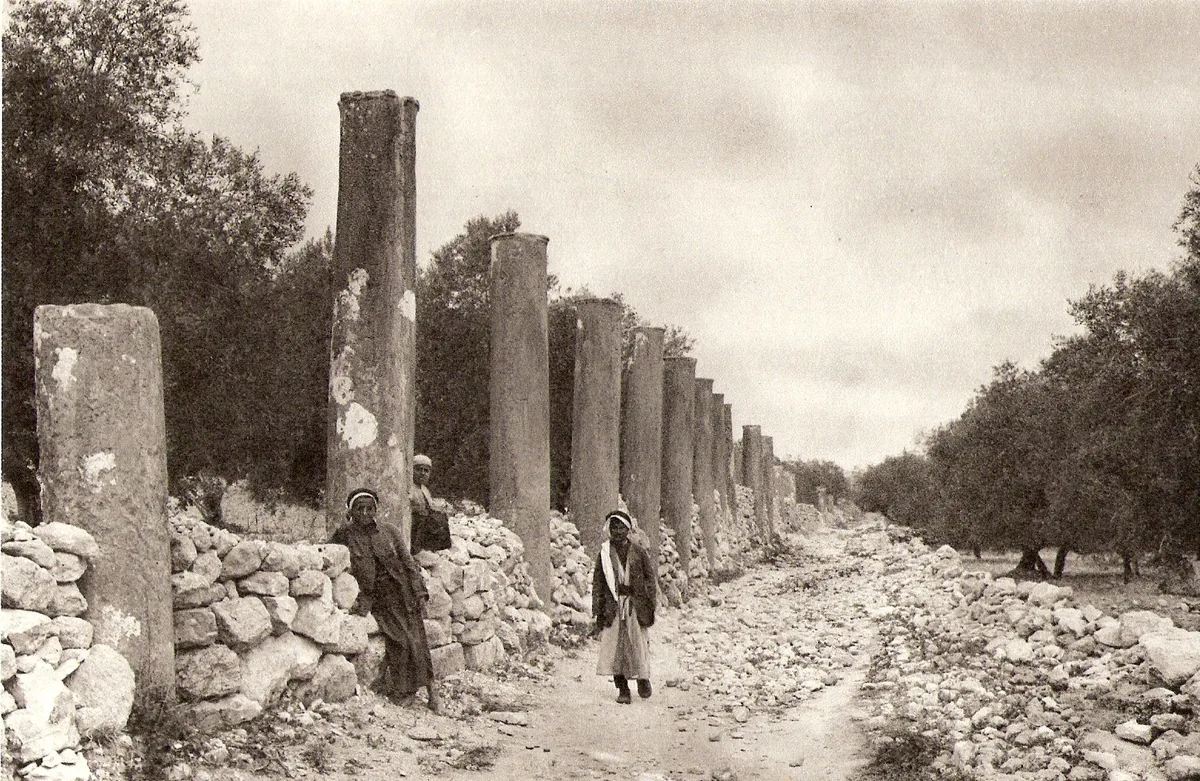
Herod did the same thing inland at Sebastia, the old city of Samaria, which he rebuilt and renamed in the emperor’s honour (Sebastos, again, is just Greek for Augustus). Samaria was an ancient city long before Herod got to it, so renaming it was part of the same gesture as the temple. On the acropolis at the top of the town he built a temple to Augustus.
The temple staircase and the standing column bases are still clearly visible on the hilltop. Sebastia is in the heart of the West Bank, so most people won’t put it on their itineraries, but it is possible to visit. Caesarea is a lot more accessible and popular.
Between the two sites you can get an understanding of what a client king in the Roman East was expected to do, and Herod doubled down by doing it twice.
Becoming a god by a vote of the Senate
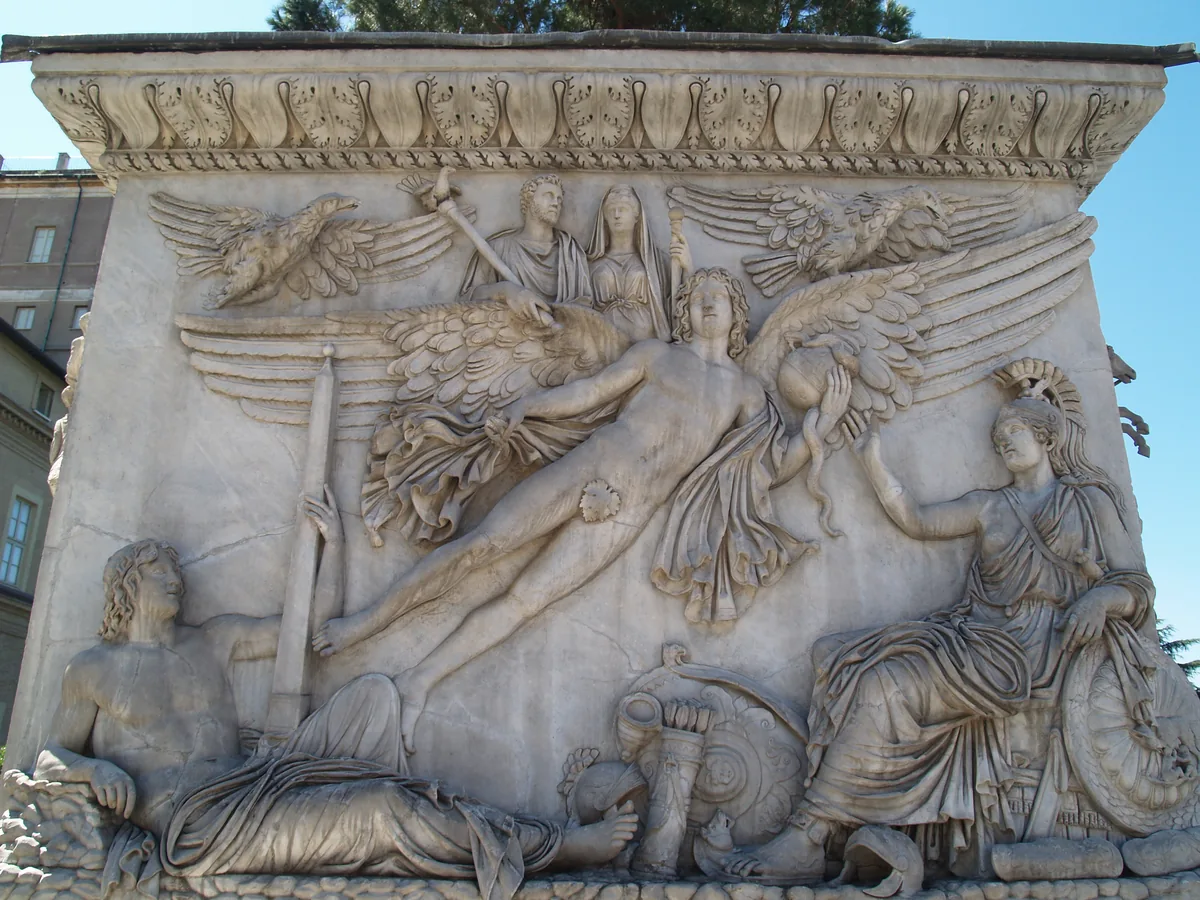
Inside Rome the process was more formal: a dead emperor could be voted a god by the Senate, in a ceremony called apotheosis (or consecratio). Our lecturer showed us a marble panel from the base of the Column of Antoninus Pius showing it happening, pictured above. The emperor and his wife Faustina are carried up into the sky on the back of a great winged figure, with eagles flying alongside, while Roma, helmeted, sits at the side and watches them rise.
It’s the same transition from being human to becoming a god that happened with Heracles, only now it could happen through a decree of the Roman state rather than a Greek legend.
Not every emperor earned the honour, and some wouldn’t wait for death to claim it. Commodus dressed himself up as Hercules. Demanding worship while you were still alive was generally the mark of an emperor going wrong. The Senate could also take divinity away as easily as grant it, destroying a disgraced emperor’s images and cancelling his god-status.
One title stayed with the office throughout. The emperor was also Pontifex Maximus, chief priest of the Roman state, responsible for seeing that the rites were performed properly and the religious calendar kept. In sculpture you know him by his toga, drawn up over his head for sacrifice, a gesture thought to come from the older Etruscan priests. Emperors went on holding the office for almost four centuries after Augustus.
How this plays out when I’m guiding
On the seafront at Caesarea I can take you where the temple stood, and give you the full context behind its construction. Why it was here, what was inside it, and why you wouldn’t find something like this in Rome.


Leave a comment