Simchat Torah is the joyful finish to the long run of autumn holidays. It’s the day the yearly cycle of reading the Torah is completed and, in the same breath, begun again, and it’s marked with dancing, singing and a real sense of celebration.
In Israel it falls at the very end of Sukkot, a single day of full holiday. Here’s what it’s about, and what it’s like to be here for it.
Quick facts & guide tips
| What it is | The joyful day that completes and restarts the yearly Torah reading, and the close of the autumn holidays. |
|---|---|
| When | One day in Israel, right after Sukkot, in September or October. In 2026, sundown Friday 2 October to nightfall Saturday 3 October. |
| What closes | A full festival day, so things close like Shabbat: shops, transport and most restaurants. |
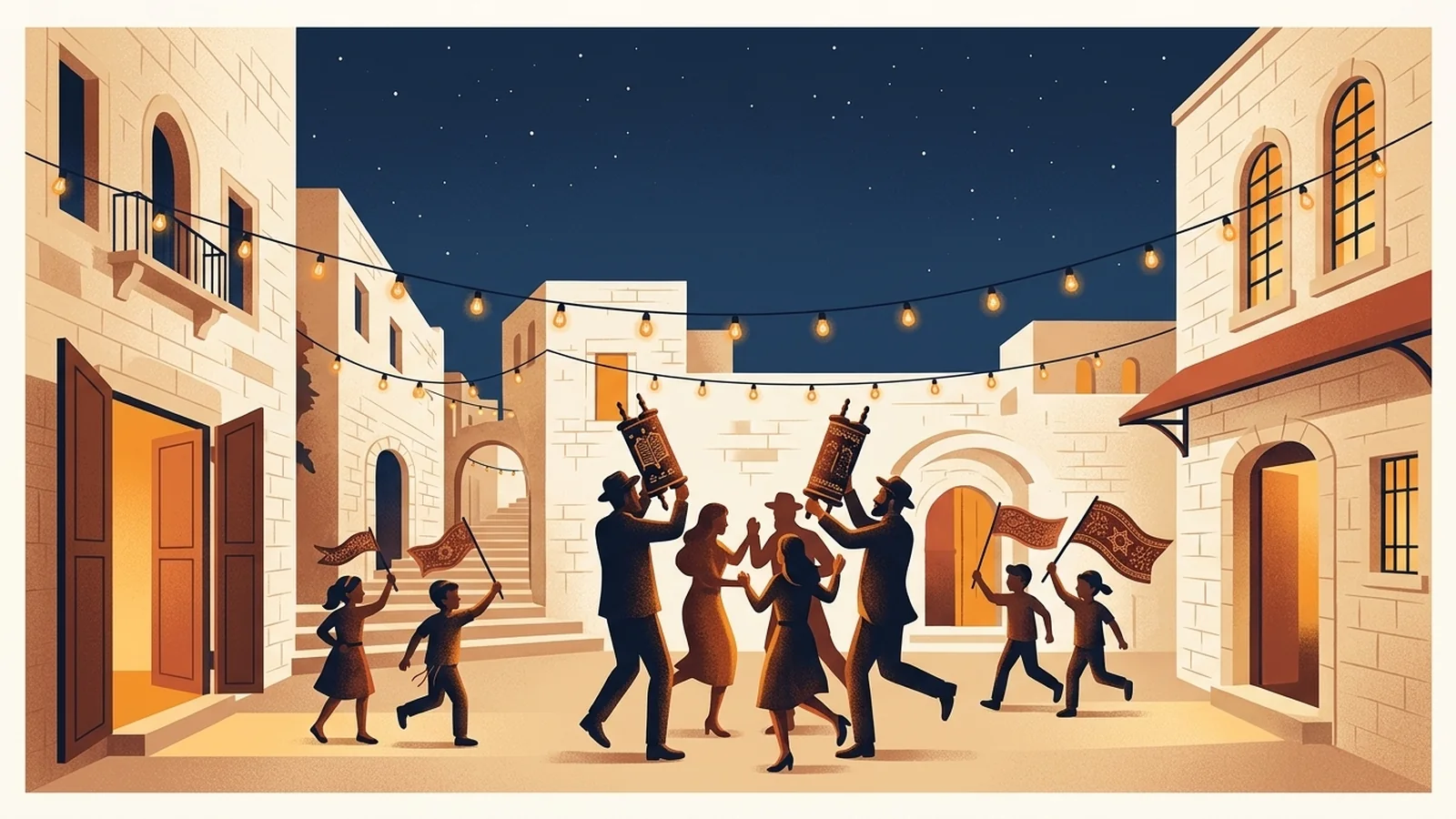
| The feeling | Dancing with the Torah scrolls (hakafot), flags and sweets for children, and a joyful service that runs long. You may see a Torah paraded in the street. |
| Guide tip | Not an ideal touring day. If you’re near a synagogue in the evening, look in on the dancing. |
What Simchat Torah is
Unlike the other holidays in September/October, Simchat Torah doesn’t actually appear in the Bible. The Torah sets out a festival called Shemini Atzeret, an “eighth day” of assembly right after Sukkot.
Simchat Torah, which means “rejoicing of the Torah”, is a later custom that grew up around it, marking the moment the community finishes the annual cycle of reading the Torah (the last words of Deuteronomy) and starts straight back at the beginning (the first words of Genesis).
In Israel Shemini Atzeret and Simchat Torah are combined into one day; outside Israel they fall on consecutive days.
The celebration
The heart of the day is the hakafot: people take the Torah scrolls from the ark and dance with them, circling the synagogue again and again, often spilling out into the courtyard or the street. There are flags for the children, sweets and apples, and a service far longer and more boisterous than usual. Alcohol can often flow freely!
My own best memory of it is from Jerusalem. I went for the service to one of the main synagogues in the Baka area. At a certain point in the morning service, we went out into the streets, taking all the Torah scrolls with us, dancing in and out of different synagogues in the area, interrupting their service (but always being well received, often with food and drink!) and taking over the street.
Things aren’t so straightforward now
Since 2023 the day also carries something heavier. The attack of 7 October 2023 fell on Simchat Torah, and for many people here the joy of the day now sits alongside grief and remembrance. 2024 was particularly strange; 2025 was better because it marked the return of the last living hostages, an incredibly joyous national moment. We’ll see what this year brings.
If you’re visiting
Practically, Simchat Torah is a full festival day, so like the first day of Sukkot it closes down much like Shabbat: shops, public transport and many restaurants. It isn’t a great day to be touring although some things are open, particularly the Christian sites.
What you can do is experience the holiday. If you’re staying near a synagogue, step in during the evening and you’ll usually find the dancing in full swing, with visitors welcome. For how the wider Jewish calendar shapes a trip, I’ve set it all out on my plan your trip page.

Leave a comment