Sukkot, the Feast of Booths, is a week-long festival in early autumn, and one of the most visible in the Israeli year. All over the country, people build small booths called sukkot (sukkah in the singular form) and spend the week eating, and sometimes sleeping, in them. It’s a happy holiday, and one centred around hospitality.
Sukkot comes just a few days after Yom Kippur. For the first day of the holiday, a lot closes down (public transport, many shops, restaurants and some attractions), but the middle days are open, and a lovely time to be out and about, although things will be busy as it’s school holidays.
Quick facts & guide tips
| What it is | The Feast of Booths (Tabernacles), a week-long autumn harvest festival. |
|---|---|
| When | Seven days in September or October (it moves with the Hebrew calendar). In 2026, from sundown Friday 25 September to Friday 2 October, with Simchat Torah the following day. |
| What closes | The first day closes like Shabbat (as does Simchat Torah at the end). The middle days are open, but it’s peak domestic travel. |
| The feeling | Sukkahs go up on balconies, in gardens and outside restaurants. Hospitality is the theme, and families eat outdoors. |
| Guide tip | The middle days are a fine time to tour, but book ahead: it’s busy and prices rise. |
What Sukkot is
Sukkot has two meanings woven together. The book of Leviticus tells the Israelites to live in booths for seven days, “so that your generations will know” that God had them dwell in booths after bringing them out of Egypt; so it recalls the temporary shelters of the wilderness years. It’s also the autumn harvest festival, the Festival of Ingathering, a thanksgiving for the year’s crops safely gathered in.
Living in a sukkah
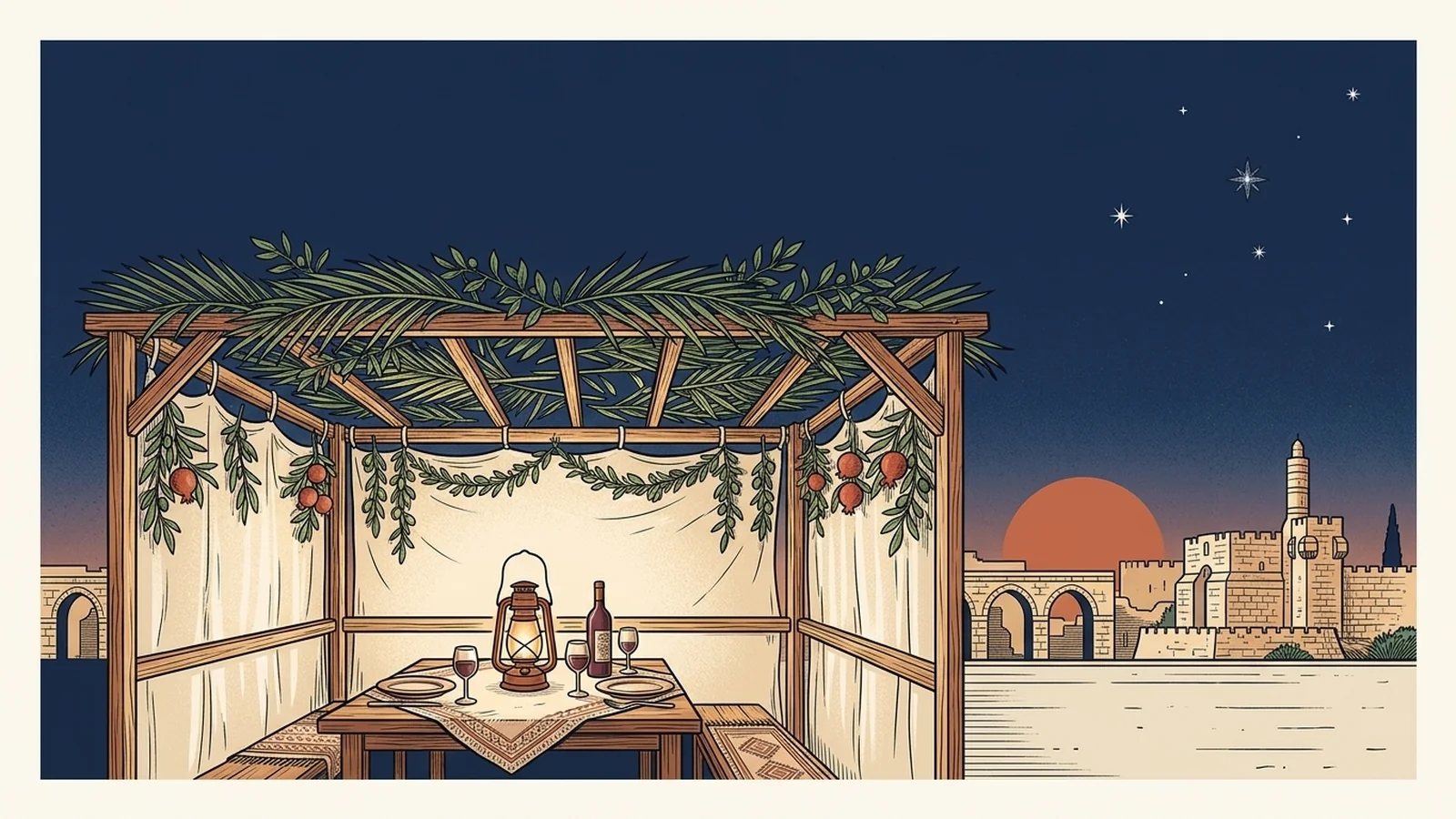
The sukkah (booth) is the heart of it. The rules are specific but simple: it needs at least a couple of walls, and a roof of cut branches or palm fronds, called s’chach, laid loosely enough that you can still see the stars through it. You’re meant to treat it as your home for the week, eating your meals there and, if the weather and space allow, sleeping in it too.
Once the festival starts you see them everywhere: on apartment balconies, in gardens, in hotel courtyards. You’ll even find a restaurant that isn’t kosher putting one up so its diners can eat in a sukkah for the week, which says something about how the festival belongs to everyone here, religious or not.
I put together a short reel of some of the sukkahs you’ll spot around at this time of year, if you’d like a look.
Hospitality runs through the whole week (there’s a custom of welcoming symbolic guests, the ushpizin, into the sukkah each night). If you’d like to be hosted for a meal in a sukkah yourself, that’s something I can sometimes arrange, just ask.
The four species and the Western Wall
The other well-known custom is the four species: a palm branch (lulav), a citron (etrog) and sprigs of myrtle (hadass) and willow (aravah), held together and waved during the morning prayers. You’ll see people carrying them to synagogue, and shopping carefully for the nicest etrog in the days before.
In the synagogue there are hoshanot, processions holding the four species. And on the middle days, thousands of cohanim (descendants of the priests) gather to give the priestly blessing at the Western Wall, one of the more moving things you can witness here. I’ve written about that day separately if you’d like to read more.
Waving and processing with the four species is one of Judaism’s most ancient customs, and we see evidence of it from synagogue mosaics from 1500 years ago, as well as textual references in the Bible and rabbinic texts.
Honestly, it’s quite an unusual sight to see people waving these branches around in unison, and can be a cool experience to add to your trip.
Chag, chol hamoed and your trip
Here’s the practical part, and it hinges on a distinction worth knowing. The first day of Sukkot is a full festival day, a chag, and closes down much like Shabbat: shops, transport and many restaurants. So does Simchat Torah, which is effectively the last day of the holiday (although it’s technically separate).
The days in between are chol hamoed, the “weekday of the festival”. They’re semi-festive: most things are open, and it’s genuinely a nice time to tour, with a holiday feeling in the air.
The catch is that it’s peak domestic travel. Israelis are off school, many are off work, and out exploring. It’s also a time when we get a lot more tourists (Sukkot is one of the holidays when historically you’re supposed to travel to Jerusalem). So sites, hotels and roads are busy and prices go up. If you’re planning to be here for it, book your accommodation well ahead.
Sukkot is one of my favourite times to show people around. It’s a holiday with good vibes, that feels right to be celebrated in Israel (I suffered many a sukkah in the freezing cold and rain of England, not fun!).
There’s a lightness to it: the sukkahs, the hospitality, a country in a good mood and holiday atmosphere. If your trip lands on the middle days, you’ve picked a fine week to be here.
For how the rest of the Jewish calendar shapes a trip, I’ve set it all out on my plan your trip page.

Leave a comment