Yom Kippur, the Day of Atonement, is the holiest day of the Jewish year. In Israel it’s also the most extraordinary to witness: for about 25 hours, the entire country comes to a stop. No flights, no traffic, no shops. The roads go silent, and the streets fill with people on foot and bicycles.
It’s my favourite day of the year here, so much so that I plan trips abroad around being back in Israel for it. If you’re travelling around late September or early October, here’s what the day means, and how to experience it.
Quick facts & guide tips
| What it is | The Day of Atonement, the holiest day of the Jewish year. |
|---|---|
| When | A single 25-hour day in September or October (it moves with the Hebrew calendar). In 2026, sundown Sunday 20 to nightfall Monday 21 September. |
| What closes | Everything. Ben Gurion airport shuts, no TV or radio, no public transport, and shops, restaurants and businesses are closed. |
| The feeling | The whole country falls silent. The roads empty, and the highways belong to people on foot and children on bikes. |
| Guide tip | You can’t travel or tour. Sort any food before sundown, then go out and take in the atmosphere on foot or bicycle. |
What Yom Kippur is
Yom Kippur is the day of atonement. The book of Leviticus describes it as a day to “afflict your souls” (understood as fasting and a few other things) and to seek forgiveness.
It’s the culmination of the ten days that begin at Rosh Hashanah, a stretch known as the Days of Repentance. The idea is to try and create a clean slate: you make peace with the people you’ve wronged, you take stock, and you ask to be sealed in the book of life for a good year.
The fast and the prayers
Observant Jews fast for the whole day, taking no food or water for about 25 hours, from sundown to nightfall the next day. Many spend much of it in synagogue, often dressed in white.
Interestingly, survey data indicates that most Israeli Jews fast on Yom Kippur (a Pew survey found around 60% fast the whole day, with more fasting part of it), a much higher percentage of the population than identifies as religious.
The evening begins with Kol Nidrei, one of the most haunting melodies in the Jewish year, and the day ends with Neila, a unique final service that is held as the fast closes.
The day the country stops
This is what makes it unlike anywhere else. Israel effectively switches off. The airport closes, so no flights land or take off, or even go into Israeli airspace; there’s no public transport, and although not driving isn’t a law, almost nobody does (even secular Israelis leave the car at home).
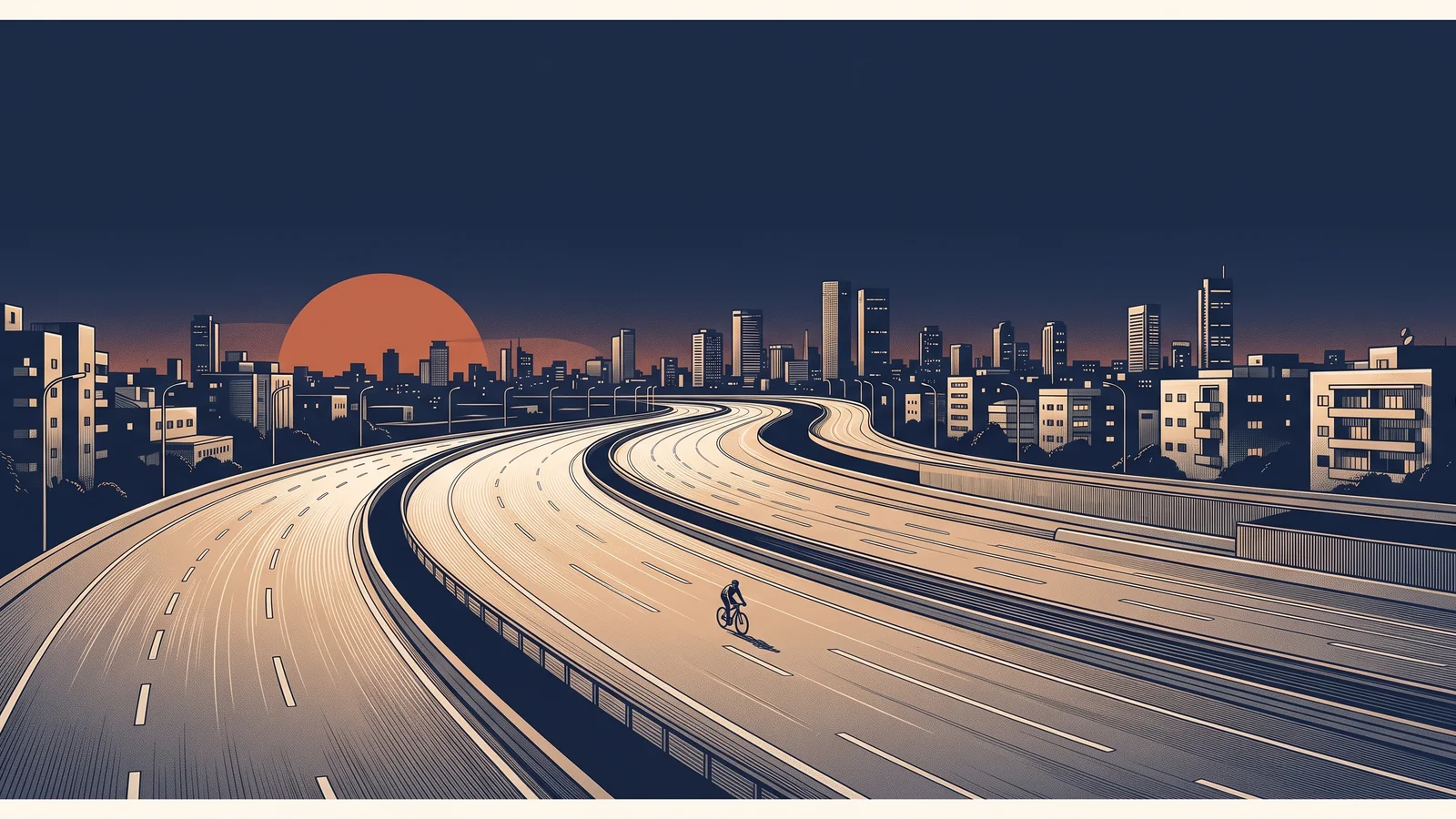
With the roads empty, something lovely happens: people reclaim them. Families walk down the middle of main streets, people draw chalk designs on the roads, and main roads are taken over by children on bikes.
I have my own tradition. After the Kol Nidre prayer, I walk out onto the Ayalon, the main motorway through Tel Aviv, and sit down in the fast lane.
I should say clearly: you’re not really meant to, and on a motorway in particular there’s the occasional ambulance, so please don’t take it as a recommendation.
But sitting in silence on an empty motorway, in the middle of a city that’s normally one long traffic jam, is something I find genuinely moving.
Experiencing it as a visitor
For a visitor, Yom Kippur isn’t a day to plan anything. You can’t tour, and you can’t get around beyond your own two feet, so the thing to do is simply to embrace the atmosphere.
I think Tel Aviv is the best place to be: walking or cycling through a silent city, past thousands of people doing the same, is something you won’t see on any other day.
If you’d like something more communal, some places hold open-air services. A well-known one is at Kikar Atarim on the Tel Aviv seafront, run by the 126 Ben Yehuda community. In Jerusalem many people like to go to the Western Wall, particularly for the final prayer at the end of the fast.
And the practical part: do your food shopping and any preparation before sundown the evening before, because once the day starts, nothing is open.
For how the rest of the Jewish calendar affects a trip here, I’ve set it all out on my plan your trip page.
People sometimes assume a day when everything shuts must be a write-off for a visitor. I’d say it’s the opposite. Yom Kippur is the one day you get to see a whole country pause at once, and there’s nothing else quite like it. If you have the opportunity to experience it here, I recommend you take it.


Leave a comment